
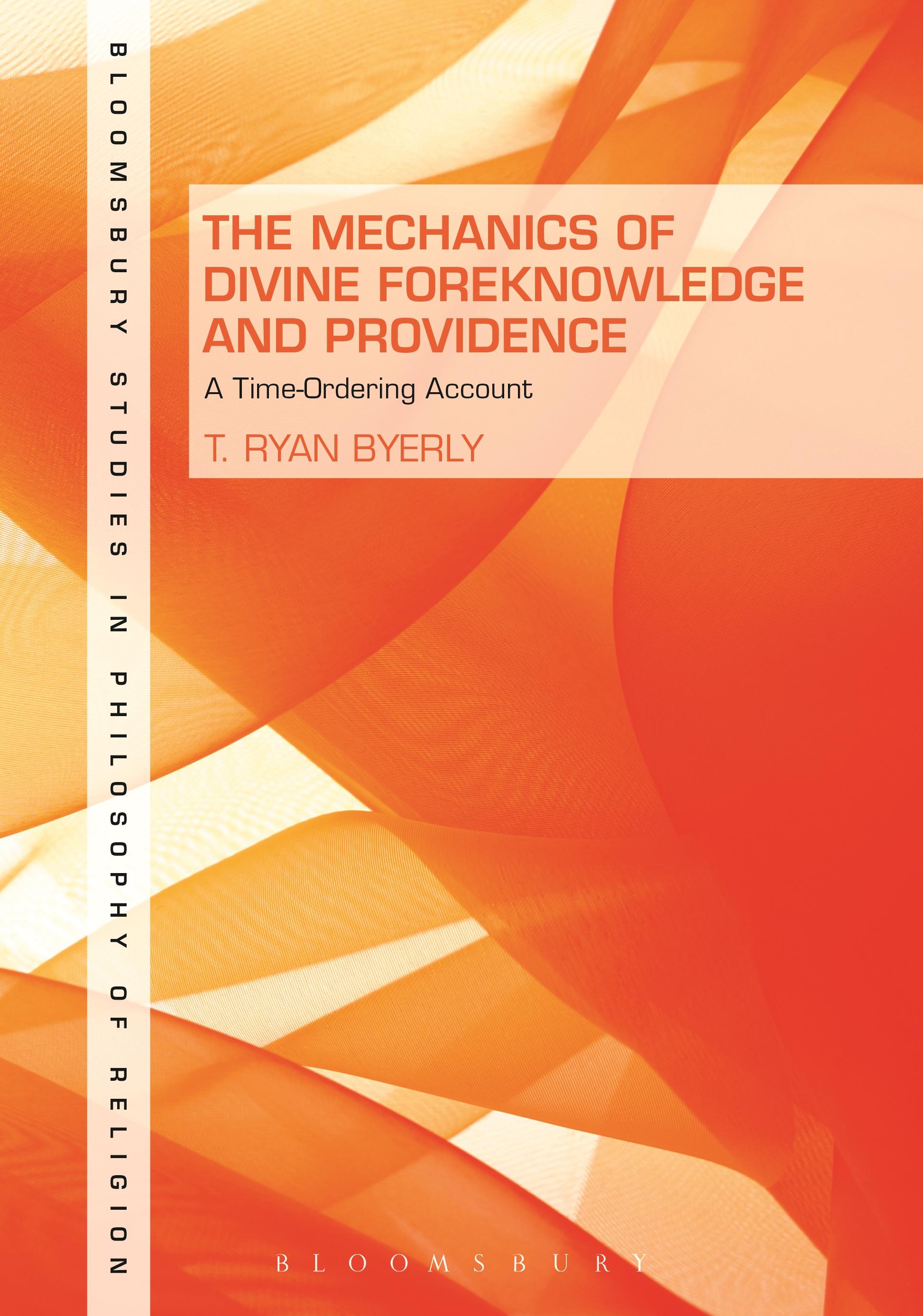
How exactly could God achieve infallible foreknowledge of every future event, including the free actions of human persons? How could God exercise careful providence over these same events? Byerly offers a novel response to these important questions by contending that God exercises providence and achieves foreknowledge by ordering the times.
The first part of the book defends the importance of the above questions. After characterizing the contemporary freedom-foreknowledge debate, Byerly argues that it has focused too narrowly on a certain argument for theological fatalism, which attempts to show that the existence of infallible divine foreknowledge poses a unique threat to the existence of creaturely libertarian freedom. Byerly contends, however, that bare existence of infallible divine foreknowledge cannot threaten freedom in this way; at most, the mechanics whereby this foreknowledge is achieved might so threaten human freedom.
In the second part of the book, Byerly develops a model for understanding the mechanics whereby infallible foreknowledge is achieved that would not threaten creaturely libertarian freedom. According to the model, God infallibly foreknows every future event because God has placed the times that constitute the history of the world in primitive earlier-than relations to one another. After defending the consistency of this model of the mechanics of divine foreknowledge with creaturely libertarian freedom, the author applies it to divine providence more generally. A novel defense of concurrentism is the result.
The first part of the book defends the importance of the above questions. After characterizing the contemporary freedom-foreknowledge debate, Byerly argues that it has focused too narrowly on a certain argument for theological fatalism, which attempts to show that the existence of infallible divine foreknowledge poses a unique threat to the existence of creaturely libertarian freedom. Byerly contends, however, that bare existence of infallible divine foreknowledge cannot threaten freedom in this way; at most, the mechanics whereby this foreknowledge is achieved might so threaten human freedom.
In the second part of the book, Byerly develops a model for understanding the mechanics whereby infallible foreknowledge is achieved that would not threaten creaturely libertarian freedom. According to the model, God infallibly foreknows every future event because God has placed the times that constitute the history of the world in primitive earlier-than relations to one another. After defending the consistency of this model of the mechanics of divine foreknowledge with creaturely libertarian freedom, the author applies it to divine providence more generally. A novel defense of concurrentism is the result.
Zahle einfach mit Karte, Klarna, Apple Pay oder Google Pay. Nicht zufrieden? Du hast immer ein 14-tägiges Widerrufsrecht. Lies mehr in unseren AGB. Hast du Fragen, schreib uns eine E-Mail an hello@memmo.org.
Memmo macht das Lernen einfacher – wo auch immer du bist. Bei uns findest du deine Kursbücher und smarte Lerntools an einem Ort: Zusammenfassungen, Quizzes, Podcasts und Lernkarten. Und Ted, dein Lernbuddy, beantwortet alles, was du wissen möchtest. Über 50.000 Studierende lernen bereits hier – gemacht, damit du schneller lernst und weniger Stress hast.