
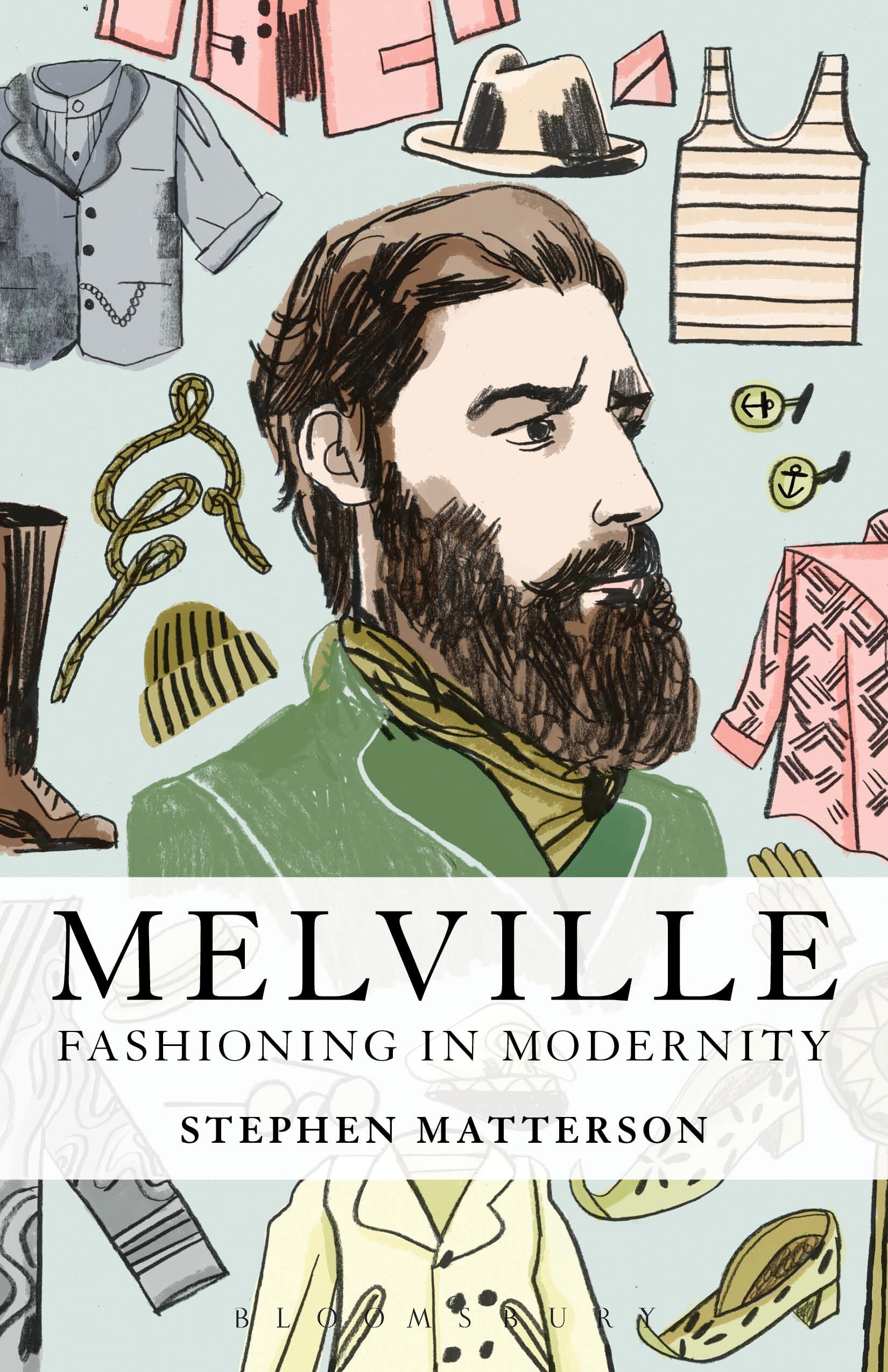
Melville: Fashioning in Modernity considers all of the major fiction with a concentration on lesser-known work, and provides a radically fresh approach to Melville, focusing on: clothing as socially symbolic; dress, power and class; the transgressive nature of dress; inappropriate clothing; the meaning of uniform; the multiplicity of identity that dress may represent; anxiety and modernity. The representation of clothing in the fiction is central to some of Melville's major themes; the relation between private and public identity, social inequality and how this is maintained; the relation between power, justice and authority; the relation between the "civilized" and the "savage."
Frequently clothing represents the malleability of identity (its possibilities as well as its limitations), represents writing itself, as well as becoming indicative of the crisis of modernity. Clothing also becomes a trope for Melville's representations of authorship and of his own scene of writing. Melville: Fashioning in Modernity also encompasses identity in transition, making use of the examination of modernity by theorists such as Anthony Giddens, as well as on theories of figures such as the dandy. In contextualizing Melville's interest in clothing, a variety of other works and writers is considered; works such as Robinson Crusoe and The Scarlet Letter, and novelists such as Fenimore Cooper, Nathaniel Hawthorne, Henry James, Jack London, and George Orwell. The book has at its core a consideration of the scene of writing and the publishing history of each text.
Frequently clothing represents the malleability of identity (its possibilities as well as its limitations), represents writing itself, as well as becoming indicative of the crisis of modernity. Clothing also becomes a trope for Melville's representations of authorship and of his own scene of writing. Melville: Fashioning in Modernity also encompasses identity in transition, making use of the examination of modernity by theorists such as Anthony Giddens, as well as on theories of figures such as the dandy. In contextualizing Melville's interest in clothing, a variety of other works and writers is considered; works such as Robinson Crusoe and The Scarlet Letter, and novelists such as Fenimore Cooper, Nathaniel Hawthorne, Henry James, Jack London, and George Orwell. The book has at its core a consideration of the scene of writing and the publishing history of each text.
Seiten: 224
Kategorie: Litteraturvetenskap & Teori
e-ISBN: 9781623566067
Versandgewicht: 1.2 kg
Versand in: 1-2 Tage
Zahle einfach mit Karte, Klarna, Apple Pay oder Google Pay. Nicht zufrieden? Du hast immer ein 14-tägiges Widerrufsrecht. Lies mehr in unseren AGB. Hast du Fragen, schreib uns eine E-Mail an hello@memmo.org.
Memmo macht das Lernen einfacher – wo auch immer du bist. Bei uns findest du deine Kursbücher und smarte Lerntools an einem Ort: Zusammenfassungen, Quizzes, Podcasts und Lernkarten. Und Ted, dein Lernbuddy, beantwortet alles, was du wissen möchtest. Über 50.000 Studierende lernen bereits hier – gemacht, damit du schneller lernst und weniger Stress hast.