
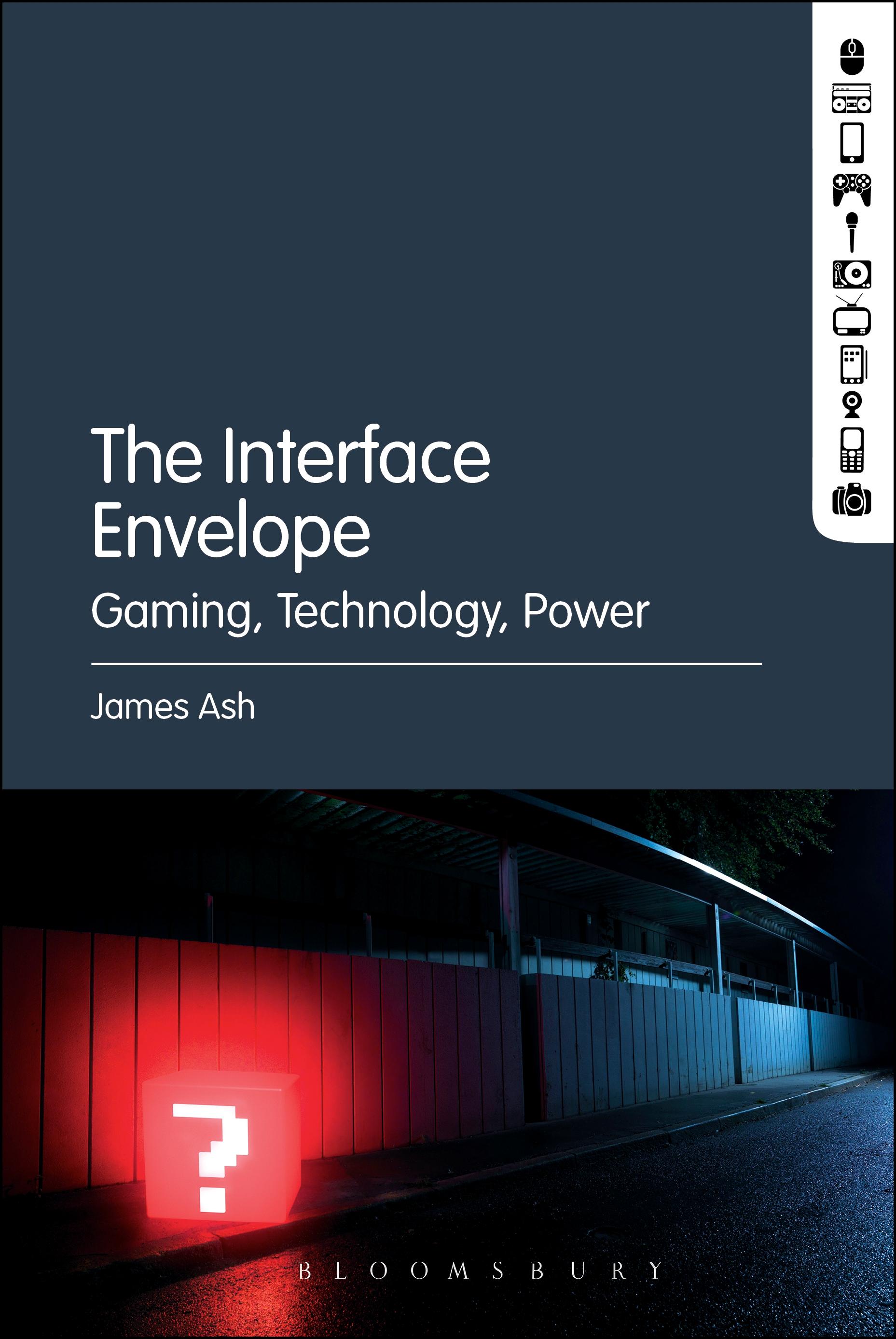
In The Interface Envelope, James Ash develops a series of concepts to understand how digital interfaces work to shape the spatial and temporal perception of players. Drawing upon examples from videogame design and work from post-phenomenology, speculative realism, new materialism and media theory, Ash argues that interfaces create envelopes, or localised foldings of space time, around which bodily and perceptual capacities are organised for the explicit production of economic profit. Modifying and developing Bernard Stiegler's account of psychopower and Warren Neidich's account of neuropower, Ash argues the aim of interface designers and publishers is the production of envelope power. Envelope power refers to the ways that interfaces in games are designed to increase users perceptual and habitual capacities to sense difference. Examining a range of examples from specific videogames, Ash identities a series of logics that are key to producing envelope power and shows how these logics have intensified over the last thirty years. In turn, Ash suggests that the logics of interface envelopes in videogames are spreading to other types of interface. In doing so life becomes enveloped as the environments people inhabit becoming increasingly loaded with digital interfaces. Rather than simply negative, Ash develops a series of responses to the potential problematics of interface envelopes and envelope power and emphasizes their pharmacological nature.
Zahle einfach mit Karte, Klarna, Apple Pay oder Google Pay. Nicht zufrieden? Du hast immer ein 14-tägiges Widerrufsrecht. Lies mehr in unseren AGB. Hast du Fragen, schreib uns eine E-Mail an hello@memmo.org.
Memmo macht das Lernen einfacher – wo auch immer du bist. Bei uns findest du deine Kursbücher und smarte Lerntools an einem Ort: Zusammenfassungen, Quizzes, Podcasts und Lernkarten. Und Ted, dein Lernbuddy, beantwortet alles, was du wissen möchtest. Über 50.000 Studierende lernen bereits hier – gemacht, damit du schneller lernst und weniger Stress hast.