
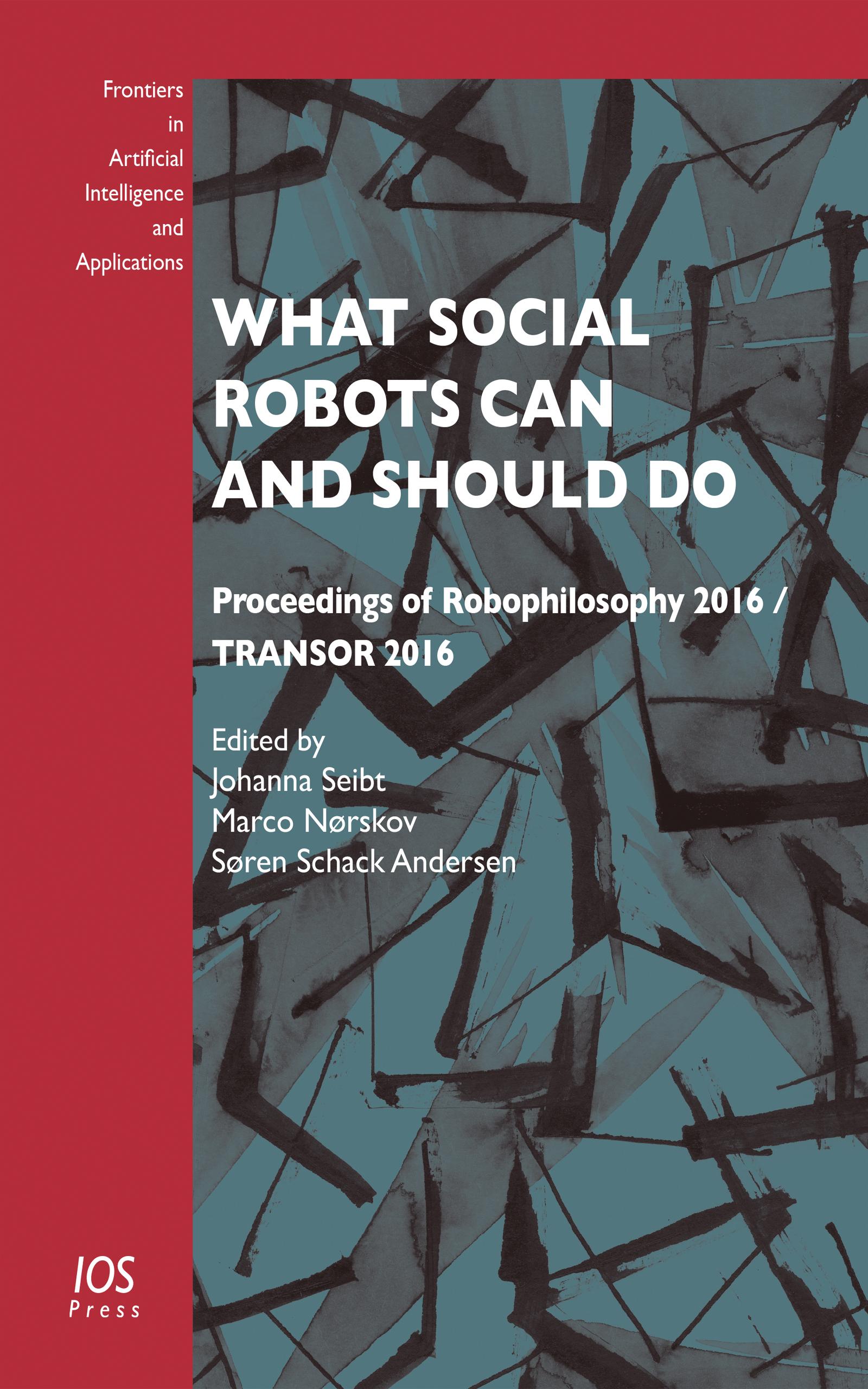
Social robotics drives a technological revolution of possibly unprecedented disruptive potential, both at the socio-economic and the socio-cultural level. The rapid development of the robotics market calls for a concerted effort across a wide spectrum of academic disciplines to understand the transformative potential of human-robot interaction. This effort cannot succeed without the special expertise in the study of socio-cultural interactions, norms, and values that humanities research provides.
This book contains the proceedings of the conference “What Social Robots Can and Should Do,” Robophilosophy 2016 / TRANSOR 2016, held in Aarhus, Denmark, in October 2016. The conference is the second event in the biennial Robophilosophy conference series, this time combined with an event of the Research Network for Transdisciplinary Studies in Social Robotics (TRANSOR). Featuring 13 plenaries and 74 session and workshop talks, the event turned out to be the world’s largest conference in Humanities research in and on social robotics.
The book is divided into 3 sections: Part I and Part III contain the abstracts of plenary lectures and contributions to 6 workshops: Artificial Empathy; Co-Designing Children Robot Interaction; Human-Robot Joint Action; Phronesis for Machine Ethics?; Robots in the Wild; and Responsible Robotics. Part II contains short papers for presentations in 7 thematically organized sessions: methodological issues; ethical tasks and implications; emotions in human robot interactions; education, art and innovation; artificial meaning and rationality; social norms and robot sociality; and perceptions of social robots.
The book will be of interest to researchers in philosophy, anthropology, sociology, psychology, linguistics, cognitive science, robotics, computer science, and art. Since all contributions are prepared for an interdisciplinary readership, they are highly accessible and will be of interest to policy makers and educators who wish to gauge the challenges and potentials of putting robots in society.
Zahle einfach mit Karte, Klarna, Apple Pay oder Google Pay. Nicht zufrieden? Du hast immer ein 14-tägiges Widerrufsrecht. Lies mehr in unseren AGB. Hast du Fragen, schreib uns eine E-Mail an hello@memmo.org.
Memmo macht das Lernen einfacher – wo auch immer du bist. Bei uns findest du deine Kursbücher und smarte Lerntools an einem Ort: Zusammenfassungen, Quizzes, Podcasts und Lernkarten. Und Ted, dein Lernbuddy, beantwortet alles, was du wissen möchtest. Über 50.000 Studierende lernen bereits hier – gemacht, damit du schneller lernst und weniger Stress hast.