
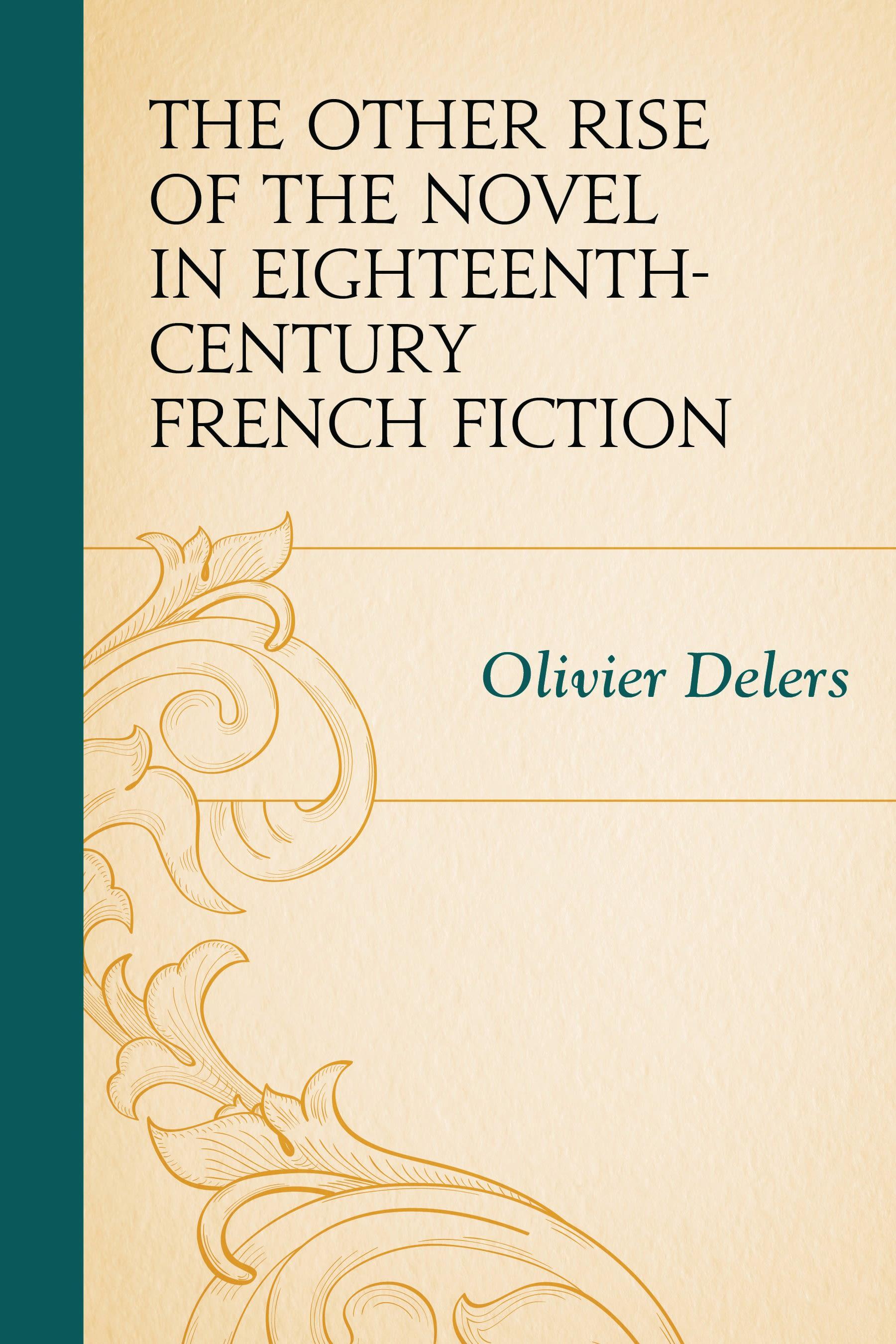
The rise of the novel paradigm—and the underlying homology between the rise of a bourgeois middle class and the coming of age of a new literary genre—continues to influence the way we analyze economic discourse in the eighteenth-century French novel. Characters are often seen as portraying bourgeois values, even when historiographical evidence points to the virtual absence of a self-conscious and coherent bourgeoisie in France in the early modern period. Likewise, the fact that the nobility was a dynamic and diverse group whose members had learned to think in individualistic and meritocratic terms as a result of courtly politics is often ignored. The Other Rise of the Novel calls for a radical revision of how realism, the language of self-interest and commercial exchanges, and idealized noble values interact in the early modern novel. It focuses on two novels from the seventeenth century, Furetière’s Roman bourgeois and Lafayette’s Princesse de Clèves and four novels from the eighteenth century, Prévost’s Manon Lescaut, Graffigny’s Lettres d’une Péruvienne, Rousseau’s La Nouvelle Héloïse and Sade’s Les infortunes de la vertu. It argues that eighteenth-century French fiction does not reflect material culture mimetically and that character action is best analyzed by focusing on the social and discursive exchanges staged by the text, rather than by trying to create parallels between specific behavior and actual historical changes. The novel produces its own reality by transforming characters and their stories into alternative social models, different articulations of how individuals should define their economic relations to others. The representation of interpersonal relations often highlights personal conceptions of private interest that cannot be easily reconciled with the traditional narrative of a transition towards economic modernity. Realism, then, is not only about verisimilar storytelling and psychological depth: it is an epistemological questioning about the type of access to reality that a particular genre can give its readers.
Seiten: 220
Kategorie: Litteraturvetenskap & Teori
e-ISBN: 9781611495829
Versandgewicht: 1.2 kg
Versand in: 1-2 Tage
Zahle einfach mit Karte, Klarna, Apple Pay oder Google Pay. Nicht zufrieden? Du hast immer ein 14-tägiges Widerrufsrecht. Lies mehr in unseren AGB. Hast du Fragen, schreib uns eine E-Mail an hello@memmo.org.
Memmo macht das Lernen einfacher – wo auch immer du bist. Bei uns findest du deine Kursbücher und smarte Lerntools an einem Ort: Zusammenfassungen, Quizzes, Podcasts und Lernkarten. Und Ted, dein Lernbuddy, beantwortet alles, was du wissen möchtest. Über 50.000 Studierende lernen bereits hier – gemacht, damit du schneller lernst und weniger Stress hast.