
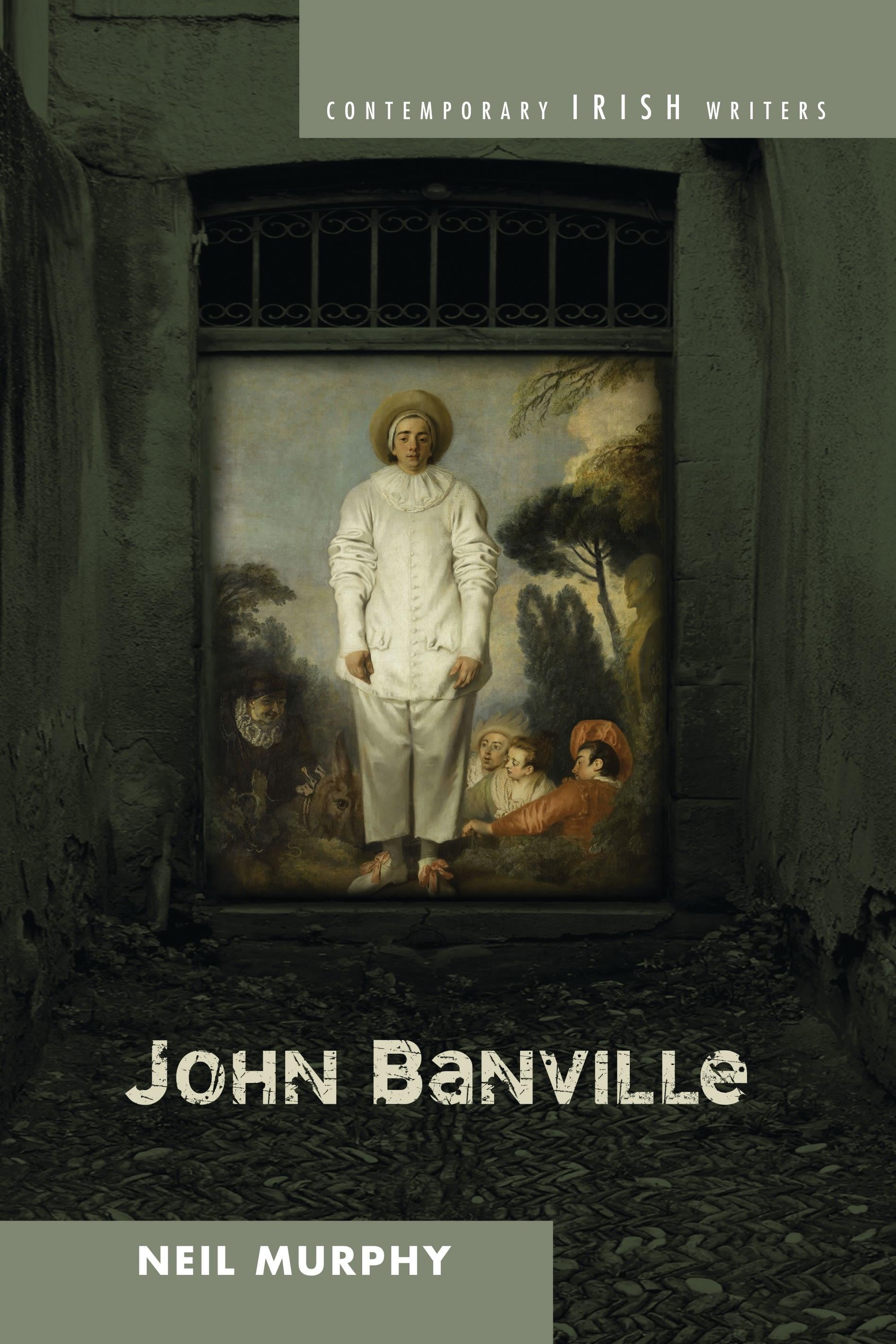
John Banville offers a close analysis of most of Banville’s major novels, as well as the ‘Quirke’ crime novels he has written under the pseudonym, Benjamin Black and his dramatic adaptations of Heinrich von Kleist’s plays. From the beginning, Banville’s work has been marked both by the presence of a complex, embedded discourse about the significance of art and by a concurrent self-conscious obsession with its own status as art. His novels perpetually reveal an overt fascination with the visual arts, in particular, and with the aesthetic principle of literature as art. This study argues that, as a whole, Banville’s work presents an elaborate and richly-textured coded account of his relationship with art and with the self-referential fictional world that his novels have conjured. It is from this critical context that John Banville’s central argument is derived. This book asserts that Banville’s fiction can be viewed both as an extended interrogation into the meaning and status of art as well as itself being a representative of the type of art that is admired in the pages of the novels. As such, it also represents an extremely sophisticated enactment of the novel form that goes beyond the “self-reflexivity” of late twentieth-century fiction to chart new developments in the literary arts. The book’s critical process involves several specific reference points. Firstly, Banville’s own theoretical statements about art in interviews, essays, reviews and journalistic writing over the past 40 years are synthesized into a coherent interpretation of the author’s artistic vision which is thereafter used as a conceptual touchstone when considering his major works of fiction. This is done in conjunction with investigating specific theoretical perspectives about the relationship between literature and art by critics such as Denis Donoghue and Susan Sontag, and by philosophers of art, Graham Gordon, Etienne Gilson, Peter Lamarque, and Susanne Langer.
Zahle einfach mit Karte, Klarna, Apple Pay oder Google Pay. Nicht zufrieden? Du hast immer ein 14-tägiges Widerrufsrecht. Lies mehr in unseren AGB. Hast du Fragen, schreib uns eine E-Mail an hello@memmo.org.
Memmo macht das Lernen einfacher – wo auch immer du bist. Bei uns findest du deine Kursbücher und smarte Lerntools an einem Ort: Zusammenfassungen, Quizzes, Podcasts und Lernkarten. Und Ted, dein Lernbuddy, beantwortet alles, was du wissen möchtest. Über 50.000 Studierende lernen bereits hier – gemacht, damit du schneller lernst und weniger Stress hast.