
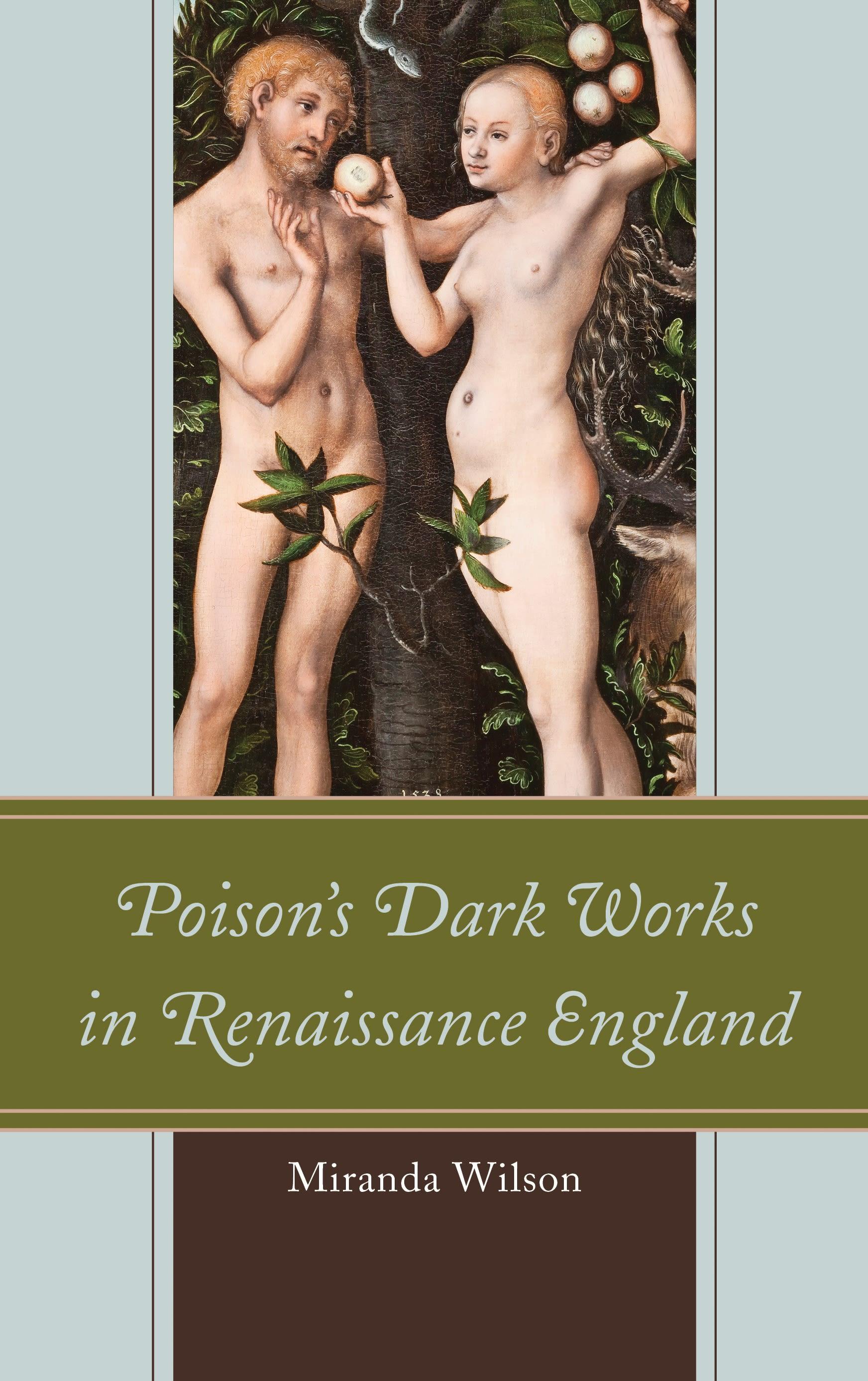
Poison's Dark Works in Renaissance England considers the ways sixteenth- and seventeenth-century fears of poisoning prompt new models for understanding the world even as the fictive qualities of poisoning frustrate attempts at certainty. Whether English writers invoke literal poisons, as they do in so many revenge dramas, homicide cases, and medical documents, or whether poisoning appears more metaphorically, as it does in a host of theological, legal, philosophical, popular, and literary works, this particular, “invisible” weapon easily comes to embody the darkest elements of a more general English appetite for imagining the hidden correlations between the seen and the unseen.
This book is an inherently interdisciplinary project. This book works from the premise that accounts of poisons and their operations in Renaissance texts are neither incidental nor purely sensational; rather, they do moral, political, and religious work which can best be assessed when we consider poisoning as part of the texture of Renaissance culture. Placing little known or less-studied texts (medical reports, legal accounts, or anonymous pamphlets) alongside those most familiar to scholars and the larger public (such as poetry by Edmund Spenser and plays by William Shakespeare and Thomas Middleton) allows us to appreciate the almost gravitational pull exerted by the notion of poison in the Renaissance. Considering a variety of texts, written for disparate audiences, and with diverse purposes, makes apparent the ways this crime functions as both a local problem to be solved and as an apt metaphor for the complications of epistemology.
This book is an inherently interdisciplinary project. This book works from the premise that accounts of poisons and their operations in Renaissance texts are neither incidental nor purely sensational; rather, they do moral, political, and religious work which can best be assessed when we consider poisoning as part of the texture of Renaissance culture. Placing little known or less-studied texts (medical reports, legal accounts, or anonymous pamphlets) alongside those most familiar to scholars and the larger public (such as poetry by Edmund Spenser and plays by William Shakespeare and Thomas Middleton) allows us to appreciate the almost gravitational pull exerted by the notion of poison in the Renaissance. Considering a variety of texts, written for disparate audiences, and with diverse purposes, makes apparent the ways this crime functions as both a local problem to be solved and as an apt metaphor for the complications of epistemology.
Seiten: 280
Kategorie: Litteraturvetenskap & Teori
e-ISBN: 9781611485394
Versandgewicht: 1.2 kg
Versand in: 1-2 Tage
Zahle einfach mit Karte, Klarna, Apple Pay oder Google Pay. Nicht zufrieden? Du hast immer ein 14-tägiges Widerrufsrecht. Lies mehr in unseren AGB. Hast du Fragen, schreib uns eine E-Mail an hello@memmo.org.
Memmo macht das Lernen einfacher – wo auch immer du bist. Bei uns findest du deine Kursbücher und smarte Lerntools an einem Ort: Zusammenfassungen, Quizzes, Podcasts und Lernkarten. Und Ted, dein Lernbuddy, beantwortet alles, was du wissen möchtest. Über 50.000 Studierende lernen bereits hier – gemacht, damit du schneller lernst und weniger Stress hast.