
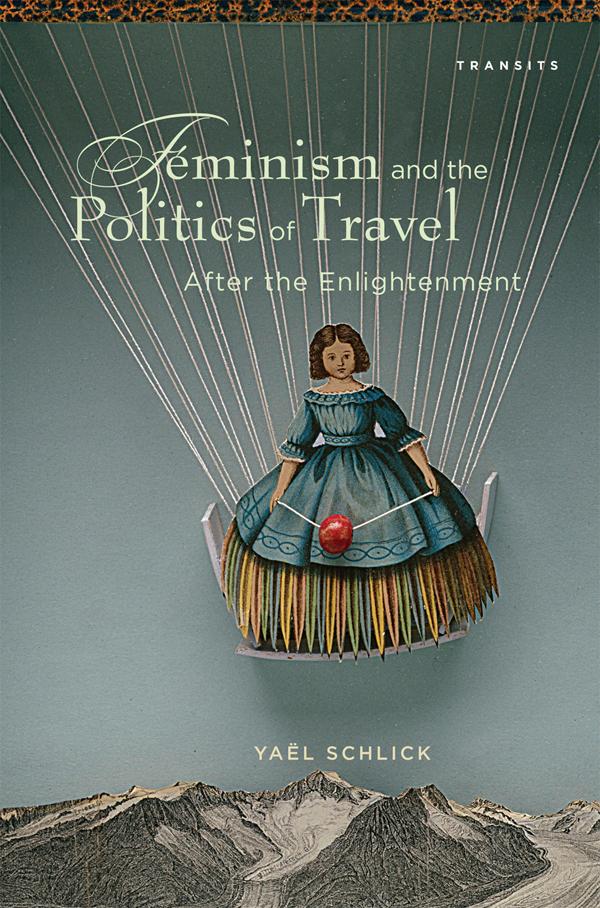
Taking the Enlightenment and the feminist tradition to which it gave rise as its historical and philosophical coordinates, Feminism and the Politics of Travel After the Enlightenment explores travel as a “technology of gender.” It also investigates the way travel’s utopian dimension and feminism’s utopian ideals have intermittently fed off each other in productive ways. With broad historical and theoretical understanding, Yaël Schlick analyzes the intersections of travel and feminism in writings published during the late eighteenth and nineteenth centuries, a period of intense feminist vindication during which women’s very presence in the public sphere, their access to education, and their political participation were contentious issues. Schlick examines the gendering of travel and its political implications in Rousseau’s Emile, and in works by Mary Wollstonecraft, Stéphanie-Félicité de Genlis, Frances Burney, Germaine de Staël, Suzanne Voilquin, Flora Tristan, Gustave Flaubert, and George Sand, arguing that travel is instrumental in furthering diverse feminist agendas. The epilogue alerts us to the continuation of the utopian strain of the voyage and its link to feminism in modern and contemporary travelogues by writers like Mary Kingsley, Robyn Davidson and Sara Wheeler.
Zahle einfach mit Karte, Klarna, Apple Pay oder Google Pay. Nicht zufrieden? Du hast immer ein 14-tägiges Widerrufsrecht. Lies mehr in unseren AGB. Hast du Fragen, schreib uns eine E-Mail an hello@memmo.org.
Memmo macht das Lernen einfacher – wo auch immer du bist. Bei uns findest du deine Kursbücher und smarte Lerntools an einem Ort: Zusammenfassungen, Quizzes, Podcasts und Lernkarten. Und Ted, dein Lernbuddy, beantwortet alles, was du wissen möchtest. Über 50.000 Studierende lernen bereits hier – gemacht, damit du schneller lernst und weniger Stress hast.