
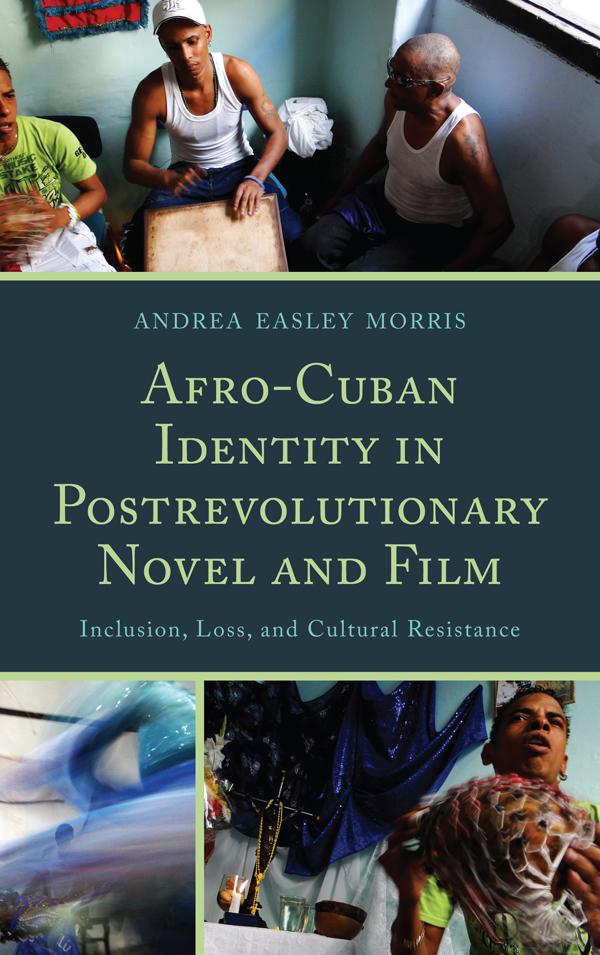
Afro-Cuban Identity in Post-Revolutionary Novel and Film examines the changing discourse on race as portrayed in Cuban novels and films produced after 1959. Andrea Easley Morris analyzes the artists’ participation in and questioning of the revolutionary government’s revision of national identity to include the unique experience and contributions of Cuban men and women of African descent. While the Cuban revolution brought sweeping changes that vastly improved the material condition of many Afro-Cubans, at the time overrepresented among Cuba’s poor and marginalized, the government’s official position was that racial inequities had been resolved as early as 1962. Although a more open dialogue on race was cut short, the work of several novelists and film directors from the late 1960s and 70s expresses the need to explore what was gained and lost by Afro-Cubans in the early years of the revolution, among them Manuel Granados, Miguel Barnet, Nivaria Tejera, Sara Gómez, César Leante, Tomás Gutiérrez Alea, Sergio Giral, and Manuel Cofiño.
Their works participate in the process of redefining Cuban national identity that took place after the revolution and, more specifically, they explore the place of Afro-Cuban identity within a broader notion of revolutionary “Cubanness.” This occurs through an emphasis on Afro-Cuban cultural practices that have constituted forms of resistance to colonial and neo-colonial oppression. This book examines the identity conflicts portrayed in these works and takes into account the artists’ negotiation of their own status within the revolutionary context by looking at the narrative strategies used to address racial issues within the constraints placed on cultural production in Cuba after 1962.
Their works participate in the process of redefining Cuban national identity that took place after the revolution and, more specifically, they explore the place of Afro-Cuban identity within a broader notion of revolutionary “Cubanness.” This occurs through an emphasis on Afro-Cuban cultural practices that have constituted forms of resistance to colonial and neo-colonial oppression. This book examines the identity conflicts portrayed in these works and takes into account the artists’ negotiation of their own status within the revolutionary context by looking at the narrative strategies used to address racial issues within the constraints placed on cultural production in Cuba after 1962.
Seiten: 204
Kategorie: Kultur-, Genus- & Postkoloniala studier
e-ISBN: 9781611484236
Versandgewicht: 1.2 kg
Versand in: 1-2 Tage
Zahle einfach mit Karte, Klarna, Apple Pay oder Google Pay. Nicht zufrieden? Du hast immer ein 14-tägiges Widerrufsrecht. Lies mehr in unseren AGB. Hast du Fragen, schreib uns eine E-Mail an hello@memmo.org.
Memmo macht das Lernen einfacher – wo auch immer du bist. Bei uns findest du deine Kursbücher und smarte Lerntools an einem Ort: Zusammenfassungen, Quizzes, Podcasts und Lernkarten. Und Ted, dein Lernbuddy, beantwortet alles, was du wissen möchtest. Über 50.000 Studierende lernen bereits hier – gemacht, damit du schneller lernst und weniger Stress hast.