
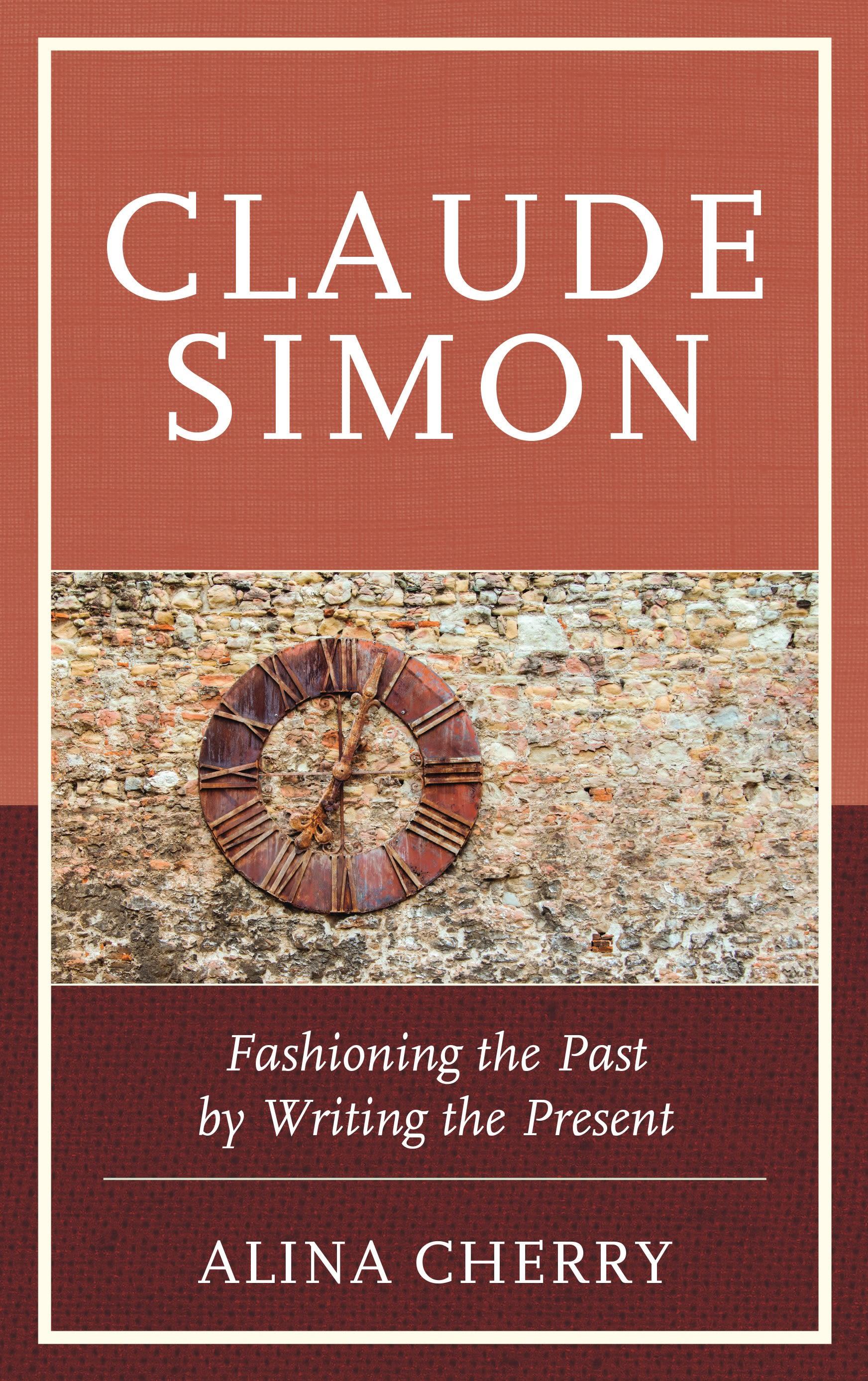
Claude Simon: Fashioning the Past by Writing the Present considers the aesthetic, cultural, and philosophical facets of a temporal paradox in the works of French novelist Claude Simon (1913-2005), and its broader implications for the study of narrative, and for cultural and post-modern theory. This paradox emerges from the problematic representation of the past through an aesthetic rooted in an exclusive valorization of the present. In his 1985 Nobel speech, as well as on other numerous occasions, Simon expressed a fascination with simultaneity through the provocative claim that he never wrote about the past, but attempted to capture only what was happening during the writing process, that is, in the “present of writing,” as he put it. Simon’s seemingly unambiguous claim raises significant issues and contradictions that become extensively apparent when the statement is considered in the light of his fictional works, since these must be construed, for the most part, as explorations of the past. In this study Alina Cherry propose to look at the tensions that arise from this paradox, and examine the present of writing holistically—that is both as a stylistic device and within the thematic context of Simon’s works—in order to assess its capacity for becoming an instrument of ontological and epistemological inquiry that can also intervene powerfully in the decisive philosophical and socio-political debates that have animated the cultural landscape of post-World War II France. Simon’s vivid portrayals of suffering and devastation open new ways of understanding the impact of some of the most traumatic historical events of the twentieth century: the two World Wars and the Spanish Civil War. This impact is necessarily connected with a need to tell these events, and to tell them in highly innovative ways, namely by creating a distinctive style that revolutionizes the outworn narrative traditions of a world whose very foundations have been shattered by the chaos of war and effectively undermines various institutions and dominant socio-cultural structures, revealing implicitly and explicitly, a strong ethical vein.
Zahle einfach mit Karte, Klarna, Apple Pay oder Google Pay. Nicht zufrieden? Du hast immer ein 14-tägiges Widerrufsrecht. Lies mehr in unseren AGB. Hast du Fragen, schreib uns eine E-Mail an hello@memmo.org.
Memmo macht das Lernen einfacher – wo auch immer du bist. Bei uns findest du deine Kursbücher und smarte Lerntools an einem Ort: Zusammenfassungen, Quizzes, Podcasts und Lernkarten. Und Ted, dein Lernbuddy, beantwortet alles, was du wissen möchtest. Über 50.000 Studierende lernen bereits hier – gemacht, damit du schneller lernst und weniger Stress hast.