
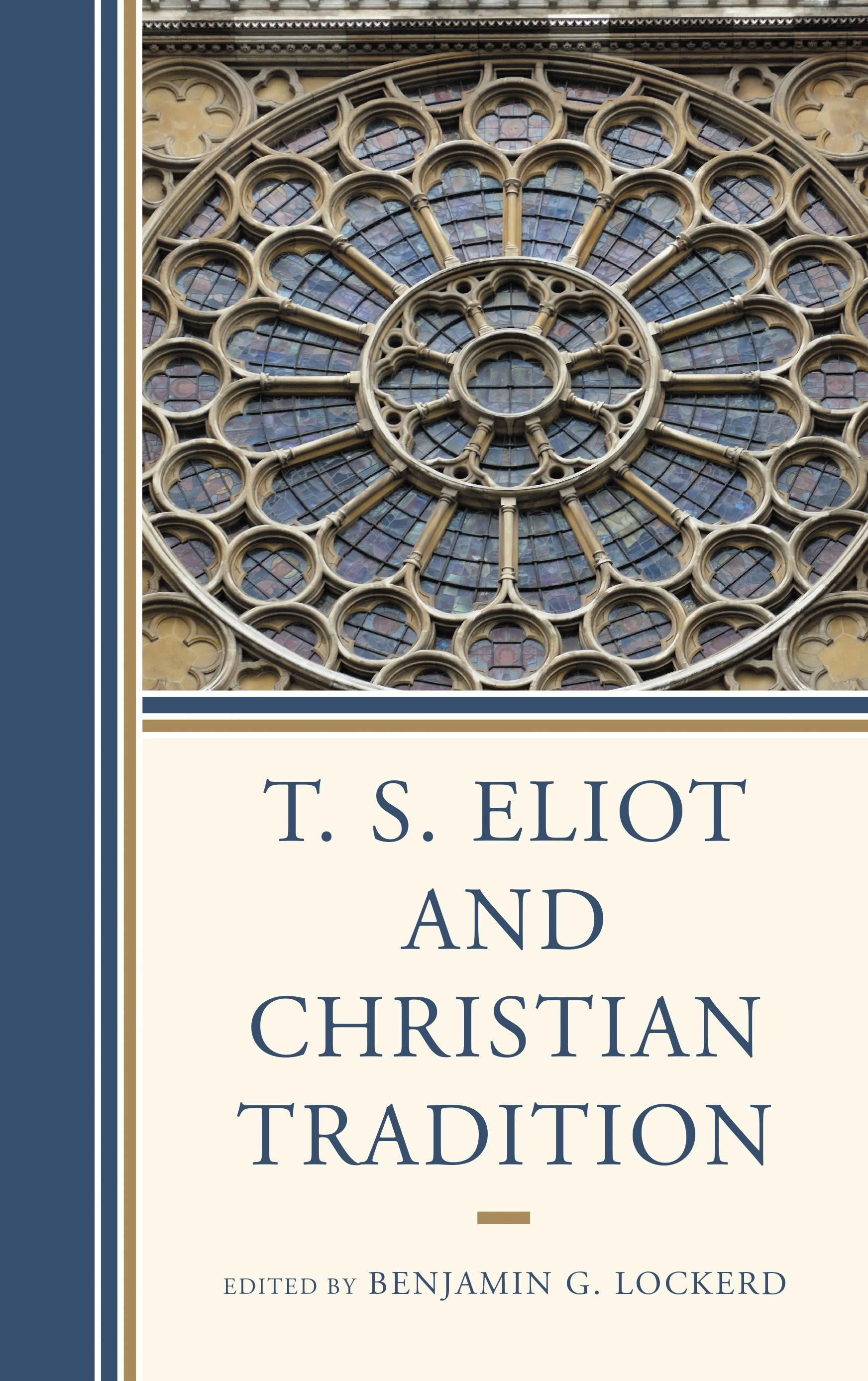
T. S. Eliot and Christian Tradition
Autor: James Seaton, William Marx, Anderson D. Araujo, Hazel Atkins, William Blissett, William C. Charron, Thomas Dilworth, David Huisman, Charles Huttar, Dominic Manganiello, Christopher McVey, John D. Morgenstern Jr., Lee Oser, Paul Robichaud, Shunichi Takayanagi, James Matthew Wilson, Benjamin G. Lockerd
Verlag: Bloomsbury Publishing
Ausgabe: 1
Erscheinungsdatum: 2014
ISBN: 9781611476118
T. S. Eliot was raised in the Unitarian faith of his family in St. Louis but drifted away from their beliefs while studying philosophy, mysticism, and anthropology at Harvard. During a year in Paris, he became involved with a group of Catholic writers and subsequently went through a gradual conversion to Catholic Christianity.
Many studies of Eliot's writings have mentioned his religious beliefs, but most have failed to give the topic due weight, and many have misunderstood or misrepresented his faith. More recently, scholars have begun exploring this dimension of Eliot's thought more carefully and fully. In this book readers will find Eliot's Anglo-Catholicism accurately defined and thoughtfully considered. Essays illuminate the all-important influence of the French Catholic writers he came to know in Paris. Prominent among them were those who wrote for or were otherwise associated with the Nouvelle Revue Française, including André Gide, Paul Claudel, and Charles-Louis Philippe. Also active in Paris at that time was the notorious Charles Maurras, whose influence on Eliot has been exaggerated by those who wished to discredit Eliot's traditionalist views. A more measured assessment of Maurras's influence has been needed and is found in several essays here. A wiser French Catholic writer, Jacques Maritain, has been largely ignored by Eliot scholars, but his influence is now given due consideration. The keynote of Eliot's cultural and political writings is his belief that religion and culture are integrally related. Several contributors examine his ideas on this subject, placing them in the context of Maritain's ideas, as well as those of the Catholic historian Christopher Dawson.
Contributors take account of Eliot's intellectual relationship with such figures as John Henry Newman, Charles Williams, and the expert on church architecture, W. R. Lethaby. Eliot's engagement with other contemporaries who held a variety of Christian beliefs—including George Santayana, Paul Elmer More, C. S. Lewis, and David Jones—is also explored.
This collection presents the subject of Eliot's religious beliefs in rich detail, from a number of different perspectives, giving readers the opportunity to see the topic in its complexity and fullness.
Many studies of Eliot's writings have mentioned his religious beliefs, but most have failed to give the topic due weight, and many have misunderstood or misrepresented his faith. More recently, scholars have begun exploring this dimension of Eliot's thought more carefully and fully. In this book readers will find Eliot's Anglo-Catholicism accurately defined and thoughtfully considered. Essays illuminate the all-important influence of the French Catholic writers he came to know in Paris. Prominent among them were those who wrote for or were otherwise associated with the Nouvelle Revue Française, including André Gide, Paul Claudel, and Charles-Louis Philippe. Also active in Paris at that time was the notorious Charles Maurras, whose influence on Eliot has been exaggerated by those who wished to discredit Eliot's traditionalist views. A more measured assessment of Maurras's influence has been needed and is found in several essays here. A wiser French Catholic writer, Jacques Maritain, has been largely ignored by Eliot scholars, but his influence is now given due consideration. The keynote of Eliot's cultural and political writings is his belief that religion and culture are integrally related. Several contributors examine his ideas on this subject, placing them in the context of Maritain's ideas, as well as those of the Catholic historian Christopher Dawson.
Contributors take account of Eliot's intellectual relationship with such figures as John Henry Newman, Charles Williams, and the expert on church architecture, W. R. Lethaby. Eliot's engagement with other contemporaries who held a variety of Christian beliefs—including George Santayana, Paul Elmer More, C. S. Lewis, and David Jones—is also explored.
This collection presents the subject of Eliot's religious beliefs in rich detail, from a number of different perspectives, giving readers the opportunity to see the topic in its complexity and fullness.
Zahle einfach mit Karte, Klarna, Apple Pay oder Google Pay. Nicht zufrieden? Du hast immer ein 14-tägiges Widerrufsrecht. Lies mehr in unseren AGB. Hast du Fragen, schreib uns eine E-Mail an hello@memmo.org.
Memmo macht das Lernen einfacher – wo auch immer du bist. Bei uns findest du deine Kursbücher und smarte Lerntools an einem Ort: Zusammenfassungen, Quizzes, Podcasts und Lernkarten. Und Ted, dein Lernbuddy, beantwortet alles, was du wissen möchtest. Über 50.000 Studierende lernen bereits hier – gemacht, damit du schneller lernst und weniger Stress hast.