
Partisans on both the left and right wings of America’s theory class and political spectrum believe we’re in trouble, big trouble. The economy is limping along. Inequality has reached unprecedented levels. And we seem to be on the verge of being overwhelmed by immigrants who don’t look and act anything like our grandparents did much less the men and women who founded our country. Angry, scared, disengaged and distrustful when we aren’t openly antagonistic toward each other, Americans can’t figure out who we are as a people and openly fret about our best days being behind us. To make matters worse, our political system, the one place we’re supposed to be able to work on behalf of a broader public good with people who aren’t like us, appears even more broken than these other parts of our culture.
There’s some unexpected good news, however, and it’s coming from one of the last places in America you’d expect different people to be getting along: Boston. Bostonians — well known for their unwelcoming and sometimes violent treatment of newcomers and unwillingness to find common ground with people deemed outsiders — aren’t acting broken or taking their resentments out on each other these days. They’ve turned instead to calmer ways of talking about each other and treating each other in public. Far from being disconnected and afraid, people in Boston are better connected and more respectful of each other, and their city is better organized and more orderly than at any time in its long and storied history. Bostonians have learned to get along with the strangers among them in ways their ancestors never knew or expected the rest of us would be willing to entertain much less master. They have their civic act together.
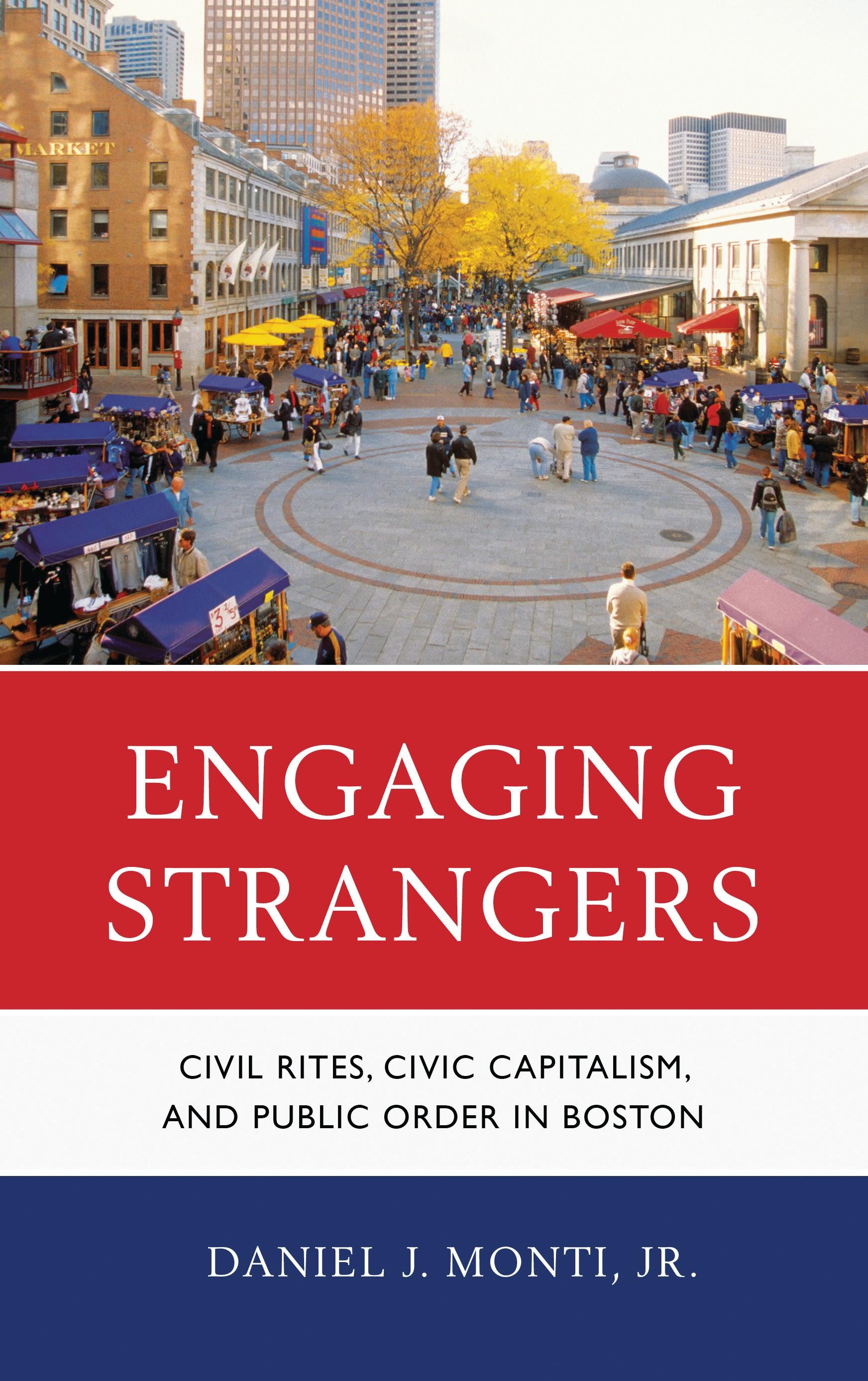
Engaging Strangers explores how the people of Boston have learned to practice a more congenial and respectful set of civic virtues. In this book, the author provides a model for civic conduct for the rest of America to study and follow.
There’s some unexpected good news, however, and it’s coming from one of the last places in America you’d expect different people to be getting along: Boston. Bostonians — well known for their unwelcoming and sometimes violent treatment of newcomers and unwillingness to find common ground with people deemed outsiders — aren’t acting broken or taking their resentments out on each other these days. They’ve turned instead to calmer ways of talking about each other and treating each other in public. Far from being disconnected and afraid, people in Boston are better connected and more respectful of each other, and their city is better organized and more orderly than at any time in its long and storied history. Bostonians have learned to get along with the strangers among them in ways their ancestors never knew or expected the rest of us would be willing to entertain much less master. They have their civic act together.
Engaging Strangers explores how the people of Boston have learned to practice a more congenial and respectful set of civic virtues. In this book, the author provides a model for civic conduct for the rest of America to study and follow.
Zahle einfach mit Karte, Klarna, Apple Pay oder Google Pay. Nicht zufrieden? Du hast immer ein 14-tägiges Widerrufsrecht. Lies mehr in unseren AGB. Hast du Fragen, schreib uns eine E-Mail an hello@memmo.org.
Memmo macht das Lernen einfacher – wo auch immer du bist. Bei uns findest du deine Kursbücher und smarte Lerntools an einem Ort: Zusammenfassungen, Quizzes, Podcasts und Lernkarten. Und Ted, dein Lernbuddy, beantwortet alles, was du wissen möchtest. Über 50.000 Studierende lernen bereits hier – gemacht, damit du schneller lernst und weniger Stress hast.