
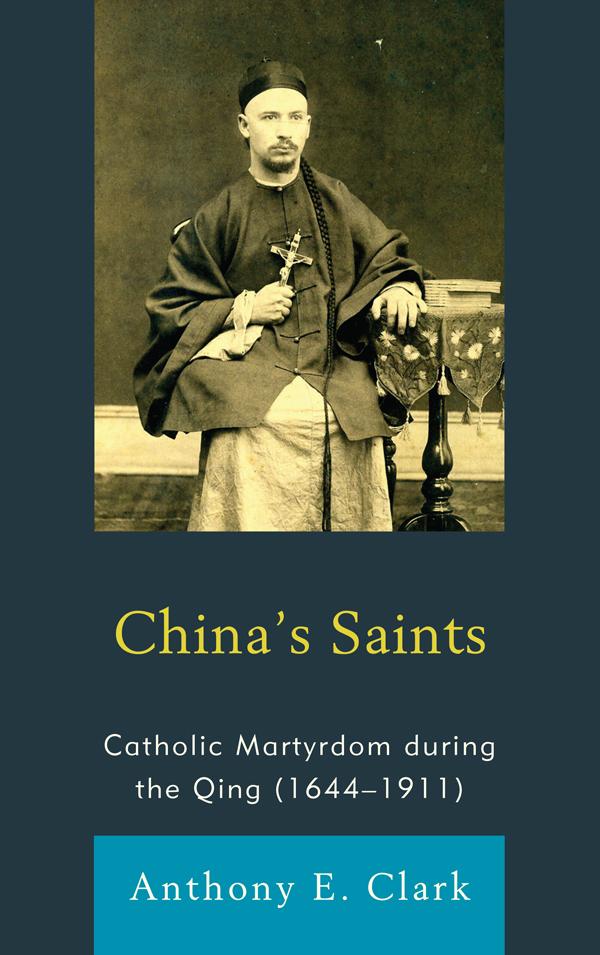
While previous works on the history of Christianity in China have largely centered on the scientific and philosophical areas of Catholic missions in the Middle Kingdom, China's Saints recounts the history of Christian martyrdom, precipitated as it was by cultural antagonisms and misunderstanding. Anthony Clark shows that Christianity in China began and grew under similar circumstances to those during the Roman Empire, with the notable exception that Catholic missionaries were not successful at producing a "Chinese Constantine."
One of the principal results of Catholic martyrdom in China was the increased indigenization of Christianity. During the reconstruction of mission churches, hospitals, and orphanages after the hostilities of the Boxer Uprising (1898–1900), the Roman Catholic tradition of venerating martyrs was attached to the reinvigoration of Christian communities. Not only did Catholic architecture accommodate to Chinese sensibilities, but causes for sainthood were also begun at the Vatican to add Chinese names to the Church's list of saints. The implications of Clark's work extend beyond the subject of Christianity in China to the broader fields of cultural, social, economic, political, and religious history. This pioneering study follows the trails of Western missionaries and Chinese converts as they negotiate the religious and cultural chasms that existed between the West and China, and it demonstrates that these differences resulted in two very different outcomes. Whereas converts appear to have bridged the cultural divide, often to the point of self-sacrifice, political and cultural tensions on the macro level sometimes ended with forceful conflicts. This book contributes to a deeper understanding of cultural and religious interaction, and provides an account of an heretofore unstudied chapter in the history of Christianity on the global landscape.
One of the principal results of Catholic martyrdom in China was the increased indigenization of Christianity. During the reconstruction of mission churches, hospitals, and orphanages after the hostilities of the Boxer Uprising (1898–1900), the Roman Catholic tradition of venerating martyrs was attached to the reinvigoration of Christian communities. Not only did Catholic architecture accommodate to Chinese sensibilities, but causes for sainthood were also begun at the Vatican to add Chinese names to the Church's list of saints. The implications of Clark's work extend beyond the subject of Christianity in China to the broader fields of cultural, social, economic, political, and religious history. This pioneering study follows the trails of Western missionaries and Chinese converts as they negotiate the religious and cultural chasms that existed between the West and China, and it demonstrates that these differences resulted in two very different outcomes. Whereas converts appear to have bridged the cultural divide, often to the point of self-sacrifice, political and cultural tensions on the macro level sometimes ended with forceful conflicts. This book contributes to a deeper understanding of cultural and religious interaction, and provides an account of an heretofore unstudied chapter in the history of Christianity on the global landscape.
Zahle einfach mit Karte, Klarna, Apple Pay oder Google Pay. Nicht zufrieden? Du hast immer ein 14-tägiges Widerrufsrecht. Lies mehr in unseren AGB. Hast du Fragen, schreib uns eine E-Mail an hello@memmo.org.
Memmo macht das Lernen einfacher – wo auch immer du bist. Bei uns findest du deine Kursbücher und smarte Lerntools an einem Ort: Zusammenfassungen, Quizzes, Podcasts und Lernkarten. Und Ted, dein Lernbuddy, beantwortet alles, was du wissen möchtest. Über 50.000 Studierende lernen bereits hier – gemacht, damit du schneller lernst und weniger Stress hast.