
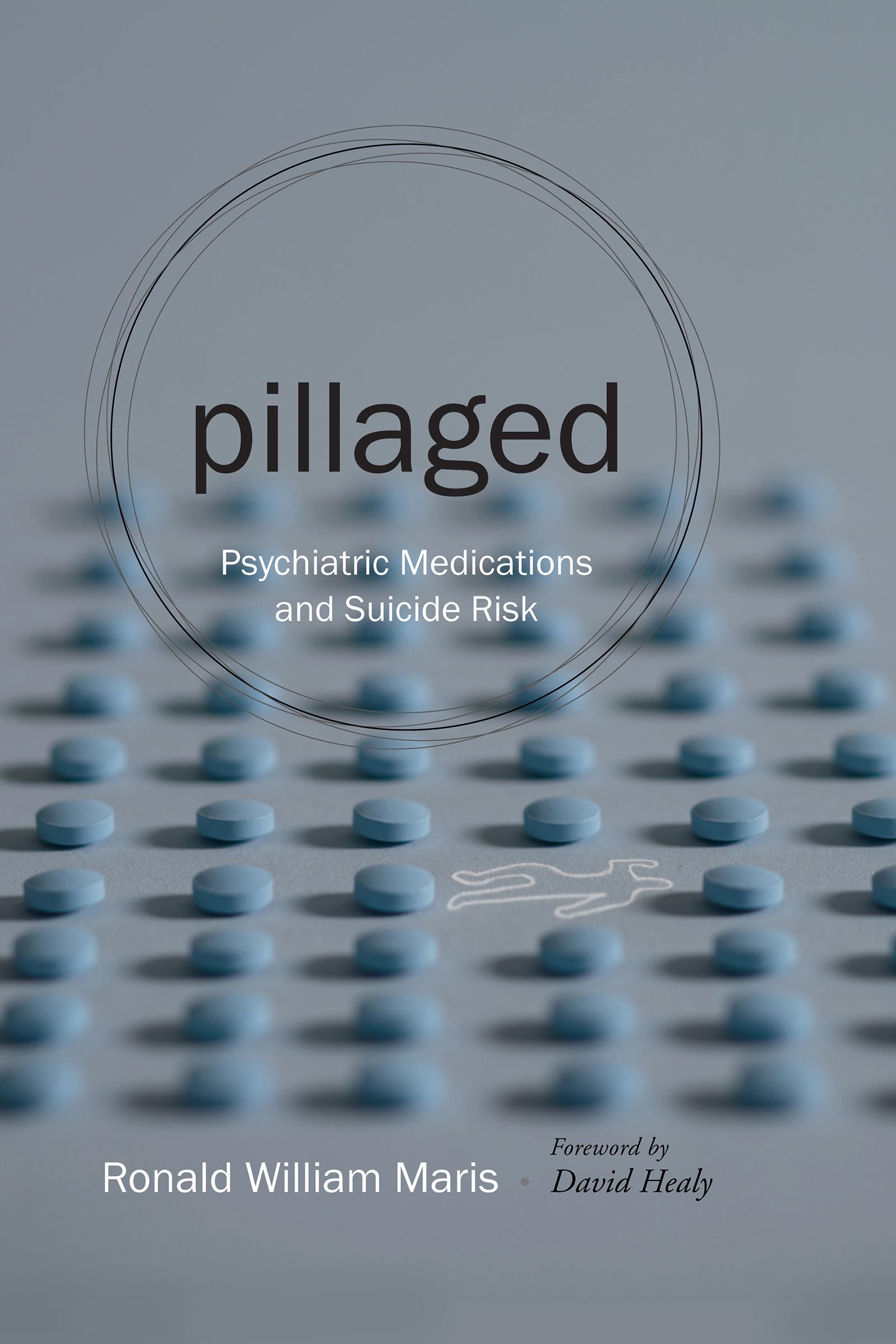
An examination of the efficacy and safety of psychiatric medications in light of how little is understood about how they work
It is estimated that forty-five to fifty percent of all Americans will suffer a mental disorder at some time during their lives. Increasingly, the treatment for these disorders is management with one or more psychiatric drugs, often prescribed by general practitioners. In Pillaged Ronald William Maris evaluates the psychiatric medications commonly used to treat several major types of psychiatric disorders—-including depression and mood disorders, bipolar disorders, anxiety disorders, and psychotic disorders—asking "do they work as advertised?" and, more importantly, "are they safe?"
Answers to these questions are more ambiguous than we might think, Maris explains, because drug manufacturers tend to minimize the adverse effects of their products. Furthermore, the underlying neurobiological theories of how psychiatric drugs work are complex, poorly understood, and often conflicting. Still Americans spend tens of billions of dollars a year on antidepressants and antipsychotics alone.
While Maris questions the rampant prescribing of psychiatric medications especially in young people, Pillaged does not suggest that anyone cavalierly discontinue potentially beneficial psychiatric medications without the advice of a qualified mental health professional. The book acknowledges that psychiatric medications are often necessary in treating some psychiatric conditions, but it reminds readers of medication's potential for degrading one's quality of life, contributing to self-destructive behaviors, and even leading to death in a vulnerable minority of patients. Maris advocates an open and honest discussion of data on psychiatric drugs, their effects, and their dangers, and he reminds readers of available alternative, nondrug treatments for psychiatric disorders. By reviewing the history and effects of medications for mental disorders, Maris hopes to educate health care consumers and prescribers to make careful, informed decisions about the treatment of psychiatric disorders.
Zahle einfach mit Karte, Klarna, Apple Pay oder Google Pay. Nicht zufrieden? Du hast immer ein 14-tägiges Widerrufsrecht. Lies mehr in unseren AGB. Hast du Fragen, schreib uns eine E-Mail an hello@memmo.org.
Memmo macht das Lernen einfacher – wo auch immer du bist. Bei uns findest du deine Kursbücher und smarte Lerntools an einem Ort: Zusammenfassungen, Quizzes, Podcasts und Lernkarten. Und Ted, dein Lernbuddy, beantwortet alles, was du wissen möchtest. Über 50.000 Studierende lernen bereits hier – gemacht, damit du schneller lernst und weniger Stress hast.