
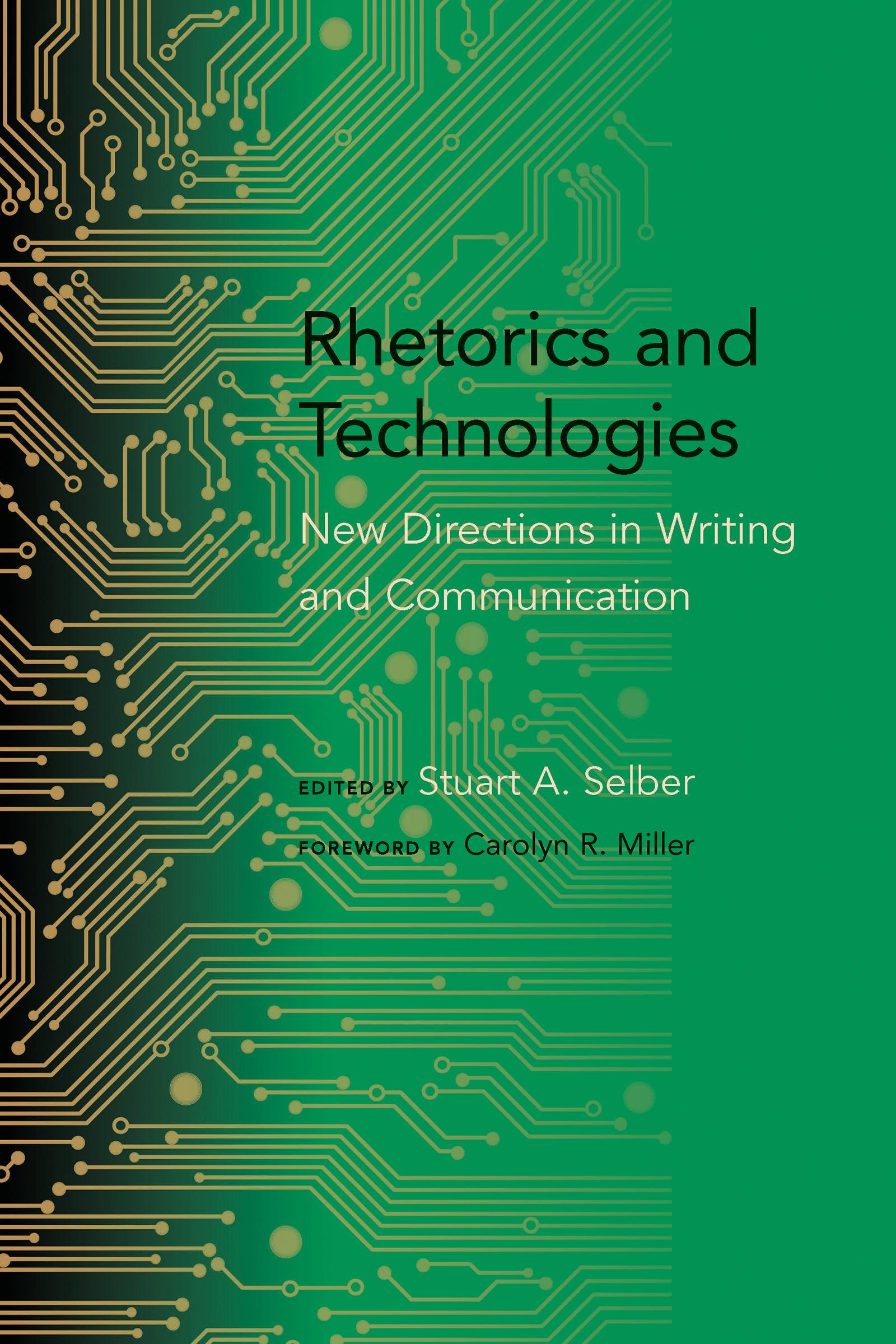
Discursive essays that illuminate the interplay between technological innovation and communication
Recognizing an increasingly technological context for rhetorical activity, the thirteen contributors to this volume illuminate the challenges and opportunities inherent in successfully navigating intersections between rhetoric and technology in existing and emergent literacy practices. Edited by Stuart A. Selber, Rhetorics and Technologies positions technology as an inevitable aspect of the rhetorical situation and as a potent force in writing and communication activities.
Taking a broad approach, this volume is not limited to discussion of particular technological systems (such as new media or wikis) or rhetorical contexts (such as invention or ethics). The essays instead offer a comprehensive treatment of the rhetoric-technology nexus. The book's first section considers the ways in which the social and material realities of using technology to support writing and communication activities have altered the borders and boundaries of rhetorical studies. The second section explores the discourse practices employed by users, designers, and scholars of technology when communicating in technological contexts. In the final section, projects and endeavors that illuminate the ways in which discourse activities can evolve to reflect emerging sociopolitical realties, technologies, and educational issues are examined. The resulting text bridges past and future by offering new understandings of traditional canons of rhetoric—invention, arrangement, style, memory, and delivery—as they present themselves in technological contexts without discarding the rich history of the field before the advent of these technological innovations. Rhetorics and Technologies includes a foreword by Carolyn R. Miller and essays by John M. Carroll, Marilyn M. Cooper, Paul Heilker, Johndan Johnson-Eilola, Debra Journet, M. Jimmie Killingsworth, Jason King, James E. Porter, Stuart A. Selber, Geoffrey Sirc, Susan Wells, and Anne Frances Wysocki.
Zahle einfach mit Karte, Klarna, Apple Pay oder Google Pay. Nicht zufrieden? Du hast immer ein 14-tägiges Widerrufsrecht. Lies mehr in unseren AGB. Hast du Fragen, schreib uns eine E-Mail an hello@memmo.org.
Memmo macht das Lernen einfacher – wo auch immer du bist. Bei uns findest du deine Kursbücher und smarte Lerntools an einem Ort: Zusammenfassungen, Quizzes, Podcasts und Lernkarten. Und Ted, dein Lernbuddy, beantwortet alles, was du wissen möchtest. Über 50.000 Studierende lernen bereits hier – gemacht, damit du schneller lernst und weniger Stress hast.