
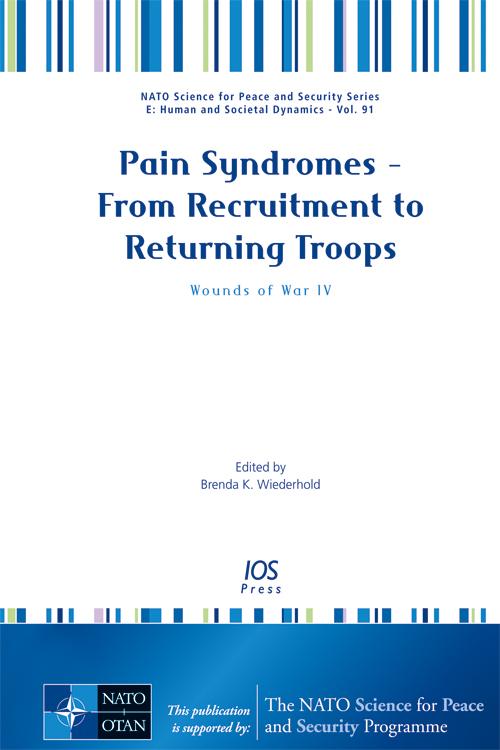
It has been shown that those who have served in both combat missions and peacekeeping operations are at increased risk for pain syndromes. Research suggests that this may result from their “wounds of war.” Some wounds may be “invisible,” such as depression, stress, and chronic pain, while others, such as physical disabilities, are more obvious.
In October 2011, twenty-seven scientists and representatives from NATO and partner countries met in Südkärnten, Austria for a three-day NATO Advanced Research Workshop entitled “Wounds of War: Pain Syndromes – From Recruitment to Returning Troops.”
The aim of this publication, which presents papers from that workshop, is to critically assess the existing knowledge and to identify directions for future actions.
The book addresses four key questions:
1. Vulnerability to Pain syndromes: Are certain types of people at a higher risk for pain syndromes (background, ethnicity, childhood trauma, etc.)?
2. Diagnosis and Assessment Issues of Pain Syndromes: Which methods are used to diagnose and assess pain?
3. Treatment of Pain Syndromes: What are the latest treatment and therapy opportunities for soldiers who experience pain syndromes?
4. Clinical Updates on Pain Syndromes: What can we learn from recent clinical updates on pain syndromes?
Zahle einfach mit Karte, Klarna, Apple Pay oder Google Pay. Nicht zufrieden? Du hast immer ein 14-tägiges Widerrufsrecht. Lies mehr in unseren AGB. Hast du Fragen, schreib uns eine E-Mail an hello@memmo.org.
Memmo macht das Lernen einfacher – wo auch immer du bist. Bei uns findest du deine Kursbücher und smarte Lerntools an einem Ort: Zusammenfassungen, Quizzes, Podcasts und Lernkarten. Und Ted, dein Lernbuddy, beantwortet alles, was du wissen möchtest. Über 50.000 Studierende lernen bereits hier – gemacht, damit du schneller lernst und weniger Stress hast.