
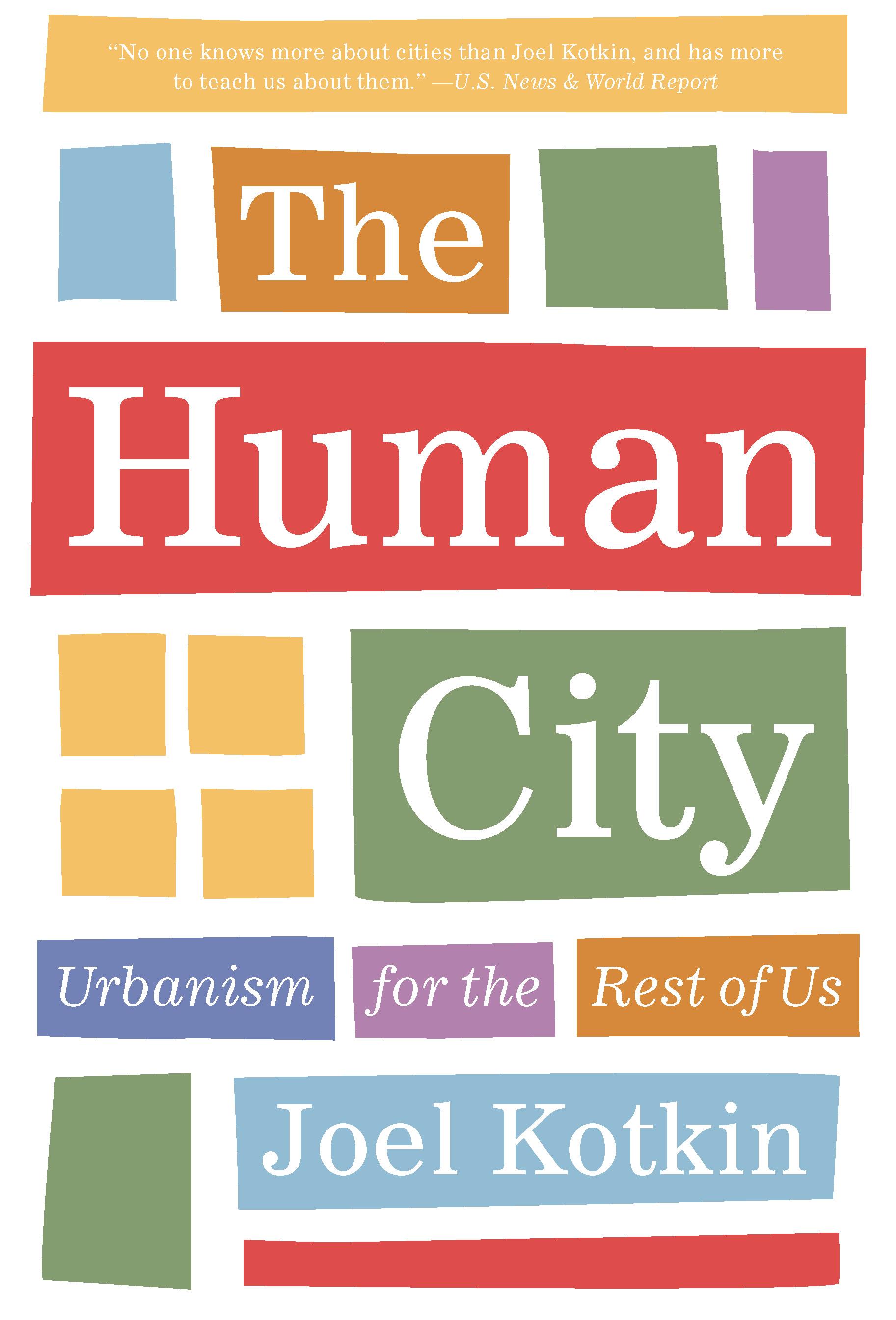
"The Human City presents the most cogent, evidence-based and clear-headed exposition of the pro-suburban argument. . . . enriching our understanding of what cities are about and what they can and must become.” —Wall Street Journal
Around the globe, most new urban development has adhered to similar tenets: tall structures, small units, and high density. In The Human City, Joel Kotkin—called “America’s uber-geographer” by David Brooks of the New York Times—questions these nearly ubiquitous practices, suggesting that they do not consider the needs and desires of the vast majority of people. Built environments, Kotkin argues, must reflect the preferences of most people—especially those of families—even if that means lower-density development.
The Human City ponders the purpose of the city and investigates the factors that drive most urban development today. Armed with his own astute research, a deep-seated knowledge of urban history, and a sound grasp of economic, political, and social trends, Kotkin pokes holes in what he calls the “retro-urbanist” ideology and offers a refreshing case for dispersion centered on human values.
This book is not anti-urban, but it does advocate a greater range of options for people to live the way they want at all stages of their lives.
Around the globe, most new urban development has adhered to similar tenets: tall structures, small units, and high density. In The Human City, Joel Kotkin—called “America’s uber-geographer” by David Brooks of the New York Times—questions these nearly ubiquitous practices, suggesting that they do not consider the needs and desires of the vast majority of people. Built environments, Kotkin argues, must reflect the preferences of most people—especially those of families—even if that means lower-density development.
The Human City ponders the purpose of the city and investigates the factors that drive most urban development today. Armed with his own astute research, a deep-seated knowledge of urban history, and a sound grasp of economic, political, and social trends, Kotkin pokes holes in what he calls the “retro-urbanist” ideology and offers a refreshing case for dispersion centered on human values.
This book is not anti-urban, but it does advocate a greater range of options for people to live the way they want at all stages of their lives.
Zahle einfach mit Karte, Klarna, Apple Pay oder Google Pay. Nicht zufrieden? Du hast immer ein 14-tägiges Widerrufsrecht. Lies mehr in unseren AGB. Hast du Fragen, schreib uns eine E-Mail an hello@memmo.org.
Memmo macht das Lernen einfacher – wo auch immer du bist. Bei uns findest du deine Kursbücher und smarte Lerntools an einem Ort: Zusammenfassungen, Quizzes, Podcasts und Lernkarten. Und Ted, dein Lernbuddy, beantwortet alles, was du wissen möchtest. Über 50.000 Studierende lernen bereits hier – gemacht, damit du schneller lernst und weniger Stress hast.
Das könnte dir auch gefallen
Buch kaufen0