
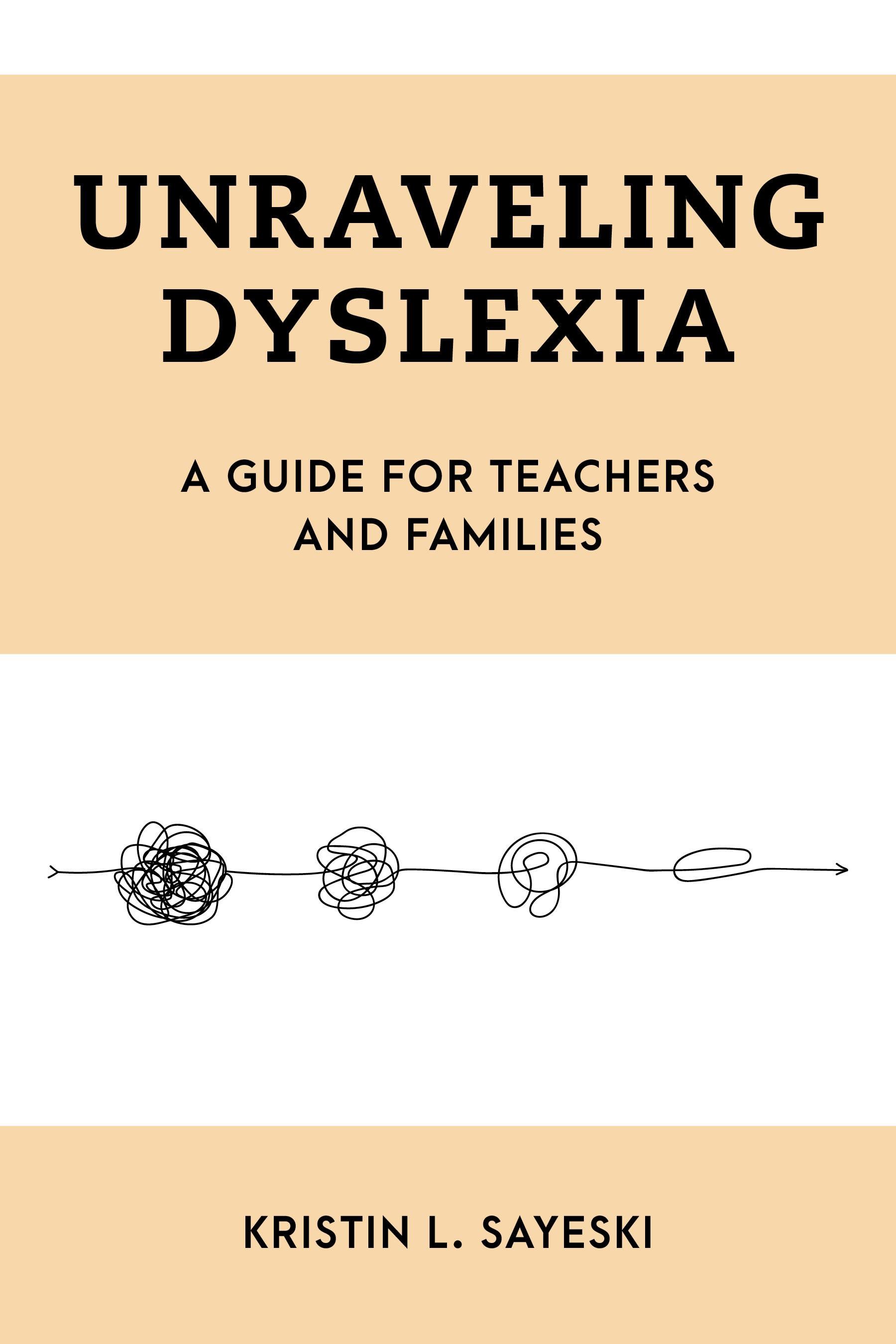
Despite being the most common learning disability, dyslexia is widely misunderstood. Shrouded by myths and misperceptions, a lack of direct, practical information on dyslexia leaves many teachers and families frustrated. Well-intentioned teachers tell parents that all kids learn differently and at a different pace, but as the months turn into years, the gap between skilled readers and those who struggle widens. The antidote to wait-and-see and more-of-the-same is information. In this book, Sayeski translates research from neuroscience, cognitive psychology, linguistics, and education into accessible information to help teachers and parents unravel the complexities of skilled reading.
Unraveling dyslexia requires an understanding of what it means to read—both the accurate recognition of words and the capacity to bring meaning to those words—and identifying where and how difficulty can occur with these processes. To do this, Sayeski situates the challenges some students experience in learning to read within the context of the development of English orthography (i.e., written language) and the history of reading instruction in the schools. Sayeski, then, presents what reading science has revealed about individual differences in reading. Within the book's final chapters, readers will find practical information on how to provide the type of structured literacy instruction required to put students with dyslexia on the path to reading.
This book is designed for teachers, administrators, and parents seeking information that can be immediately applied to improve the outcomes of students with dyslexia or who struggle learning to read. It is never too soon to address signs of difficulty with reading. The aim of this book is to provide readers with the knowledge they need to act now to provide students with the gift of literacy.
Unraveling dyslexia requires an understanding of what it means to read—both the accurate recognition of words and the capacity to bring meaning to those words—and identifying where and how difficulty can occur with these processes. To do this, Sayeski situates the challenges some students experience in learning to read within the context of the development of English orthography (i.e., written language) and the history of reading instruction in the schools. Sayeski, then, presents what reading science has revealed about individual differences in reading. Within the book's final chapters, readers will find practical information on how to provide the type of structured literacy instruction required to put students with dyslexia on the path to reading.
This book is designed for teachers, administrators, and parents seeking information that can be immediately applied to improve the outcomes of students with dyslexia or who struggle learning to read. It is never too soon to address signs of difficulty with reading. The aim of this book is to provide readers with the knowledge they need to act now to provide students with the gift of literacy.
Seiten: 226
Kategorie: Utbildning & lärande
e-ISBN: 9781538170250
Versandgewicht: 1.2 kg
Versand in: 1-2 Tage
Zahle einfach mit Karte, Klarna, Apple Pay oder Google Pay. Nicht zufrieden? Du hast immer ein 14-tägiges Widerrufsrecht. Lies mehr in unseren AGB. Hast du Fragen, schreib uns eine E-Mail an hello@memmo.org.
Memmo macht das Lernen einfacher – wo auch immer du bist. Bei uns findest du deine Kursbücher und smarte Lerntools an einem Ort: Zusammenfassungen, Quizzes, Podcasts und Lernkarten. Und Ted, dein Lernbuddy, beantwortet alles, was du wissen möchtest. Über 50.000 Studierende lernen bereits hier – gemacht, damit du schneller lernst und weniger Stress hast.