
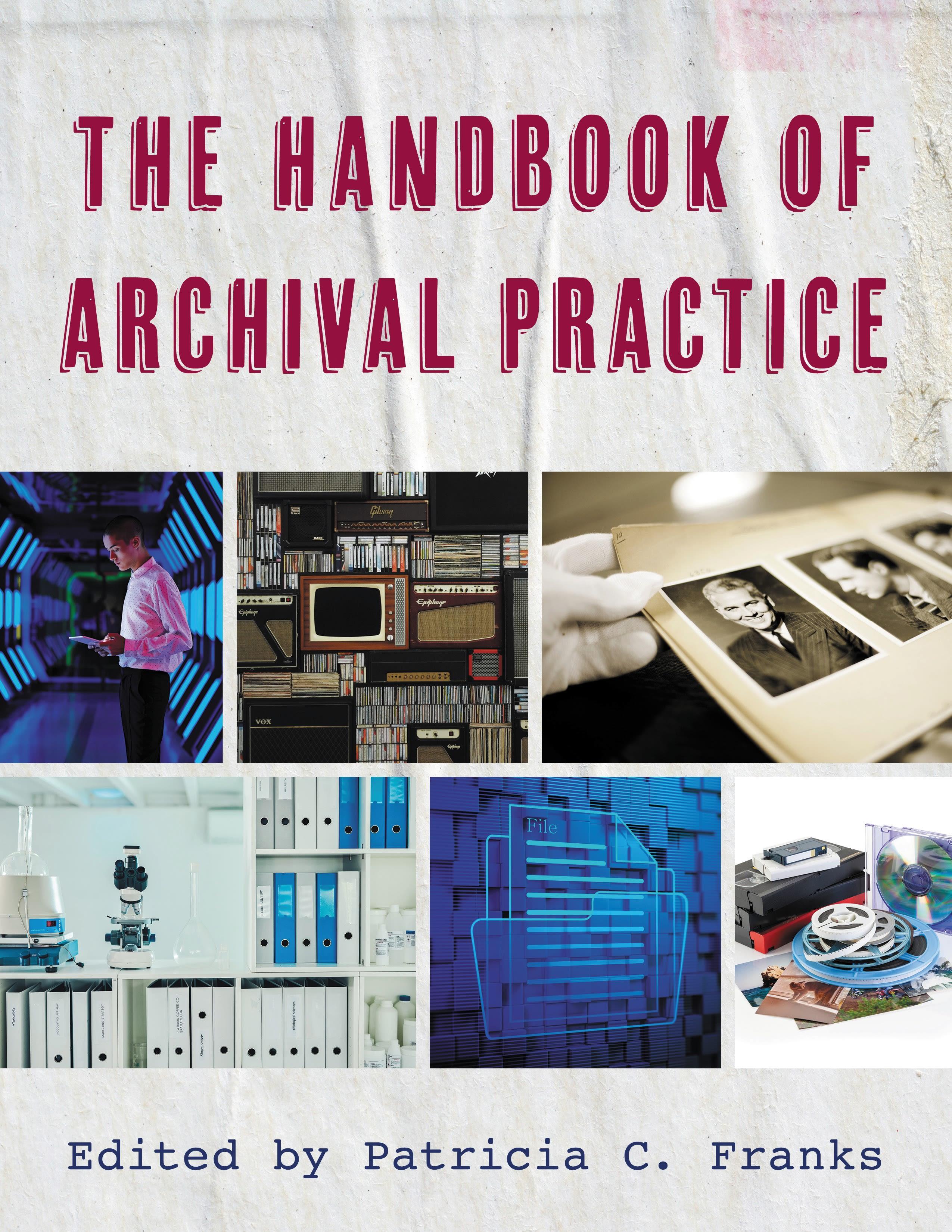
To meet the demands of archivists increasingly tasked with the responsibility for hybrid collections, this indispensable guide covers contemporary archival practice for managing analog and digital materials in a single publication.
Terms describing activities central to the archival process—such as appraisal, acquisition, arrangement, description, storage, access, and preservation—are included. In addition, responsibilities traditionally considered outside the purview of the archivist but currently impacting professional activities—such as cybersecurity, digital forensics, digital curation, distributed systems (e.g., cloud computing), and distributed trust systems (e.g., blockchain)—are also covered.
The Handbook is divided into ten sections: current environment; records creation and recordkeeping systems; appraisal and acquisition; arrangement and description; storage and preservation; digital preservation; user services; community outreach and advocacy; risk management, security and privacy; and management and leadership. Some terms touch on more than one category, which made sorting a challenge. Readers are encouraged to consult both the table of contents and the index, as a topic may be addressed in more than one entry.
A total of 111 entries by 105 authors are defined and described in The Handbook. The majority (79) of the contributors were from the US, 12 from Canada, 7 from the United Kingdom, 3 from Australia, 1 each from Germany, Jamaica, New Zealand, and the Russian Federation. Because archival practice differs among practitioners in different countries, this work represents an amalgamation.
The Handbook was written primarily for archival practitioners who wish to access desired information at the point of need. However, can also serve as a valuable resource for students pursuing careers in the archival profession and information professionals engaged in related fields.
Terms describing activities central to the archival process—such as appraisal, acquisition, arrangement, description, storage, access, and preservation—are included. In addition, responsibilities traditionally considered outside the purview of the archivist but currently impacting professional activities—such as cybersecurity, digital forensics, digital curation, distributed systems (e.g., cloud computing), and distributed trust systems (e.g., blockchain)—are also covered.
The Handbook is divided into ten sections: current environment; records creation and recordkeeping systems; appraisal and acquisition; arrangement and description; storage and preservation; digital preservation; user services; community outreach and advocacy; risk management, security and privacy; and management and leadership. Some terms touch on more than one category, which made sorting a challenge. Readers are encouraged to consult both the table of contents and the index, as a topic may be addressed in more than one entry.
A total of 111 entries by 105 authors are defined and described in The Handbook. The majority (79) of the contributors were from the US, 12 from Canada, 7 from the United Kingdom, 3 from Australia, 1 each from Germany, Jamaica, New Zealand, and the Russian Federation. Because archival practice differs among practitioners in different countries, this work represents an amalgamation.
The Handbook was written primarily for archival practitioners who wish to access desired information at the point of need. However, can also serve as a valuable resource for students pursuing careers in the archival profession and information professionals engaged in related fields.
Seiten: 510
Kategorie: Samhällsvetenskap
e-ISBN: 9781538137352
Versandgewicht: 1.2 kg
Versand in: 1-2 Tage
Zahle einfach mit Karte, Klarna, Apple Pay oder Google Pay. Nicht zufrieden? Du hast immer ein 14-tägiges Widerrufsrecht. Lies mehr in unseren AGB. Hast du Fragen, schreib uns eine E-Mail an hello@memmo.org.
Memmo macht das Lernen einfacher – wo auch immer du bist. Bei uns findest du deine Kursbücher und smarte Lerntools an einem Ort: Zusammenfassungen, Quizzes, Podcasts und Lernkarten. Und Ted, dein Lernbuddy, beantwortet alles, was du wissen möchtest. Über 50.000 Studierende lernen bereits hier – gemacht, damit du schneller lernst und weniger Stress hast.