
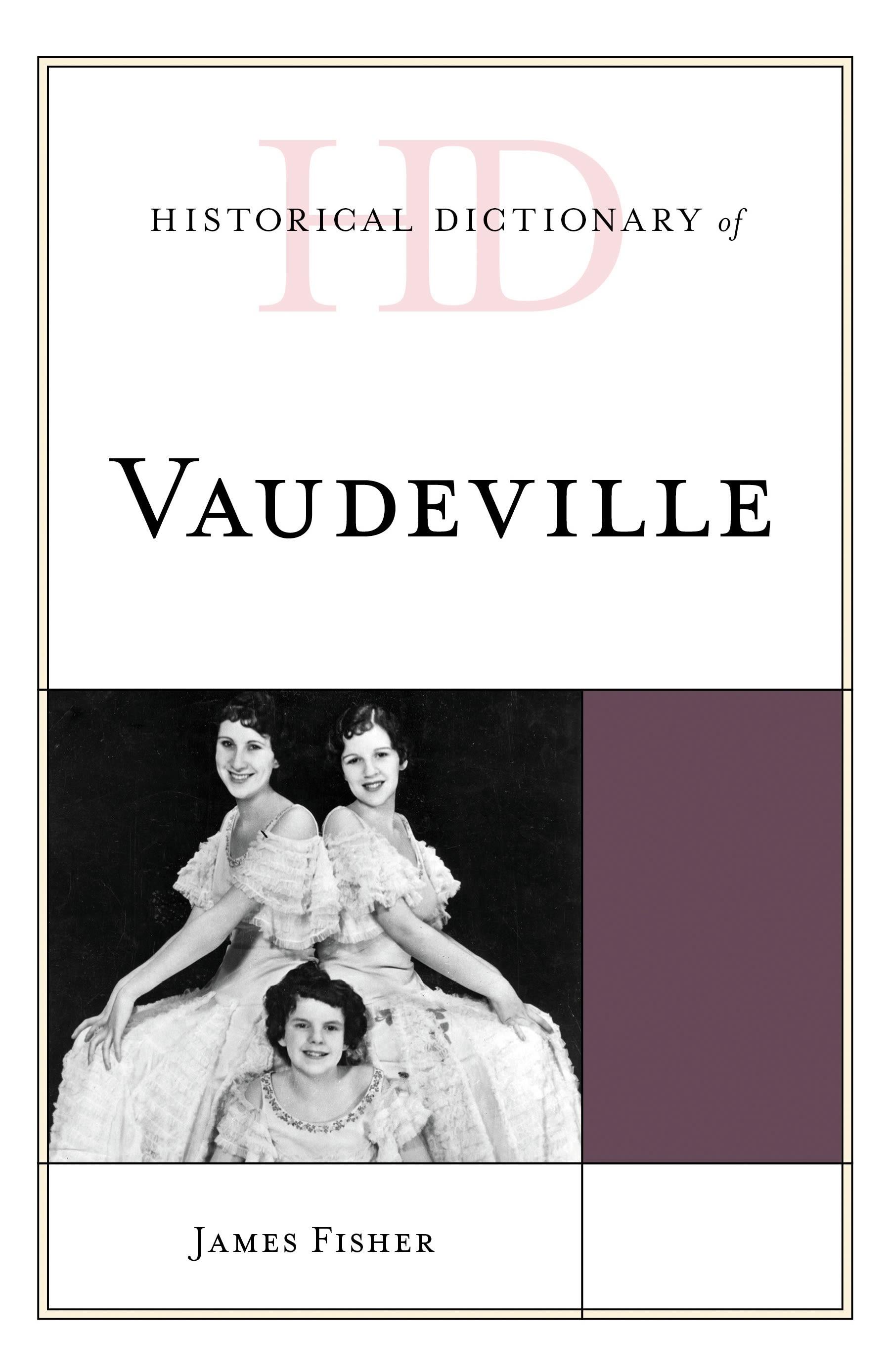
Vaudeville, as it is commonly known today, began as a response to scandalous variety performances appealing mostly to adult, male patrons. When former minstrel performer and balladeer Tony Pastor opened the Fourteenth Street Theatre in New York in 1881, he was guided by a mission to provide family-friendly variety shows in hopes of drawing in that portion of the audience – women and children – otherwise inherently excluded from variety bills prior to 1881. There he perfected a framework for family-oriented amusements of the highest obtainable quality and style.
Historical Dictionary of Vaudeville contains a chronology, an introduction, an extensive bibliography, and the dictionary section has more than 1,000 cross-referenced entries on performing artists, managers and agents, theatre facilities, and the terminology central to the history of vaudeville. This book is an excellent resource for students, researchers, and anyone wanting to know more about vaudeville.
Historical Dictionary of Vaudeville contains a chronology, an introduction, an extensive bibliography, and the dictionary section has more than 1,000 cross-referenced entries on performing artists, managers and agents, theatre facilities, and the terminology central to the history of vaudeville. This book is an excellent resource for students, researchers, and anyone wanting to know more about vaudeville.
Zahle einfach mit Karte, Klarna, Apple Pay oder Google Pay. Nicht zufrieden? Du hast immer ein 14-tägiges Widerrufsrecht. Lies mehr in unseren AGB. Hast du Fragen, schreib uns eine E-Mail an hello@memmo.org.
Memmo macht das Lernen einfacher – wo auch immer du bist. Bei uns findest du deine Kursbücher und smarte Lerntools an einem Ort: Zusammenfassungen, Quizzes, Podcasts und Lernkarten. Und Ted, dein Lernbuddy, beantwortet alles, was du wissen möchtest. Über 50.000 Studierende lernen bereits hier – gemacht, damit du schneller lernst und weniger Stress hast.