
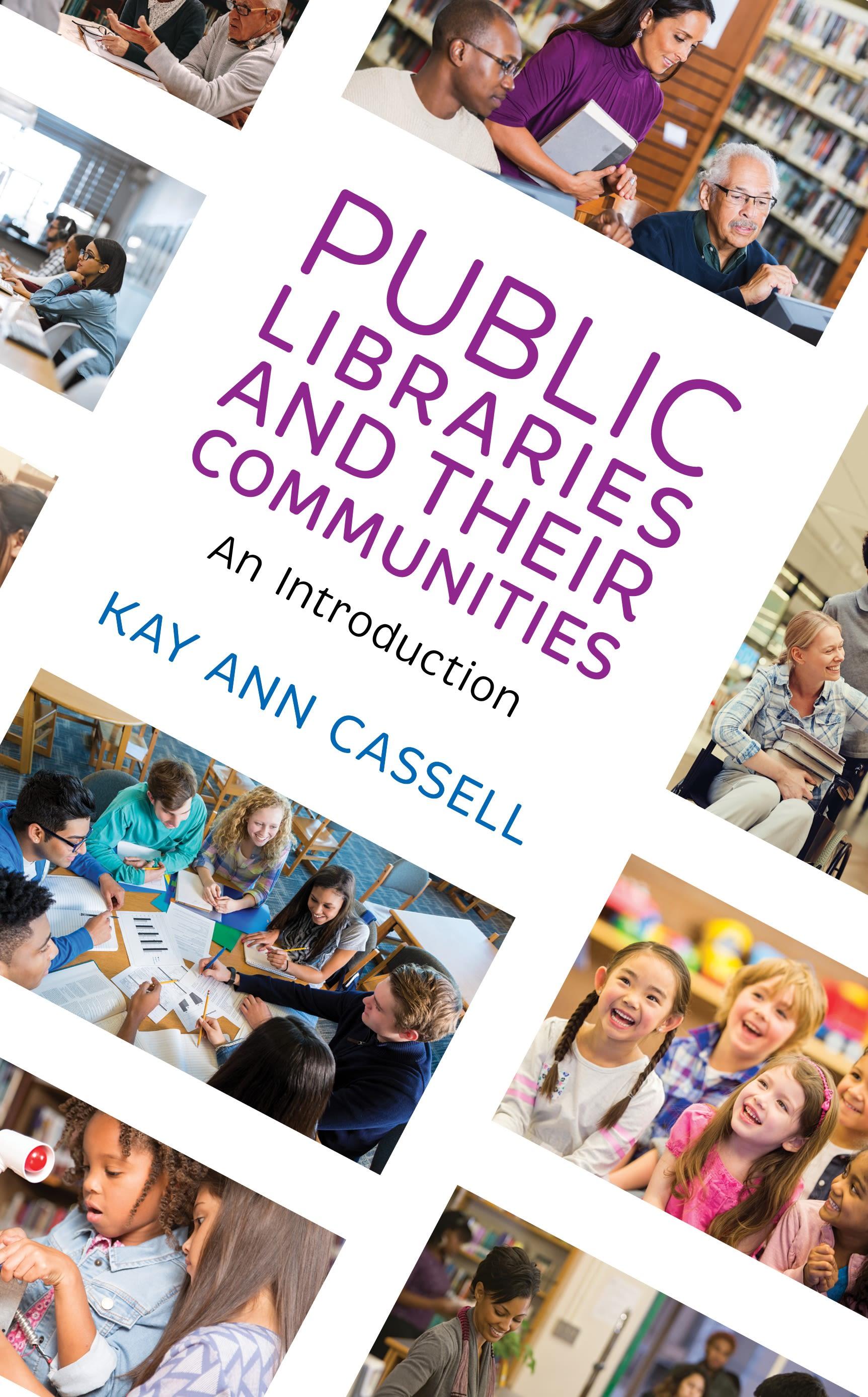
Public Libraries and Their Communities: An Introduction provide an overview of public librarianship today.
It covers library organization, policy development, staffing, fiscal organization including funding sources and budgets, the legal framework, relationships with local and state governments, advocacy, services and service development for different age groups and for different groups of users, development of programming and outreach, collection development, promotion and marketing, and current issues and trends.
In addition to context and concepts, the book uses many examples from both large and small public libraries to bring principles to life. Examples include real library policies, case studies, strategic planning, organization charts and library budgets.
Many think that public libraries are not complicated to run.This book aims to show that public libraries are very complicated and require much skill on the part of the director, staff, and Board of Trustees to meet the needs of their local users.Advocacy and marketing have become important parts of the work of public libraries. Funding is always challenging so public libraries must constantly be making the local government and its citizens aware of the public library – its programs, collections, and services.
This book's focus is on how public libraries reach beyond the walls of their buildings and touch the lives of their citizens.Meeting community interests and needs is essential for 21st century public libraries.
For students the book offers discussion questions at the end of each chapter. These questions also provide discussion starters for public library staff development.
It covers library organization, policy development, staffing, fiscal organization including funding sources and budgets, the legal framework, relationships with local and state governments, advocacy, services and service development for different age groups and for different groups of users, development of programming and outreach, collection development, promotion and marketing, and current issues and trends.
In addition to context and concepts, the book uses many examples from both large and small public libraries to bring principles to life. Examples include real library policies, case studies, strategic planning, organization charts and library budgets.
Many think that public libraries are not complicated to run.This book aims to show that public libraries are very complicated and require much skill on the part of the director, staff, and Board of Trustees to meet the needs of their local users.Advocacy and marketing have become important parts of the work of public libraries. Funding is always challenging so public libraries must constantly be making the local government and its citizens aware of the public library – its programs, collections, and services.
This book's focus is on how public libraries reach beyond the walls of their buildings and touch the lives of their citizens.Meeting community interests and needs is essential for 21st century public libraries.
For students the book offers discussion questions at the end of each chapter. These questions also provide discussion starters for public library staff development.
Zahle einfach mit Karte, Klarna, Apple Pay oder Google Pay. Nicht zufrieden? Du hast immer ein 14-tägiges Widerrufsrecht. Lies mehr in unseren AGB. Hast du Fragen, schreib uns eine E-Mail an hello@memmo.org.
Memmo macht das Lernen einfacher – wo auch immer du bist. Bei uns findest du deine Kursbücher und smarte Lerntools an einem Ort: Zusammenfassungen, Quizzes, Podcasts und Lernkarten. Und Ted, dein Lernbuddy, beantwortet alles, was du wissen möchtest. Über 50.000 Studierende lernen bereits hier – gemacht, damit du schneller lernst und weniger Stress hast.