
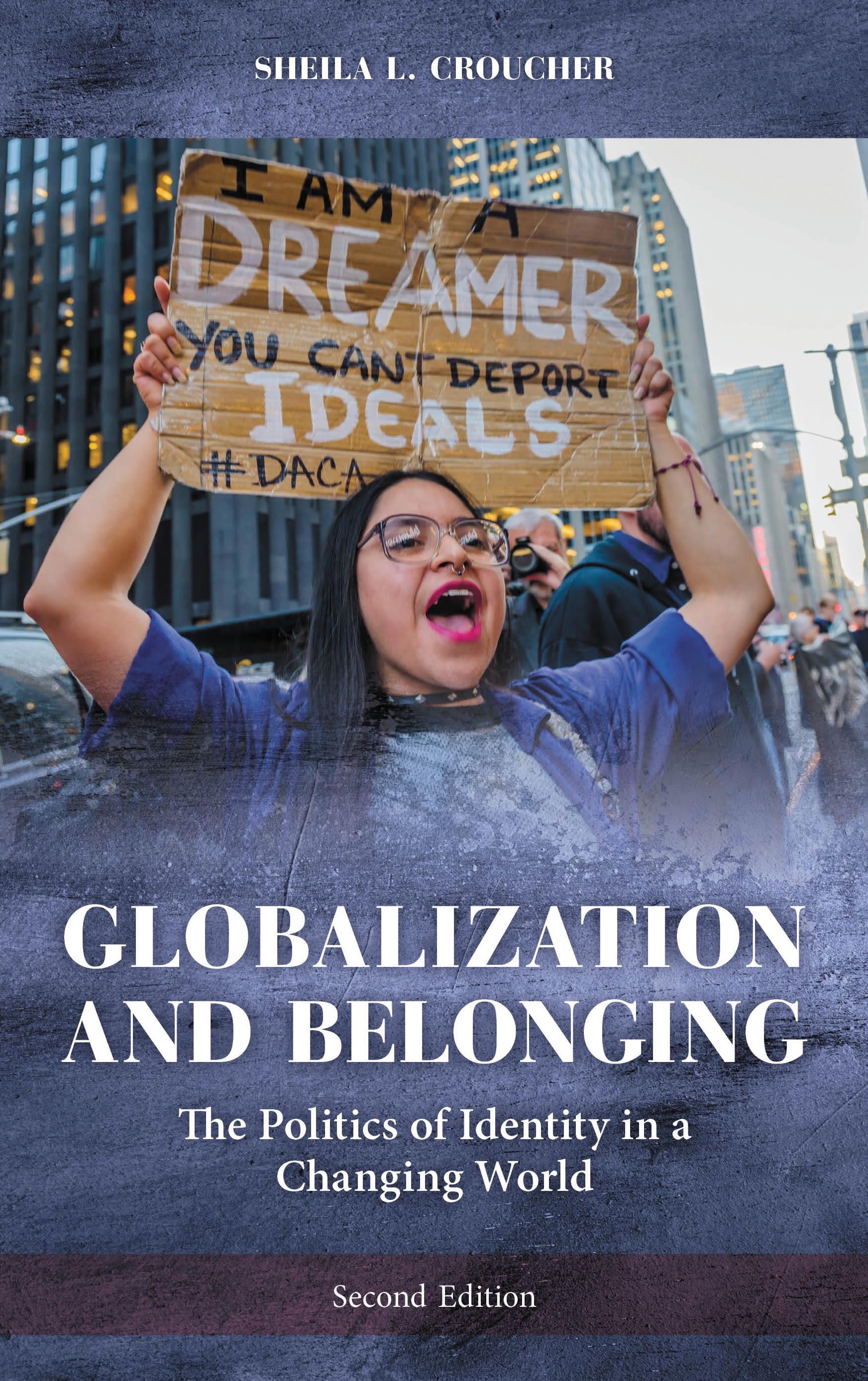
In the decades since the September 11, 2001, terrorist attacks on the United States forces of cultural, economic, and political integration appear locked in battle with equally powerful forces of fragmentation. Globalization is facilitating unprecedented movement of goods, services, people, and ideas, while calls for building walls, erecting fences, and strengthening borders intensify. Tensions flare around claims of deeply rooted ethnic and civilizational identities—identities that are shaped and mobilized via sophisticated advances in technology. Women worldwide are achieving remarkable economic and political gains while sexual violence and gender inequalities persist and are fueled by rapid global change.
This book explores the complex inter-relationship between globalization and belonging. In a hyper-modern, 21st-century world, questions and conflicts surrounding who ‘we’ are and who ‘we’ want to be predominate. This book links the politics of different forms of identification and attachment to the dynamics of an increasingly interconnected world.
This book explores the complex inter-relationship between globalization and belonging. In a hyper-modern, 21st-century world, questions and conflicts surrounding who ‘we’ are and who ‘we’ want to be predominate. This book links the politics of different forms of identification and attachment to the dynamics of an increasingly interconnected world.
Zahle einfach mit Karte, Klarna, Apple Pay oder Google Pay. Nicht zufrieden? Du hast immer ein 14-tägiges Widerrufsrecht. Lies mehr in unseren AGB. Hast du Fragen, schreib uns eine E-Mail an hello@memmo.org.
Memmo macht das Lernen einfacher – wo auch immer du bist. Bei uns findest du deine Kursbücher und smarte Lerntools an einem Ort: Zusammenfassungen, Quizzes, Podcasts und Lernkarten. Und Ted, dein Lernbuddy, beantwortet alles, was du wissen möchtest. Über 50.000 Studierende lernen bereits hier – gemacht, damit du schneller lernst und weniger Stress hast.