
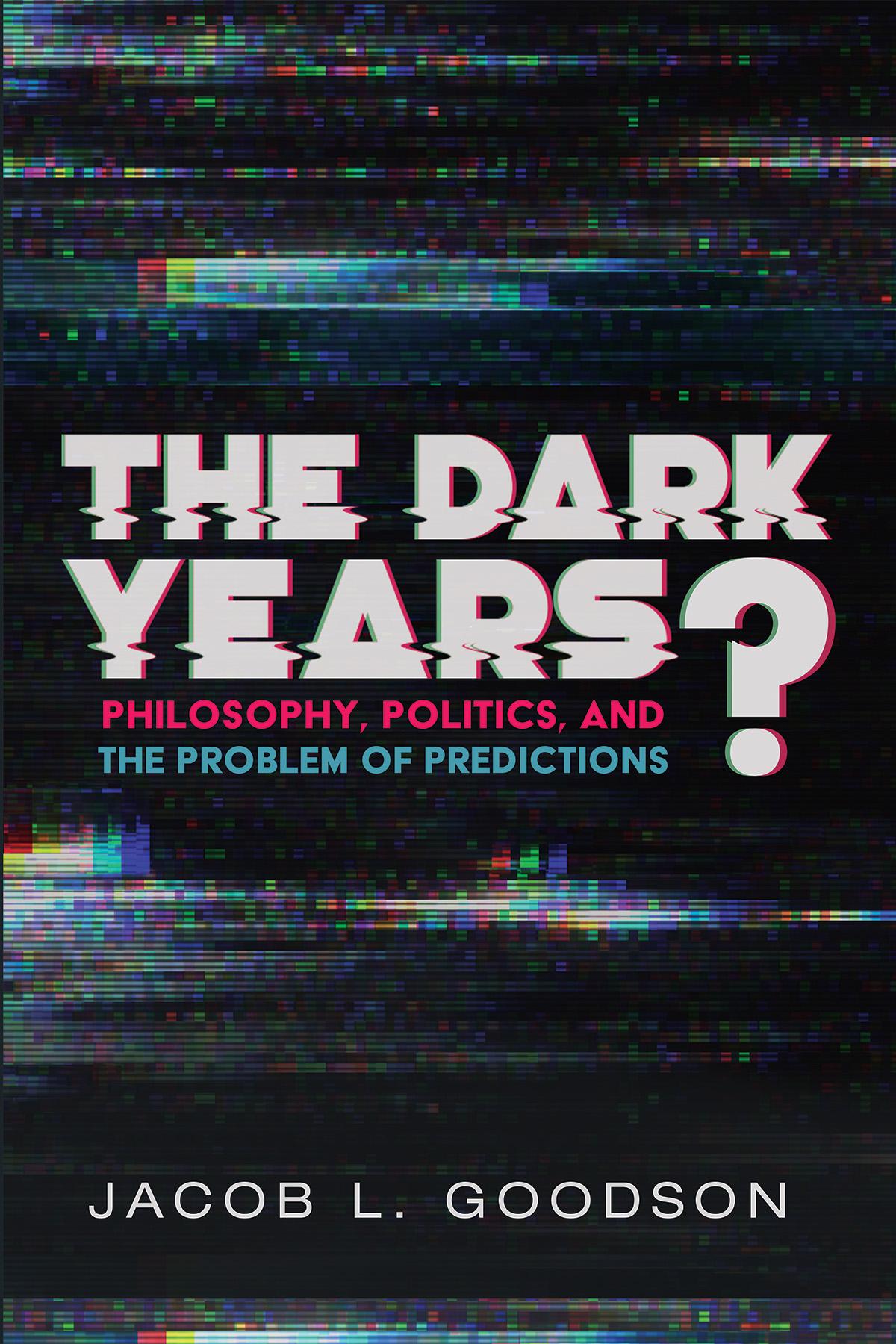
In 1997 and 1998, the American secular philosopher Richard Rorty published a set of predictions about the twenty-first century ranging from the years 2014-95. He predicted, for instance, the election of a "strong man" in the 2016 presidential race and the proliferation of gun violence starting in 2014. He labels the years from 2014-44 the darkest years of American history, politics, and society. From 2045-95, Rorty thinks his own vision for "social hope" will be implemented within American society--a vision that includes charity (in the Pauline sense), solidarity, and sympathy. Rorty considers himself a leftist, liberal, and a philosopher of hope. So why would a philosopher of hope predict such darkness and despair? In The Dark Years? Philosophy, Politics, and the Problem of Predictions philosopher and political theorist Jacob L. Goodson explains the fullness of Rorty's predictions, the problem of making predictions within the social sciences, and the reasons why even Rorty's vision for life after the "dark years" fails us on the standards of hope. Goodson argues that we ought to challenge the monopoly that American politics has as our object of hope. Goodson makes the case for a melancholic yet redemptive hope.
Zahle einfach mit Karte, Klarna, Apple Pay oder Google Pay. Nicht zufrieden? Du hast immer ein 14-tägiges Widerrufsrecht. Lies mehr in unseren AGB. Hast du Fragen, schreib uns eine E-Mail an hello@memmo.org.
Memmo macht das Lernen einfacher – wo auch immer du bist. Bei uns findest du deine Kursbücher und smarte Lerntools an einem Ort: Zusammenfassungen, Quizzes, Podcasts und Lernkarten. Und Ted, dein Lernbuddy, beantwortet alles, was du wissen möchtest. Über 50.000 Studierende lernen bereits hier – gemacht, damit du schneller lernst und weniger Stress hast.
Das könnte dir auch gefallen
Buch kaufen0