
Migration moves people, ideas and things. Migration shakes up political scenes and instigates new social movements. It redraws emotional landscapes and reshapes social networks, with traditional and digital media enabling, representing, and shaping the processes, relationships and people on the move. The deep entanglement of media and migration expands across the fields of political, cultural and social life. For example, migration is increasingly digitally tracked and surveilled, and national and international policy-making draws on data on migrant movement, anticipated movement, and biometrics to maintain a sense of control over the mobilities of humans and things. Also, social imaginaries are constituted in highly mediated environments where information and emotions on migration are constantly shared on social and traditional media. Both, those migrating and those receiving them, turn to media and communicative practices to learn how to make sense of migration and to manage fears and desires associated with cross-border mobility in an increasingly porous but also controlled and divided world.
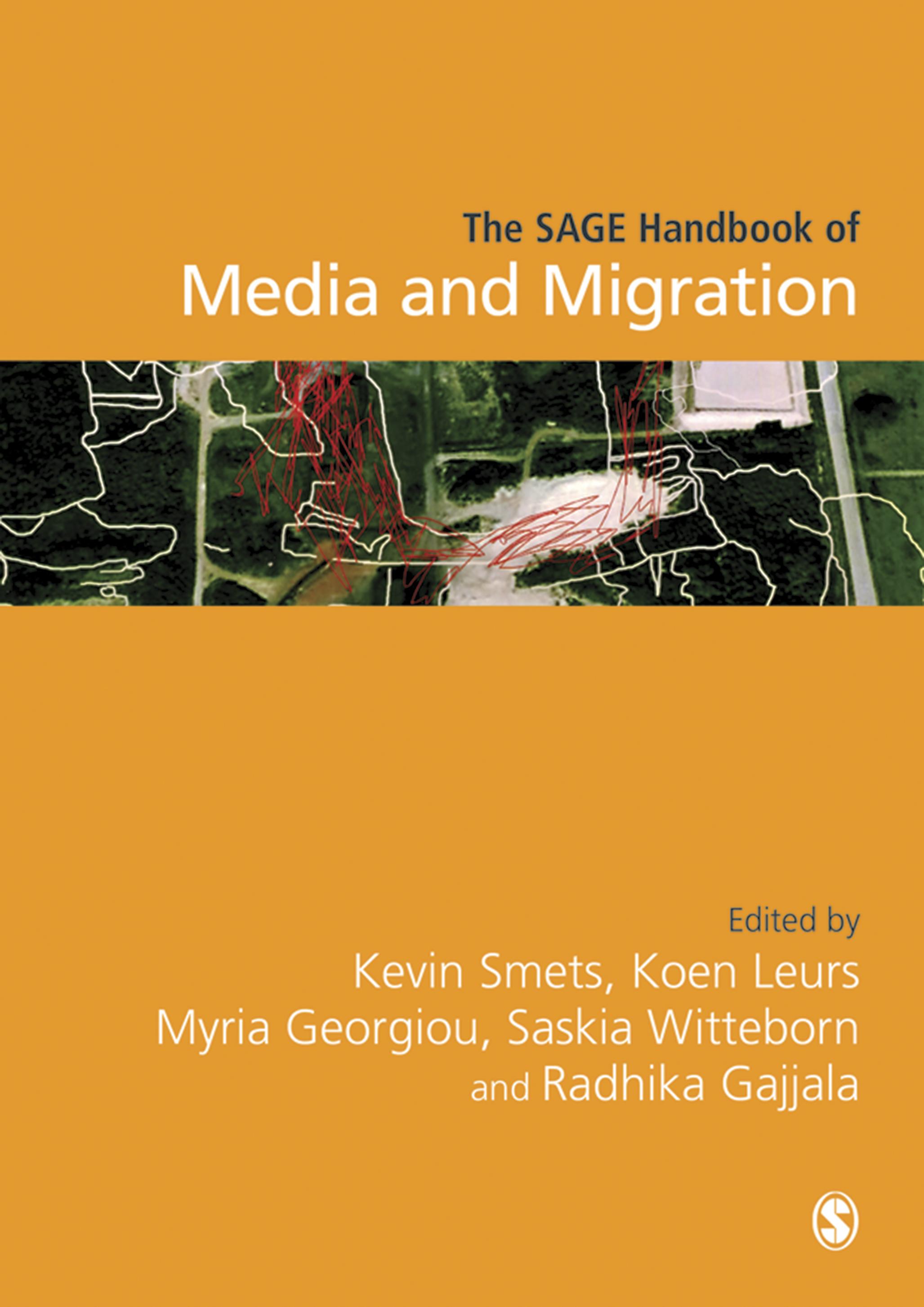
The SAGE Handbook of Media and Migration offers a comprehensive overview of media and migration through new research, as well as a review of present scholarship in this expanding and promising field. It explores key interdisciplinary concepts and methodologies, and how these are challenged by new realities and the links between contemporary migration patterns and its use of mediated processes. Although primarily grounded in media and communication studies, the Handbook builds on research in the fields of sociology, anthropology, political science, urban studies, science and technology studies, human rights, development studies, and gender and sexuality studies, to bring to the forefront key theories, concepts and methodological approaches to the study of the movement of people.
In seven parts, the Handbook dissects important areas of cross-disciplinary and generational discourse for graduate students, early career researcher, migration management practitioners, and academics in the fields of media and migration studies, international development, communication studies, and the wider social science discipline.
Part One: Keywords and Legacies
Part Two: Methodologies
Part Three: Communities
Part Four: Representations
Part Five: Borders and Rights
Part Six: Spatialities
Part Seven: Conflicts
Zahle einfach mit Karte, Klarna, Apple Pay oder Google Pay. Nicht zufrieden? Du hast immer ein 14-tägiges Widerrufsrecht. Lies mehr in unseren AGB. Hast du Fragen, schreib uns eine E-Mail an hello@memmo.org.
Memmo macht das Lernen einfacher – wo auch immer du bist. Bei uns findest du deine Kursbücher und smarte Lerntools an einem Ort: Zusammenfassungen, Quizzes, Podcasts und Lernkarten. Und Ted, dein Lernbuddy, beantwortet alles, was du wissen möchtest. Über 50.000 Studierende lernen bereits hier – gemacht, damit du schneller lernst und weniger Stress hast.