
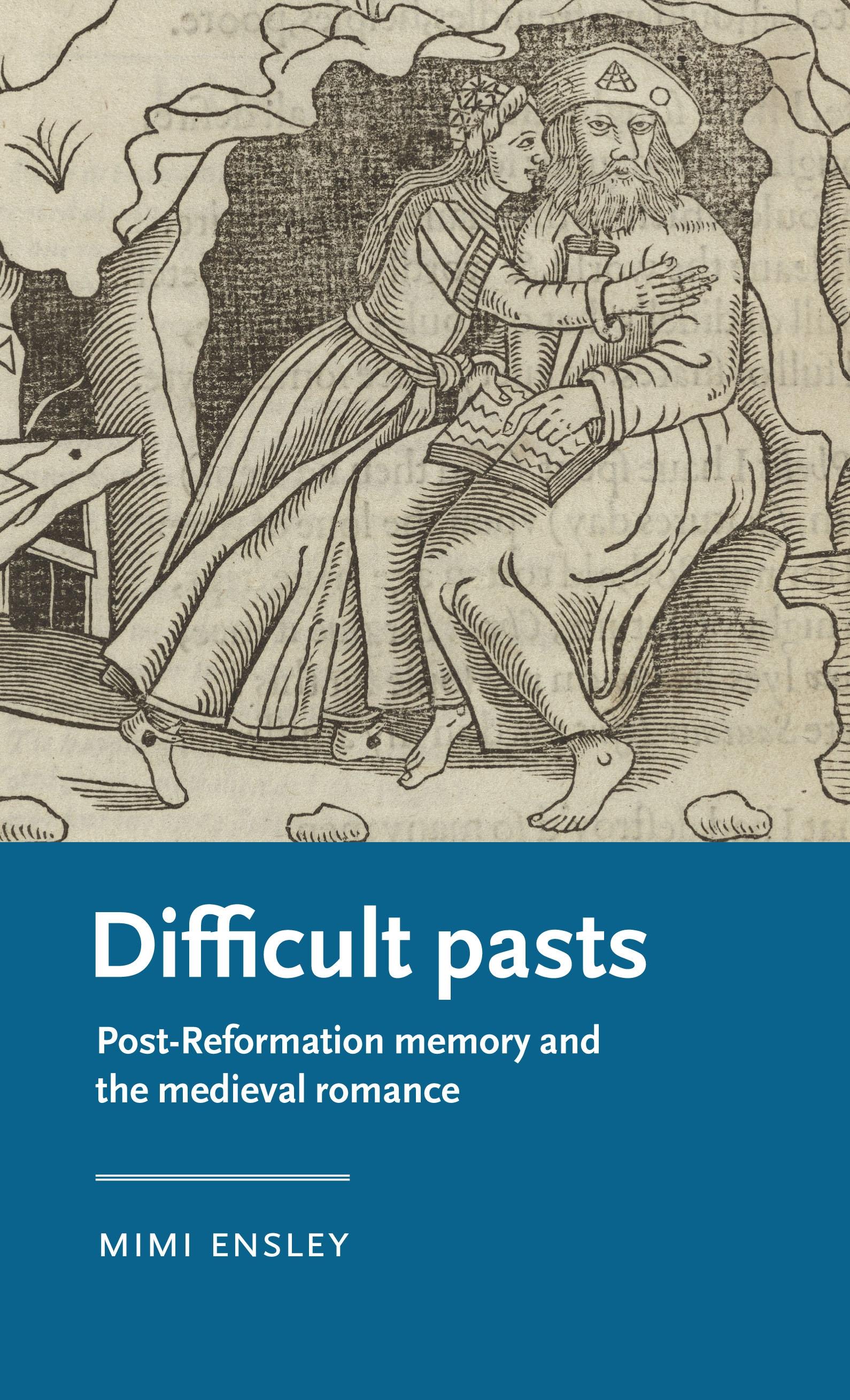
Medieval romances were widely condemned by early modern thinkers: the genre of questing knights and marvellous adventure was decried as bloody, bawdy and superstitious. Despite such proclamations, though, the Middle English romance genre remained popular across the early modern period.
Difficult pasts examines the reception of Middle English romances after the Protestant Reformation in England, arguing that the genre’s popularity rested not in its violent or superstitious qualities, but in its multivocality. Incorporating insights from book history, reception history and cultural memory studies, Ensley argues that the medieval romance book became a flexible site of memory with which early modern readers could both connect with and distance themselves from the recent ‘difficult past’, a past that invited controversy and encouraged divided perspectives. Central characters in this study range from canonical authors like Geoffrey Chaucer and Edmund Spenser to less studied figures, such as printer William Copland, Elizabethan scribe Edward Banister and seventeenth-century poet and romance enthusiast, John Lane. In uniting a wide range of romance readers’ perspectives, the book complicates clear ruptures between manuscript and print, Catholic and Protestant, or medieval and Renaissance. Difficult pasts reveals how the romance book offers a new way to understand the simultaneous change and continuity that defines post-Reformation England.
Zahle einfach mit Karte, Klarna, Apple Pay oder Google Pay. Nicht zufrieden? Du hast immer ein 14-tägiges Widerrufsrecht. Lies mehr in unseren AGB. Hast du Fragen, schreib uns eine E-Mail an hello@memmo.org.
Memmo macht das Lernen einfacher – wo auch immer du bist. Bei uns findest du deine Kursbücher und smarte Lerntools an einem Ort: Zusammenfassungen, Quizzes, Podcasts und Lernkarten. Und Ted, dein Lernbuddy, beantwortet alles, was du wissen möchtest. Über 50.000 Studierende lernen bereits hier – gemacht, damit du schneller lernst und weniger Stress hast.