
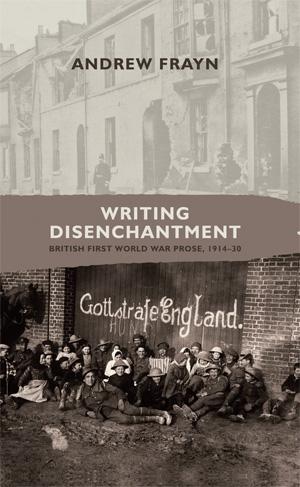
It has become axiomatic that First World War literature was disenchanted, or disillusioned, and returning combatants were unable to process or communicate that experience. In Writing disenchantment, Andrew Frayn argues that this was not just about the war: non-combatants were just as disenchanted as those who fought, and writers such as D. H. Lawrence and Virginia Woolf produced some of the sharpest criticisms. Its language already existed in contemporary sociological and historical accounts of the problems of mass culture and the modern city, whose structures contained the conflict and were strengthened during it.
Archival material, sales data and reviews are used to chart disenchantment in a wide range of early twentieth-century war literature from novels about fears of invasion and pacifism, through the modernist novels of the 1920s to its dominance in the War Books Boom of 1928–30. This book will appeal to scholars and students of English literature, social and cultural history, and gender studies.
Zahle einfach mit Karte, Klarna, Apple Pay oder Google Pay. Nicht zufrieden? Du hast immer ein 14-tägiges Widerrufsrecht. Lies mehr in unseren AGB. Hast du Fragen, schreib uns eine E-Mail an hello@memmo.org.
Memmo macht das Lernen einfacher – wo auch immer du bist. Bei uns findest du deine Kursbücher und smarte Lerntools an einem Ort: Zusammenfassungen, Quizzes, Podcasts und Lernkarten. Und Ted, dein Lernbuddy, beantwortet alles, was du wissen möchtest. Über 50.000 Studierende lernen bereits hier – gemacht, damit du schneller lernst und weniger Stress hast.