
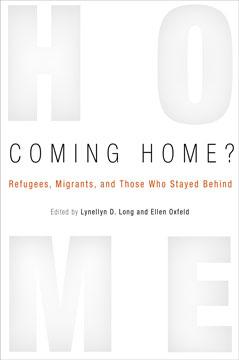
Few things weigh on the human spirit more heavily than a sense of place; the lands we live in and return to have a profound ability to shape our notions of home and homeland, not to mention our own identities. The pull of the familiar and the desire to begin anew are conflicting impulses for the nearly 180 million people who live outside their countries of origin, often with the expectation of returning home. Of 30 million people who immigrated to the United States alone between 1900 and 1980, 10 million are believed to have returned to their homelands.
While migration flows occur in both directions, surprisingly few studies of transnationalism, global migration, or diaspora address return experiences. Undertaking a comparative analysis of how coming home affects individuals and their communities in a myriad cultural and geographic settings, the contributors to this volume seek to understand the unique return migration experiences of refugees, migrants, and various others as they confront the social pressures and a sense of displacement that accompany their journeys.
The returns depicted in Coming Home? range from temporary visits to permanent repatriation, from voluntary to coerced movements, and from those occurring after a few years of exile to those after several decades away. The geographic sites include the Balkans, Barbados, China, Eritrea, Ethiopia, Germany, Nicaragua, the Philippines, Rwanda, and Vietnam. Several studies portray the experiences of returning refugees who earlier fled war and violence, while others focus on economic or labor migrants.
As the essays show, connections between permanent returnees and home communities are contentious and complex. On the one hand, issues of land title, property rights, political orientation, and religious and cultural beliefs and practices create grounds for clashes between returnees and their home communities, but on the other, returnees bring with them a unique ability to transform local practices and provide new resources.
Zahle einfach mit Karte, Klarna, Apple Pay oder Google Pay. Nicht zufrieden? Du hast immer ein 14-tägiges Widerrufsrecht. Lies mehr in unseren AGB. Hast du Fragen, schreib uns eine E-Mail an hello@memmo.org.
Memmo macht das Lernen einfacher – wo auch immer du bist. Bei uns findest du deine Kursbücher und smarte Lerntools an einem Ort: Zusammenfassungen, Quizzes, Podcasts und Lernkarten. Und Ted, dein Lernbuddy, beantwortet alles, was du wissen möchtest. Über 50.000 Studierende lernen bereits hier – gemacht, damit du schneller lernst und weniger Stress hast.