
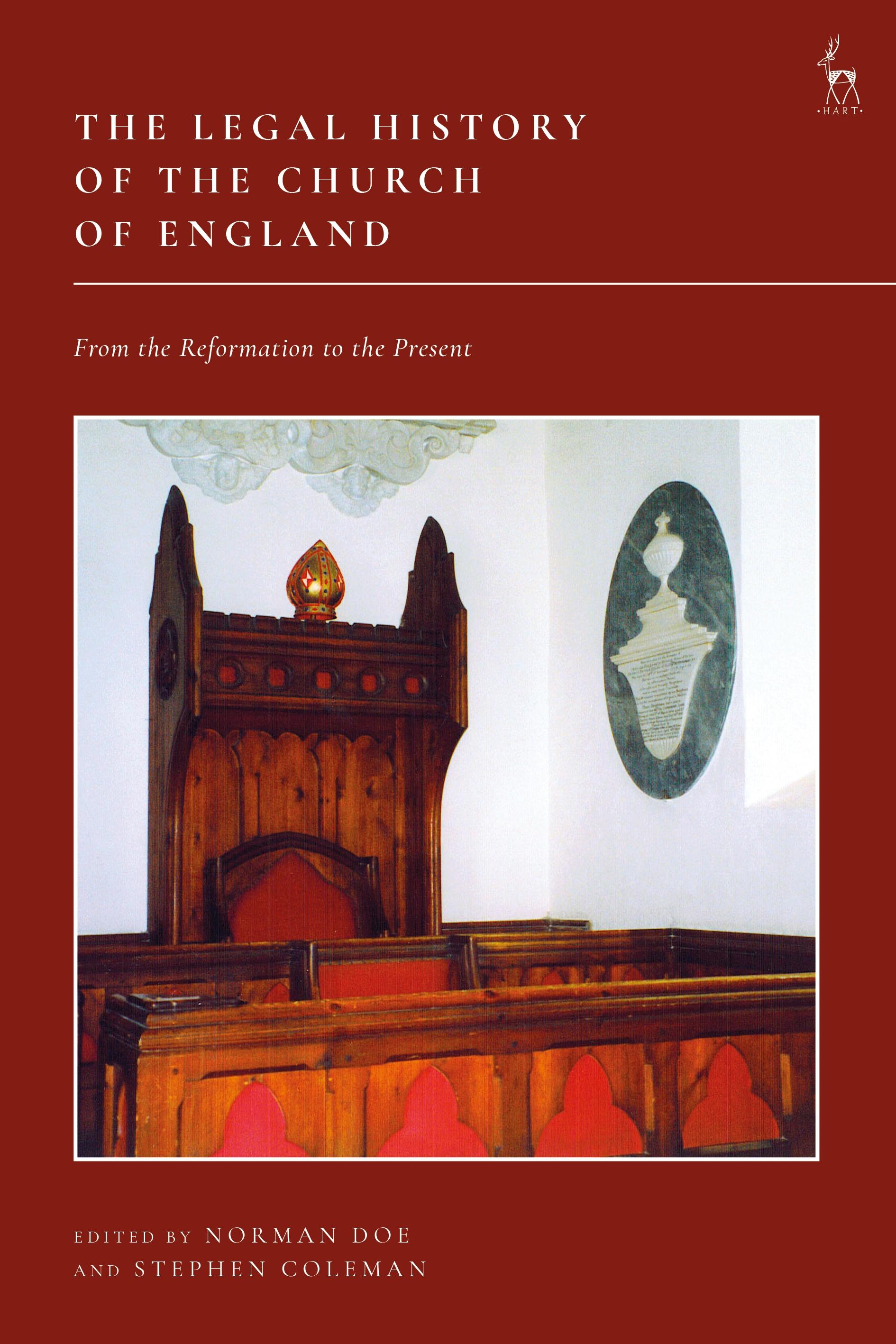
This book provides the first comprehensive analysis of the principal legal landmarks in the evolution of the law of the established Church of England from the Reformation to the present day.
It explores the foundations of ecclesiastical law and considers its crucial role in the development of the Church of England over the centuries.
The law has often been the site of major political and theological controversies, within and outside the church, including the Reformation itself, the English civil war, the Restoration and rise of religious toleration, the impact of the industrial revolution, the ritualist disputes of the 19th century, and the rise of secularisation in the twentieth. The book examines key statutes, canons, case-law, and other instruments in fields such as church governance and ministry, doctrine and liturgy, rites of passage (from baptism to burial) and church property.
Each chapter studies a broadly 50-year period, analysing it in terms of continuity and change, explaining the laws by reference to politics and theology, and evaluating the significance of the legal landmarks for the development of church law and its place in wider English society.
It explores the foundations of ecclesiastical law and considers its crucial role in the development of the Church of England over the centuries.
The law has often been the site of major political and theological controversies, within and outside the church, including the Reformation itself, the English civil war, the Restoration and rise of religious toleration, the impact of the industrial revolution, the ritualist disputes of the 19th century, and the rise of secularisation in the twentieth. The book examines key statutes, canons, case-law, and other instruments in fields such as church governance and ministry, doctrine and liturgy, rites of passage (from baptism to burial) and church property.
Each chapter studies a broadly 50-year period, analysing it in terms of continuity and change, explaining the laws by reference to politics and theology, and evaluating the significance of the legal landmarks for the development of church law and its place in wider English society.
Zahle einfach mit Karte, Klarna, Apple Pay oder Google Pay. Nicht zufrieden? Du hast immer ein 14-tägiges Widerrufsrecht. Lies mehr in unseren AGB. Hast du Fragen, schreib uns eine E-Mail an hello@memmo.org.
Memmo macht das Lernen einfacher – wo auch immer du bist. Bei uns findest du deine Kursbücher und smarte Lerntools an einem Ort: Zusammenfassungen, Quizzes, Podcasts und Lernkarten. Und Ted, dein Lernbuddy, beantwortet alles, was du wissen möchtest. Über 50.000 Studierende lernen bereits hier – gemacht, damit du schneller lernst und weniger Stress hast.