
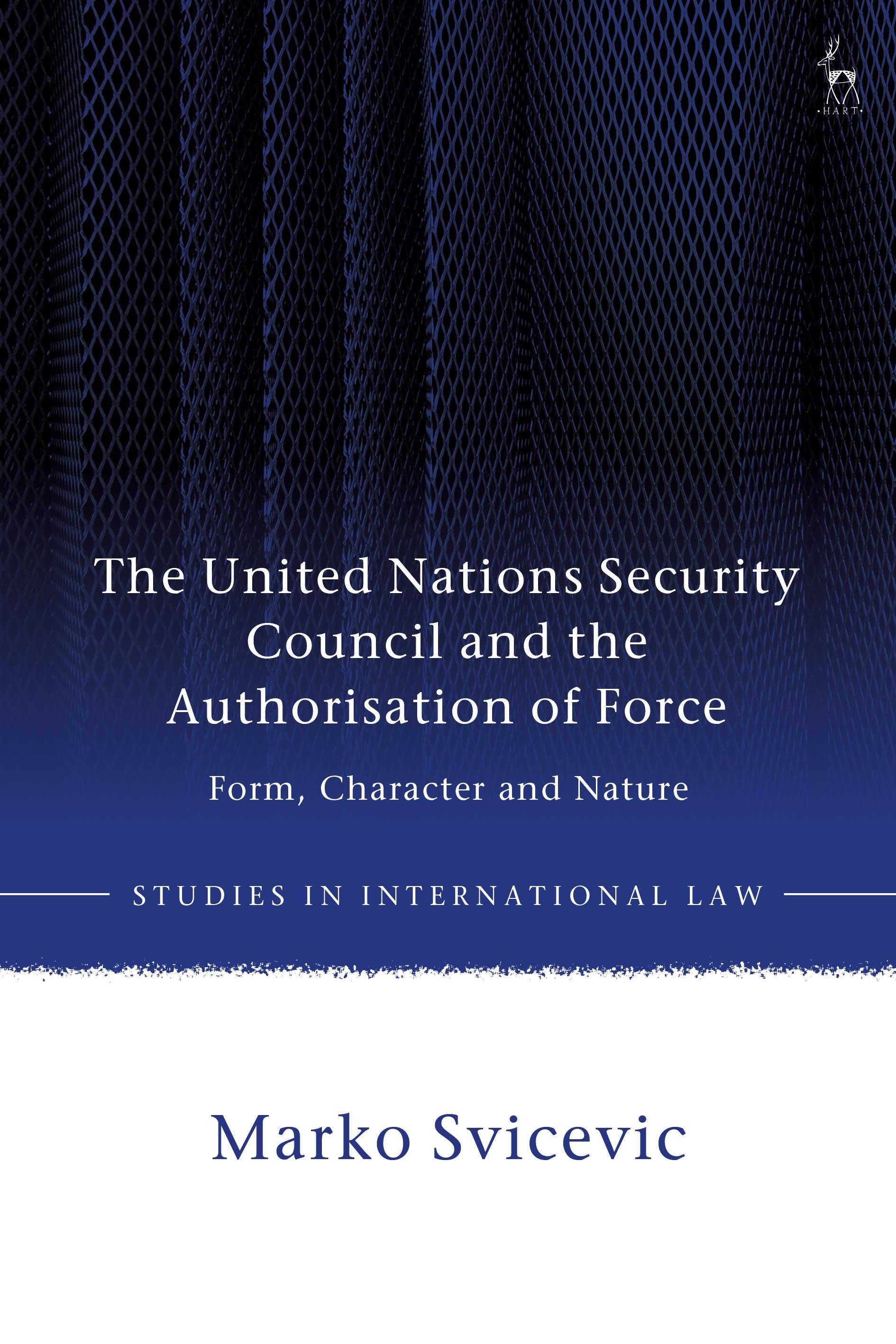
This book examines the United Nations Security Council's authorisation of the use of force, considering the extensive body of UN Security Council resolutions across its now eighty years of existence.
As one of the established exceptions to the Article 2(4) UN Charter prohibition on the use of force, UN Security Council authorisation of force remains a key focus for both States and scholars alike. Despite the apparent consequences of authorisation, authorising resolutions lack prescribed formats or mandatory content. The UN Security Council has over time, however, developed a consistent practice of prior explicit authorisation.
The development of this practice is reflected in a number of essential characteristics within authorising resolutions of the UN Security Council. These include explicit determinations of a threat to international peace and security, the invocation of Chapter VII (or VIII) of the UN Charter, the use of specific authorising language, the inclusion of time or functional limits on authorisation, and the imposition of reporting obligations on those authorised to use force. The book ultimately argues that prior explicit authorisation constitutes a well-established practice, rejecting the legality and admissibility of implicit and retroactive authorisation.
As one of the established exceptions to the Article 2(4) UN Charter prohibition on the use of force, UN Security Council authorisation of force remains a key focus for both States and scholars alike. Despite the apparent consequences of authorisation, authorising resolutions lack prescribed formats or mandatory content. The UN Security Council has over time, however, developed a consistent practice of prior explicit authorisation.
The development of this practice is reflected in a number of essential characteristics within authorising resolutions of the UN Security Council. These include explicit determinations of a threat to international peace and security, the invocation of Chapter VII (or VIII) of the UN Charter, the use of specific authorising language, the inclusion of time or functional limits on authorisation, and the imposition of reporting obligations on those authorised to use force. The book ultimately argues that prior explicit authorisation constitutes a well-established practice, rejecting the legality and admissibility of implicit and retroactive authorisation.
Zahle einfach mit Karte, Klarna, Apple Pay oder Google Pay. Nicht zufrieden? Du hast immer ein 14-tägiges Widerrufsrecht. Lies mehr in unseren AGB. Hast du Fragen, schreib uns eine E-Mail an hello@memmo.org.
Memmo macht das Lernen einfacher – wo auch immer du bist. Bei uns findest du deine Kursbücher und smarte Lerntools an einem Ort: Zusammenfassungen, Quizzes, Podcasts und Lernkarten. Und Ted, dein Lernbuddy, beantwortet alles, was du wissen möchtest. Über 50.000 Studierende lernen bereits hier – gemacht, damit du schneller lernst und weniger Stress hast.