
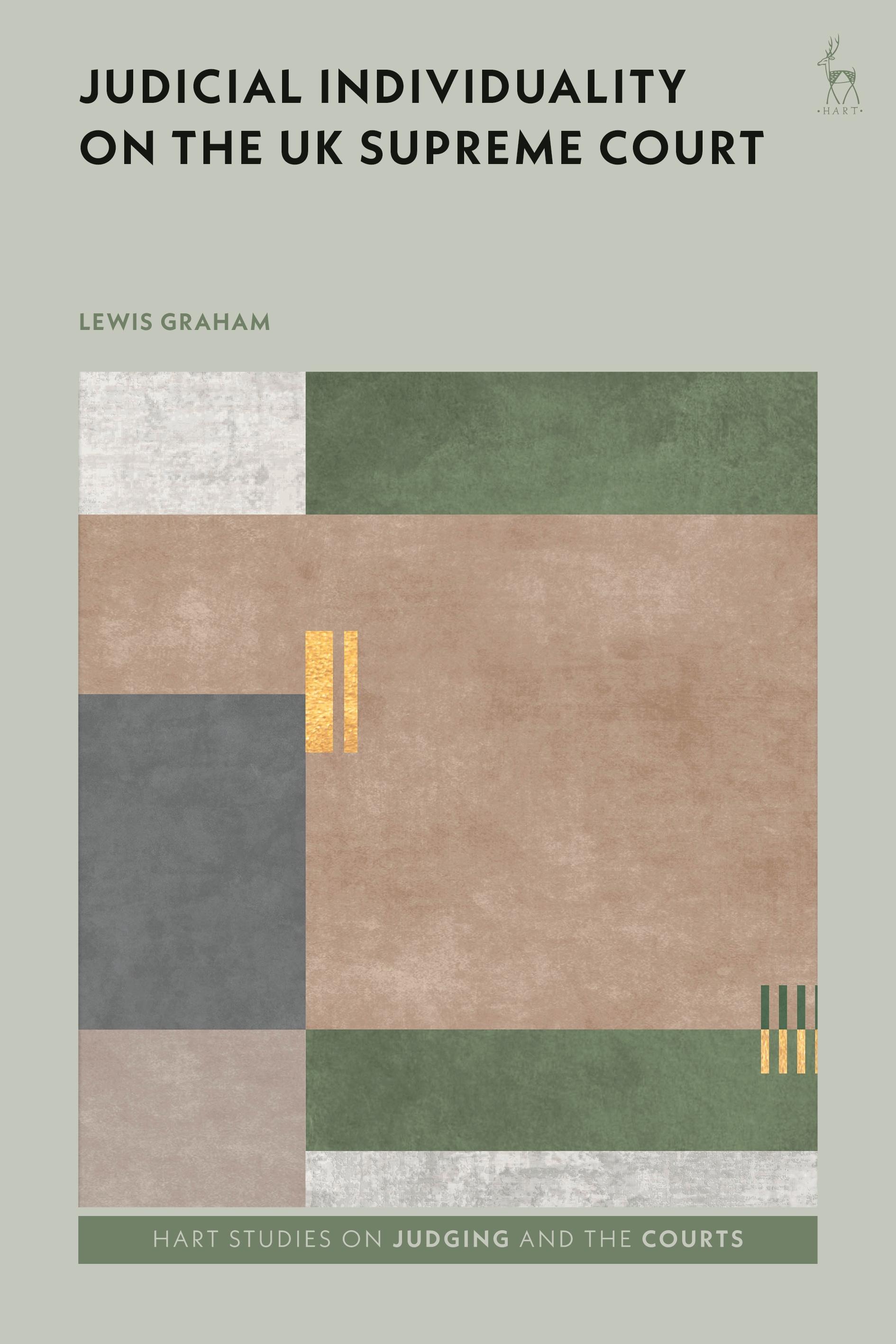
This book presents an empirical analysis of the UK Supreme Court's output over its first ten years, with a specific focus on each individual judge's contribution to each case. It shows that judges, like all of us, are human; it would be difficult to imagine that any of us, even in our most professional capacity, could act completely independently of our predilections, motivations and biases. The same is true for the judges sitting on the UK's highest court.
Drawing on insights from a bespoke dataset of judgments, this work discerns trends and tendencies across each judge's voting patterns and the reasoning they adopt when disposing of cases. It not only highlights areas of divergence, but also shows how each of the judges tended to vote in different contexts, including which were more likely to overturn appeals from lower courts, side with certain parties such as the state or underdogs, and find liability in various areas (tort, contract, criminal, EU, immigration and tax law, with a special focus on human rights cases). Another section illustrates the differences between the judges when it comes to judicial reasoning, such as their approach to precedent and preferred methods of statutory interpretation.
This work shows that different judges exercise their power in different ways. Some are more comfortable with pushing boundaries whilst others are more restrained. Some grant the state a lot of leeway whilst others apply heavy scrutiny. Some are, as Lord Denning suggested, 'bold spirits' whilst others are 'timorous souls'. It shows, at least when it comes to the Supreme Court, that it matters who our judges are.
Drawing on insights from a bespoke dataset of judgments, this work discerns trends and tendencies across each judge's voting patterns and the reasoning they adopt when disposing of cases. It not only highlights areas of divergence, but also shows how each of the judges tended to vote in different contexts, including which were more likely to overturn appeals from lower courts, side with certain parties such as the state or underdogs, and find liability in various areas (tort, contract, criminal, EU, immigration and tax law, with a special focus on human rights cases). Another section illustrates the differences between the judges when it comes to judicial reasoning, such as their approach to precedent and preferred methods of statutory interpretation.
This work shows that different judges exercise their power in different ways. Some are more comfortable with pushing boundaries whilst others are more restrained. Some grant the state a lot of leeway whilst others apply heavy scrutiny. Some are, as Lord Denning suggested, 'bold spirits' whilst others are 'timorous souls'. It shows, at least when it comes to the Supreme Court, that it matters who our judges are.
Zahle einfach mit Karte, Klarna, Apple Pay oder Google Pay. Nicht zufrieden? Du hast immer ein 14-tägiges Widerrufsrecht. Lies mehr in unseren AGB. Hast du Fragen, schreib uns eine E-Mail an hello@memmo.org.
Memmo macht das Lernen einfacher – wo auch immer du bist. Bei uns findest du deine Kursbücher und smarte Lerntools an einem Ort: Zusammenfassungen, Quizzes, Podcasts und Lernkarten. Und Ted, dein Lernbuddy, beantwortet alles, was du wissen möchtest. Über 50.000 Studierende lernen bereits hier – gemacht, damit du schneller lernst und weniger Stress hast.