
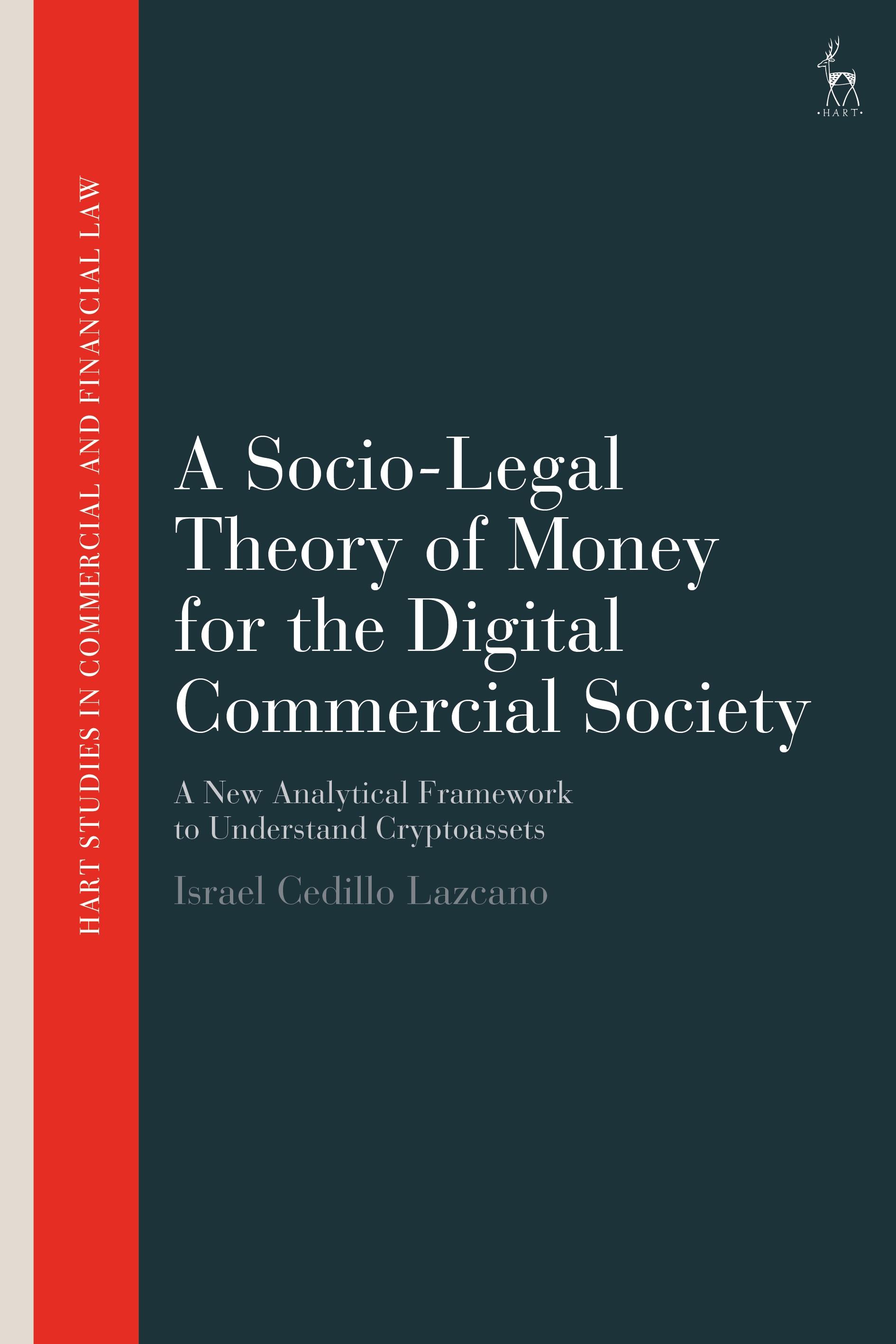
This book poses the question: do we need a new body of regulations and the constitution of new regulatory agents to face the evolution of money in the Fourth Industrial Revolution?
After the Global Financial Crisis and the subsequent introduction of Distributed Ledger Technologies in monetary matters, multiple opinions claim that we are in the middle of a financial revolution that will eliminate the need for central banks and other financial institutions to form bonds of trust on our behalf. In contrast to these arguments, this book argues that we are not witnessing a revolutionary expression, but an evolutionary one that we can trace back to the very origin of money.
Accordingly, the book provides academics, regulators and policy makers with a multidisciplinary analysis that includes elements such as the relevance of intellectual property rights, which are disregarded in the legal analysis of money. Furthermore, the book proposes the idea that traditional analyses on the exercise of the lex monetae ignore the role of inside monies and technological infrastructures developed and supported by the private sector, as exemplified in the evolution of the cryptoassets market and in cases such as Banco de Portugal v Waterlow & Sons.
The book puts forward a proposal for the design and regulation of new payment systems and invites the reader to look beyond the dissemination of individual Distributed Ledger Technologies such as Bitcoin.
After the Global Financial Crisis and the subsequent introduction of Distributed Ledger Technologies in monetary matters, multiple opinions claim that we are in the middle of a financial revolution that will eliminate the need for central banks and other financial institutions to form bonds of trust on our behalf. In contrast to these arguments, this book argues that we are not witnessing a revolutionary expression, but an evolutionary one that we can trace back to the very origin of money.
Accordingly, the book provides academics, regulators and policy makers with a multidisciplinary analysis that includes elements such as the relevance of intellectual property rights, which are disregarded in the legal analysis of money. Furthermore, the book proposes the idea that traditional analyses on the exercise of the lex monetae ignore the role of inside monies and technological infrastructures developed and supported by the private sector, as exemplified in the evolution of the cryptoassets market and in cases such as Banco de Portugal v Waterlow & Sons.
The book puts forward a proposal for the design and regulation of new payment systems and invites the reader to look beyond the dissemination of individual Distributed Ledger Technologies such as Bitcoin.
Zahle einfach mit Karte, Klarna, Apple Pay oder Google Pay. Nicht zufrieden? Du hast immer ein 14-tägiges Widerrufsrecht. Lies mehr in unseren AGB. Hast du Fragen, schreib uns eine E-Mail an hello@memmo.org.
Memmo macht das Lernen einfacher – wo auch immer du bist. Bei uns findest du deine Kursbücher und smarte Lerntools an einem Ort: Zusammenfassungen, Quizzes, Podcasts und Lernkarten. Und Ted, dein Lernbuddy, beantwortet alles, was du wissen möchtest. Über 50.000 Studierende lernen bereits hier – gemacht, damit du schneller lernst und weniger Stress hast.