
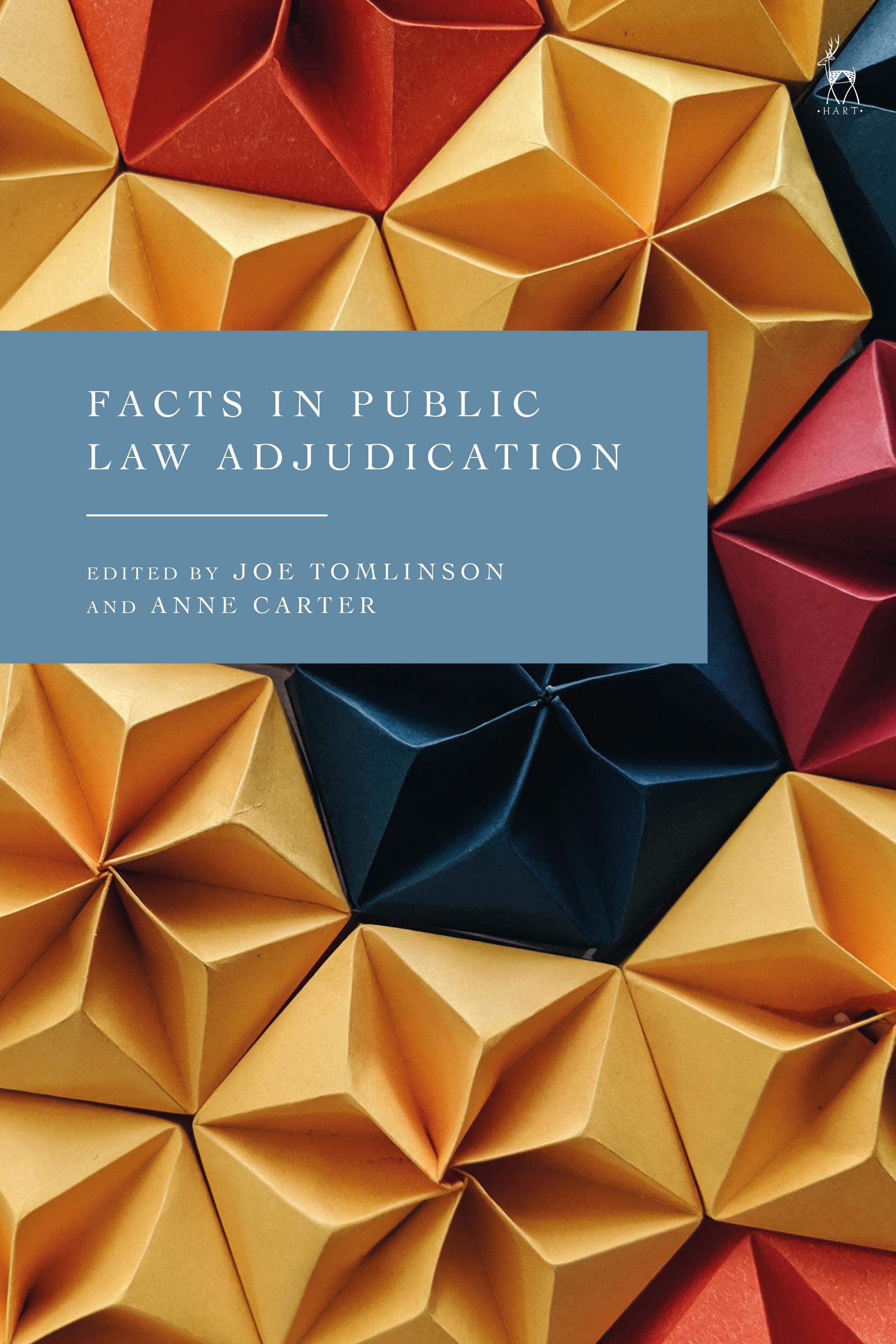
This book explores critical issues about how courts engage with questions of fact in public law adjudication.
Although the topic of judicial review - the mechanism through which individuals can challenge governmental action - continues to generate sustained interest amongst constitutional and administrative lawyers, there has been little attention given to questions of fact. This is so despite such determinations of fact often being hugely important to the outcomes and impacts of public law adjudication.
The book brings together scholars from across the common law world to identify and explore contested issues, common challenges, and gaps in understanding. The various chapters consider where facts arise in constitutional and administrative law proceedings, the role of the courts, and the types of evidence that might assist courts in determining legal issues that are underpinned by complex and contested social or policy questions. The book also considers whether the existing laws and practices surrounding evidence are sufficient, and how other disciplines might assist the courts.
The book reconnects the key practical issues surrounding evidence and facts with the lively academic debate on judicial review in the common law world; it therefore contributes to an emerging area of scholarly debate and also has practical implications for the conduct of litigation and government policy-making.
Although the topic of judicial review - the mechanism through which individuals can challenge governmental action - continues to generate sustained interest amongst constitutional and administrative lawyers, there has been little attention given to questions of fact. This is so despite such determinations of fact often being hugely important to the outcomes and impacts of public law adjudication.
The book brings together scholars from across the common law world to identify and explore contested issues, common challenges, and gaps in understanding. The various chapters consider where facts arise in constitutional and administrative law proceedings, the role of the courts, and the types of evidence that might assist courts in determining legal issues that are underpinned by complex and contested social or policy questions. The book also considers whether the existing laws and practices surrounding evidence are sufficient, and how other disciplines might assist the courts.
The book reconnects the key practical issues surrounding evidence and facts with the lively academic debate on judicial review in the common law world; it therefore contributes to an emerging area of scholarly debate and also has practical implications for the conduct of litigation and government policy-making.
Zahle einfach mit Karte, Klarna, Apple Pay oder Google Pay. Nicht zufrieden? Du hast immer ein 14-tägiges Widerrufsrecht. Lies mehr in unseren AGB. Hast du Fragen, schreib uns eine E-Mail an hello@memmo.org.
Memmo macht das Lernen einfacher – wo auch immer du bist. Bei uns findest du deine Kursbücher und smarte Lerntools an einem Ort: Zusammenfassungen, Quizzes, Podcasts und Lernkarten. Und Ted, dein Lernbuddy, beantwortet alles, was du wissen möchtest. Über 50.000 Studierende lernen bereits hier – gemacht, damit du schneller lernst und weniger Stress hast.