
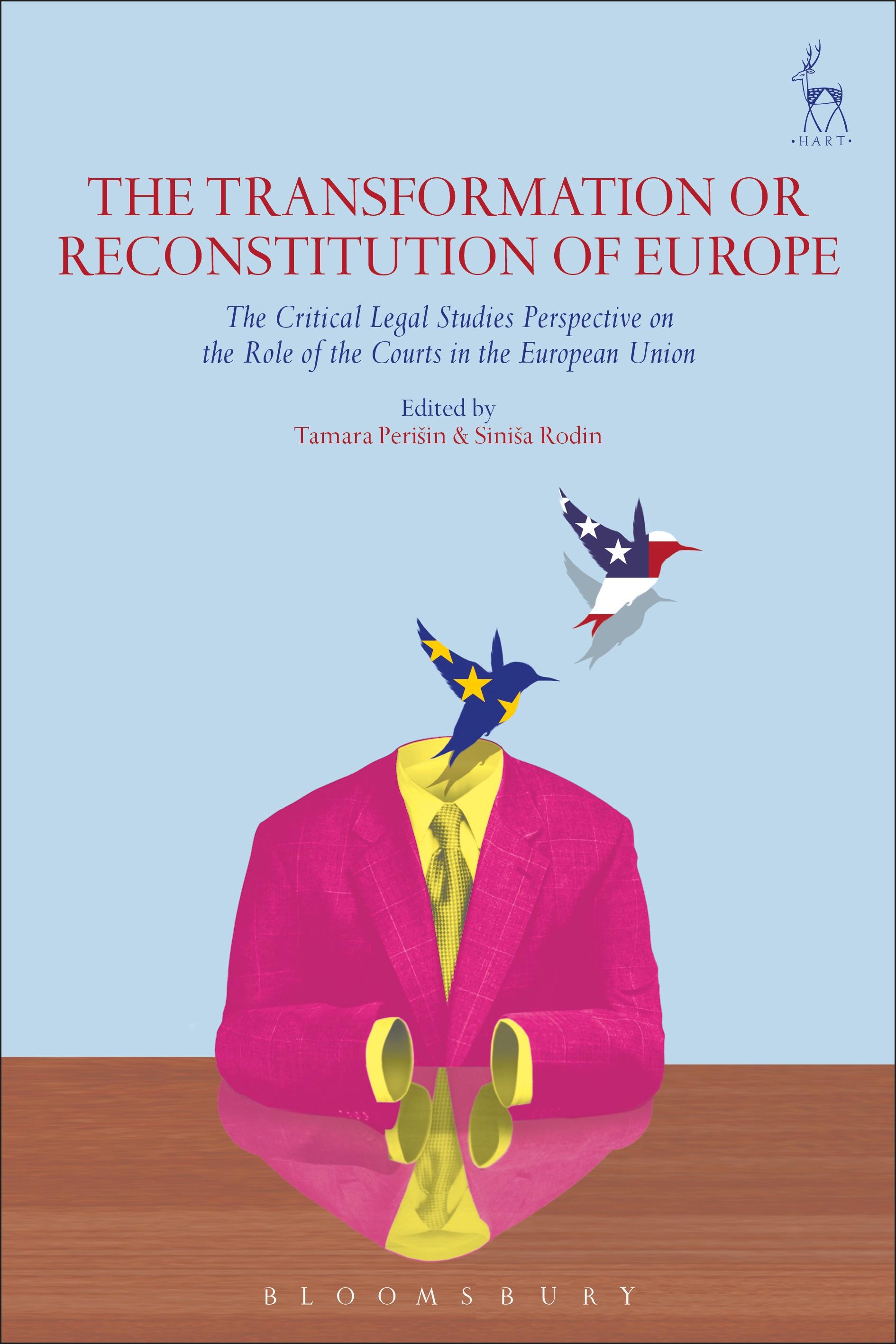
It is generally understood that EU law as interpreted by the ECJ has not merely reconstituted the national legal matrix at the supranational level, but has also transformed Europe and shaken the well-established, often formalist, ways of thinking about law in the Member States. This innovative new study seeks to examine such a narrative through the lens of the American critical legal studies (CLS) perspective.
The introduction explains how the editors understand CLS and why its methodology is relevant in the European context. Part II examines whether and how judges embed policy choices or even ideologies in their decisions, and how to detect them. Part III assesses how the ECJ acts to ensure the legitimacy of its decisions, whether it resists implementing political ideologies, what the ideology of European integration is, and how the selection of judges influences these issues. Part IV uses the critical perspective to examine some substantive parts of EU law, rules on internal and external movement, and the European arrest warrant. It seeks to determine whether the role of the ECJ has really been transformative and whether that transformation is reversible. Part V considers the role of academics in shaping the narratives of EU integration.
The introduction explains how the editors understand CLS and why its methodology is relevant in the European context. Part II examines whether and how judges embed policy choices or even ideologies in their decisions, and how to detect them. Part III assesses how the ECJ acts to ensure the legitimacy of its decisions, whether it resists implementing political ideologies, what the ideology of European integration is, and how the selection of judges influences these issues. Part IV uses the critical perspective to examine some substantive parts of EU law, rules on internal and external movement, and the European arrest warrant. It seeks to determine whether the role of the ECJ has really been transformative and whether that transformation is reversible. Part V considers the role of academics in shaping the narratives of EU integration.
Zahle einfach mit Karte, Klarna, Apple Pay oder Google Pay. Nicht zufrieden? Du hast immer ein 14-tägiges Widerrufsrecht. Lies mehr in unseren AGB. Hast du Fragen, schreib uns eine E-Mail an hello@memmo.org.
Memmo macht das Lernen einfacher – wo auch immer du bist. Bei uns findest du deine Kursbücher und smarte Lerntools an einem Ort: Zusammenfassungen, Quizzes, Podcasts und Lernkarten. Und Ted, dein Lernbuddy, beantwortet alles, was du wissen möchtest. Über 50.000 Studierende lernen bereits hier – gemacht, damit du schneller lernst und weniger Stress hast.