
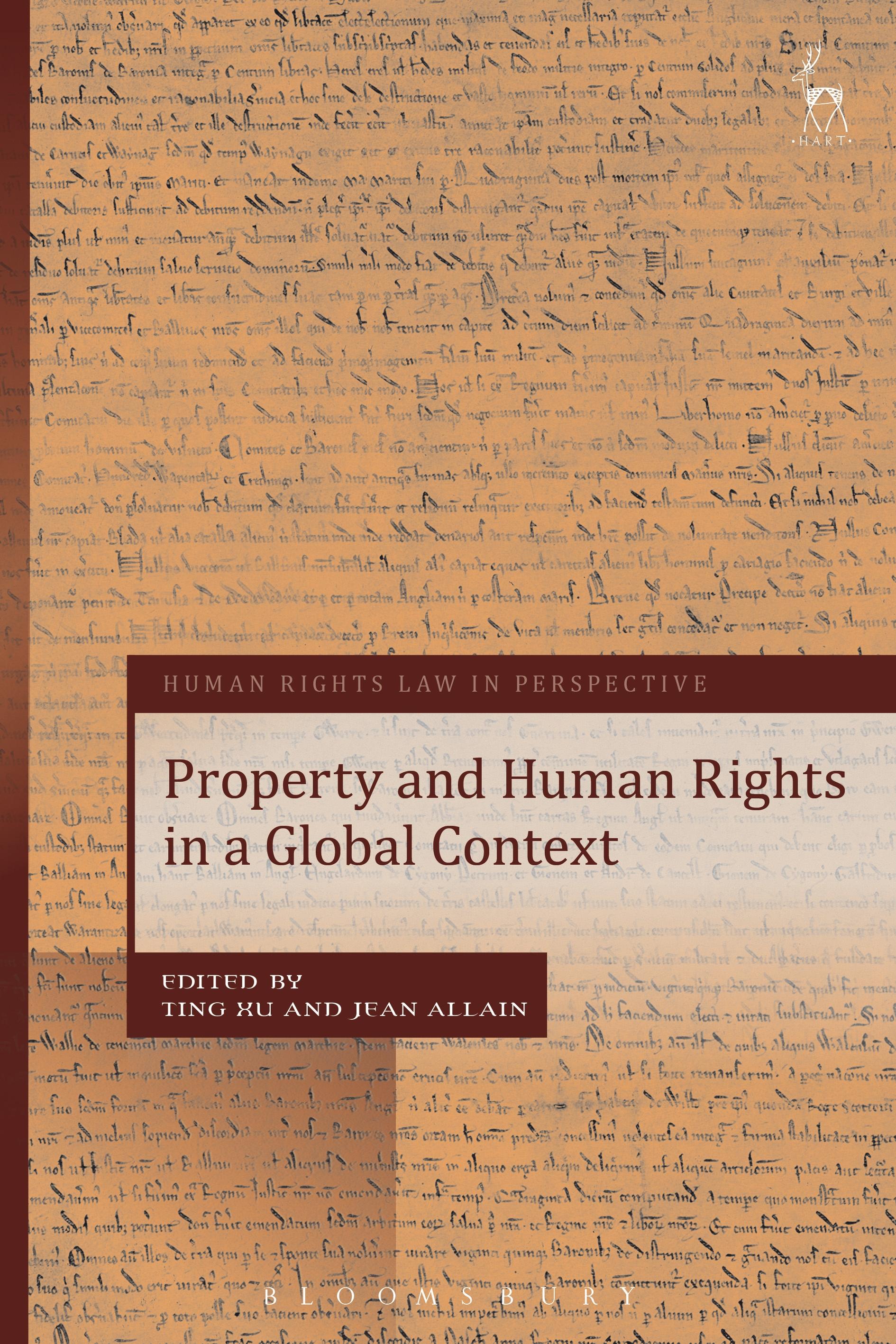
Property as a human rights concern is manifested through its incorporation in international instruments and as a subject of the law through property-related cases considered by international human rights organs. Yet, for the most part, the relationship between property and human rights has been discussed in rather superficial terms, lacking a clear substantive connection or common language. That said, the currents of globalisation have witnessed a new era of interrelation between these two areas of the law, including the emergence of international intellectual property law and the recognition of indigenous claims, which, in fundamental ways, speak to an engagement with human rights law.
This collection starts the conversation between human rights lawyers and property lawyers and explores analytical approaches to the increasing relationship between property and human rights in a global context. The chapters engage with key theoretical and policy debates and range across three main themes: The re-evaluation of the public/private divide in the law; the tensions between the market and social justice in development and the balance between the rights of individuals and those of communities. The chapters adopt a global, comparative perspective and engage in case studies from countries including India, Philippines, Brazil, the United States, the United Kingdom and includes various regions of Africa and Europe.
This collection starts the conversation between human rights lawyers and property lawyers and explores analytical approaches to the increasing relationship between property and human rights in a global context. The chapters engage with key theoretical and policy debates and range across three main themes: The re-evaluation of the public/private divide in the law; the tensions between the market and social justice in development and the balance between the rights of individuals and those of communities. The chapters adopt a global, comparative perspective and engage in case studies from countries including India, Philippines, Brazil, the United States, the United Kingdom and includes various regions of Africa and Europe.
Zahle einfach mit Karte, Klarna, Apple Pay oder Google Pay. Nicht zufrieden? Du hast immer ein 14-tägiges Widerrufsrecht. Lies mehr in unseren AGB. Hast du Fragen, schreib uns eine E-Mail an hello@memmo.org.
Memmo macht das Lernen einfacher – wo auch immer du bist. Bei uns findest du deine Kursbücher und smarte Lerntools an einem Ort: Zusammenfassungen, Quizzes, Podcasts und Lernkarten. Und Ted, dein Lernbuddy, beantwortet alles, was du wissen möchtest. Über 50.000 Studierende lernen bereits hier – gemacht, damit du schneller lernst und weniger Stress hast.