
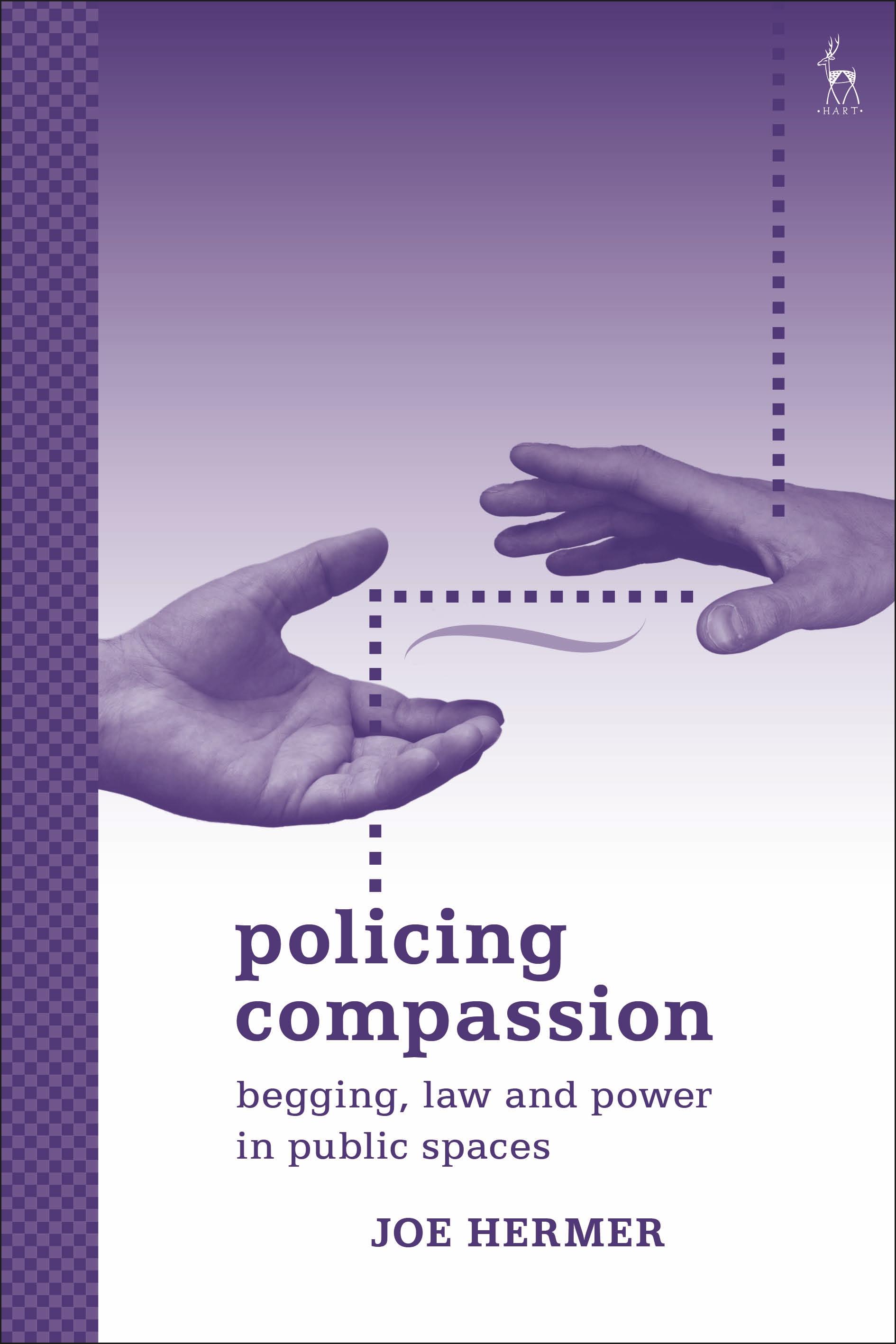
Do you give to someone begging? For centuries, the figure of the beggar has caused public fear, sympathy and confusion. In this book, criminologist Joe Hermer explores how the dilemma of giving to someone begging today has become an unusual site of regulation, public inquiry and law reform. This book investigates why handing pocket change to someone begging is now widely viewed as a gift crime, one that attempts to make the giving public complicit in the policing and control of visibly poor people.
Drawing on the historical insight that public feeling is a central problem of policing the vagrant beggar, the author examines how a quirky provincial experiment to stop people giving to beggars morphed into an unlikely movement across England. Hermer ranges widely in his analysis, with discussions of 'diverted giving' schemes, specialised police operations, activist efforts to repeal the Vagrancy Law, and begging-like activities such as busking, Big Issue vending and flag day collections. The author pays particular attention to the Vagrancy Act 1824 and the historic reforms enabled by gift crime regulation to this storied area of criminal law. The consequence, this book argues, is the continuing abandonment of some of the most vulnerable individuals in society through direct appeals to compassion and kindness.
Drawing on the historical insight that public feeling is a central problem of policing the vagrant beggar, the author examines how a quirky provincial experiment to stop people giving to beggars morphed into an unlikely movement across England. Hermer ranges widely in his analysis, with discussions of 'diverted giving' schemes, specialised police operations, activist efforts to repeal the Vagrancy Law, and begging-like activities such as busking, Big Issue vending and flag day collections. The author pays particular attention to the Vagrancy Act 1824 and the historic reforms enabled by gift crime regulation to this storied area of criminal law. The consequence, this book argues, is the continuing abandonment of some of the most vulnerable individuals in society through direct appeals to compassion and kindness.
Zahle einfach mit Karte, Klarna, Apple Pay oder Google Pay. Nicht zufrieden? Du hast immer ein 14-tägiges Widerrufsrecht. Lies mehr in unseren AGB. Hast du Fragen, schreib uns eine E-Mail an hello@memmo.org.
Memmo macht das Lernen einfacher – wo auch immer du bist. Bei uns findest du deine Kursbücher und smarte Lerntools an einem Ort: Zusammenfassungen, Quizzes, Podcasts und Lernkarten. Und Ted, dein Lernbuddy, beantwortet alles, was du wissen möchtest. Über 50.000 Studierende lernen bereits hier – gemacht, damit du schneller lernst und weniger Stress hast.