
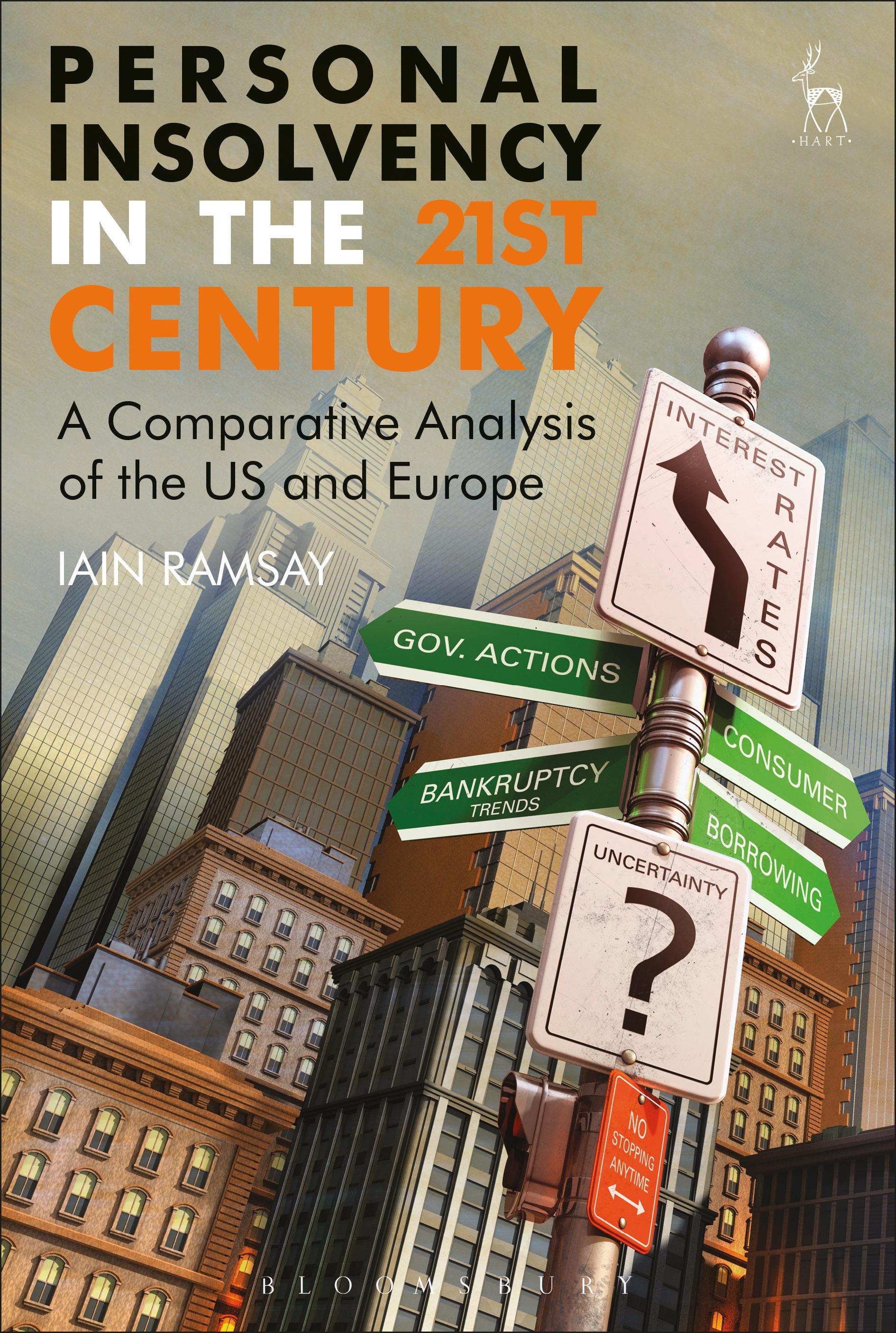
Since 1979 the world has witnessed a remarkable cycle of personal insolvency law reform. Changes in capitalist economies, financial crises and political interest groups all contributed to this cycle of reform. This book examines the role of interest groups and distinct narratives in shaping reform in different countries while drawing attention to the role of timing, path dependency and unintended consequences in the development of personal insolvency law.
The book presents case studies of personal insolvency law in the US, France, Sweden, and England and Wales. It then analyses how, following the Great Recession of 2008, international financial institutions paid greater attention to the significance of household debt in contributing to financial instability and the role of individual insolvency law in providing a fresh start. Personal insolvency law reform became part of EU responses to the eurozone crisis and the EU has proposed harmonisation of individual insolvency law to promote entrepreneurialism. This book examines the extent to which these developments represent an emerging international commonsense about personal insolvency and its relationship to neo-liberalism. Finally, this book discusses whether the international emergence of individual personal insolvency law represents a progressive step or a band-aid for the costs of neo-liberal policies, where a significant number of people live close to the precipice of over-indebtedness.
The book presents case studies of personal insolvency law in the US, France, Sweden, and England and Wales. It then analyses how, following the Great Recession of 2008, international financial institutions paid greater attention to the significance of household debt in contributing to financial instability and the role of individual insolvency law in providing a fresh start. Personal insolvency law reform became part of EU responses to the eurozone crisis and the EU has proposed harmonisation of individual insolvency law to promote entrepreneurialism. This book examines the extent to which these developments represent an emerging international commonsense about personal insolvency and its relationship to neo-liberalism. Finally, this book discusses whether the international emergence of individual personal insolvency law represents a progressive step or a band-aid for the costs of neo-liberal policies, where a significant number of people live close to the precipice of over-indebtedness.
Zahle einfach mit Karte, Klarna, Apple Pay oder Google Pay. Nicht zufrieden? Du hast immer ein 14-tägiges Widerrufsrecht. Lies mehr in unseren AGB. Hast du Fragen, schreib uns eine E-Mail an hello@memmo.org.
Memmo macht das Lernen einfacher – wo auch immer du bist. Bei uns findest du deine Kursbücher und smarte Lerntools an einem Ort: Zusammenfassungen, Quizzes, Podcasts und Lernkarten. Und Ted, dein Lernbuddy, beantwortet alles, was du wissen möchtest. Über 50.000 Studierende lernen bereits hier – gemacht, damit du schneller lernst und weniger Stress hast.