
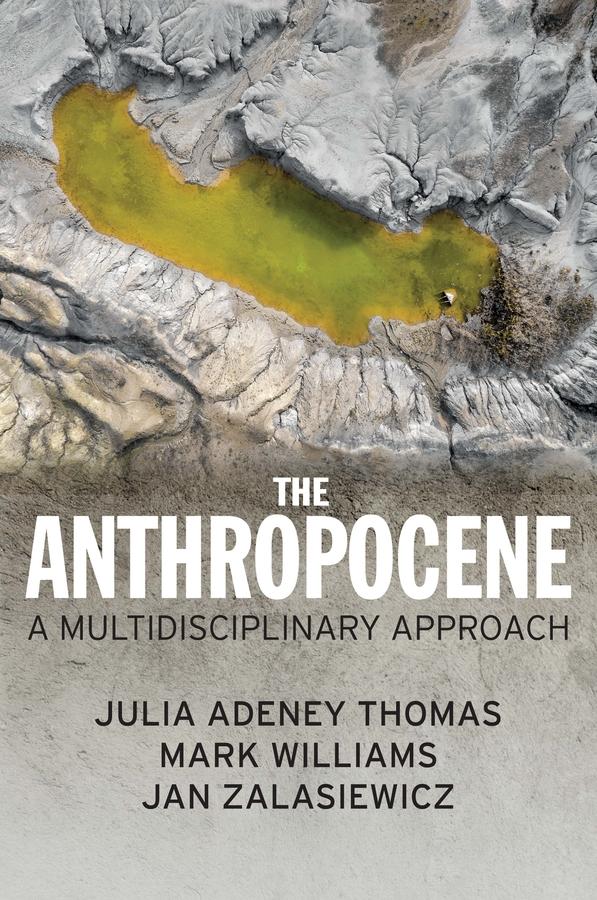
Humans rank with the powerful forces of nature transforming Earth. Since the mid-20th century, population growth, industrialization, and globalization have had such deep and wide-ranging impacts that our planet no longer functions as it did during the previous eleven millennia. So distinctive is this collective human intervention that a new geological interval has been proposed; it is called the Anthropocene.
The Anthropocene is intriguing scientifically, fascinating intellectually, and deeply disturbing politically, socially, economically, and ethically. We must learn how to co-exist sustainably with the rest of nature in what is emerging as a new planetary state. To do so, we must first understand what "Anthropocene" means in all its dimensions. This book adopts a multidisciplinary approach, starting with an exploration of the Anthropocene as a geological concept: ranging across the physical changes to the landscape, to the rapidly heating climate, to a biosphere undergoing transformation. And what of the "anthropos" in the Anthropocene? While geoscience does not normally address political and ethical issues of justice and equity, or economics and culture, Anthropocene studies in the humanities and social sciences investigate the complexities of the human activity driving global change. Here the book looks at human history, both in the deep past and more recently, the politics and economics of growth spurring the Anthropocene, and potential ways of mitigating its cruel effects. Our fragile, still beautiful, planet is finite. The new realities of the Anthropocene will need our best efforts, across disciplinary divides, at effective hope and action.
The Anthropocene is intriguing scientifically, fascinating intellectually, and deeply disturbing politically, socially, economically, and ethically. We must learn how to co-exist sustainably with the rest of nature in what is emerging as a new planetary state. To do so, we must first understand what "Anthropocene" means in all its dimensions. This book adopts a multidisciplinary approach, starting with an exploration of the Anthropocene as a geological concept: ranging across the physical changes to the landscape, to the rapidly heating climate, to a biosphere undergoing transformation. And what of the "anthropos" in the Anthropocene? While geoscience does not normally address political and ethical issues of justice and equity, or economics and culture, Anthropocene studies in the humanities and social sciences investigate the complexities of the human activity driving global change. Here the book looks at human history, both in the deep past and more recently, the politics and economics of growth spurring the Anthropocene, and potential ways of mitigating its cruel effects. Our fragile, still beautiful, planet is finite. The new realities of the Anthropocene will need our best efforts, across disciplinary divides, at effective hope and action.
Zahle einfach mit Karte, Klarna, Apple Pay oder Google Pay. Nicht zufrieden? Du hast immer ein 14-tägiges Widerrufsrecht. Lies mehr in unseren AGB. Hast du Fragen, schreib uns eine E-Mail an hello@memmo.org.
Memmo macht das Lernen einfacher – wo auch immer du bist. Bei uns findest du deine Kursbücher und smarte Lerntools an einem Ort: Zusammenfassungen, Quizzes, Podcasts und Lernkarten. Und Ted, dein Lernbuddy, beantwortet alles, was du wissen möchtest. Über 50.000 Studierende lernen bereits hier – gemacht, damit du schneller lernst und weniger Stress hast.
Das könnte dir auch gefallen
Buch kaufen0