
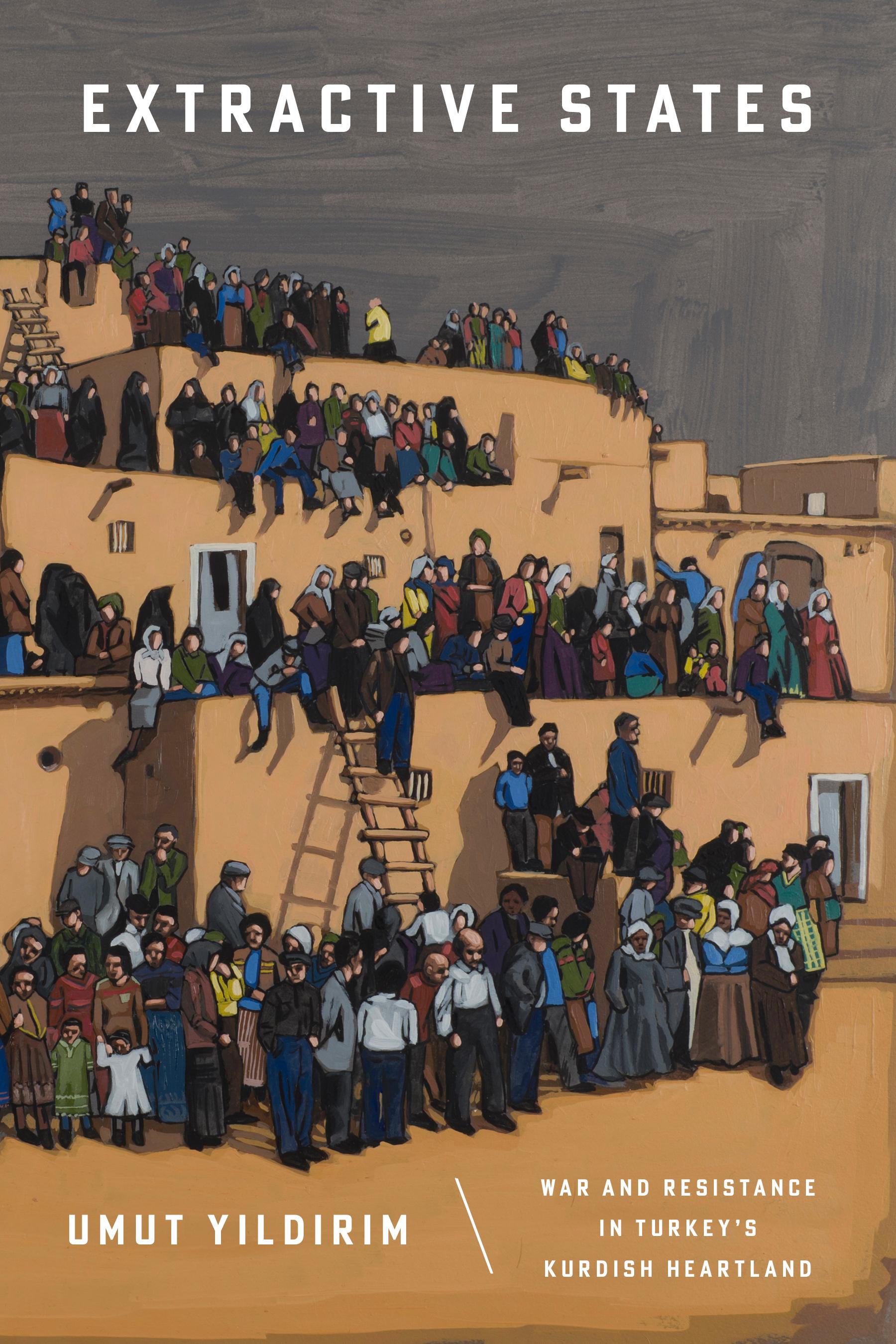
The Turkish state and the Kurdistan Workers' Party engaged in a counterinsurgency war for nearly four decades. Over this period, Diyarbakır, the de facto capital of Greater Kurdistan, was a site of sieges and ceasefires, welfare and humanitarian relief, NGO interventions and decolonial resistance—the complementary, intertwined processes of low-intensity war. War turned urban slums into high-security frontiers and transactional hubs for policy design, and settled deep into embodied knowledges and environments.
Through committed and engaged ethnography, Umut Yıldırım reveals how destruction and displacement became structures of extraction, by which the Turkish state subjugated the Kurdish population into an object to be intervened in, traded, and contained. She also tracks Kurdish efforts to reassert their own stories of war through fact-building, welfare and compensation, women's wellbeing, acts of solidarity, and environmental politics. What we see is a constant dance between war and peace, movement building and its containment, forced displacement and its rehabilitation, memory and its transmutations, environmental damage and its reconstruction. Extractive States offers compelling example of how low-intensity war transforms everyday needs, embodied knowledges, and uprooted populations into securitized knowledge—and how everyday sites of perseverance can reveal such extraction, and thus help conceive of novel modes of resistance.
Zahle einfach mit Karte, Klarna, Apple Pay oder Google Pay. Nicht zufrieden? Du hast immer ein 14-tägiges Widerrufsrecht. Lies mehr in unseren AGB. Hast du Fragen, schreib uns eine E-Mail an hello@memmo.org.
Memmo macht das Lernen einfacher – wo auch immer du bist. Bei uns findest du deine Kursbücher und smarte Lerntools an einem Ort: Zusammenfassungen, Quizzes, Podcasts und Lernkarten. Und Ted, dein Lernbuddy, beantwortet alles, was du wissen möchtest. Über 50.000 Studierende lernen bereits hier – gemacht, damit du schneller lernst und weniger Stress hast.