
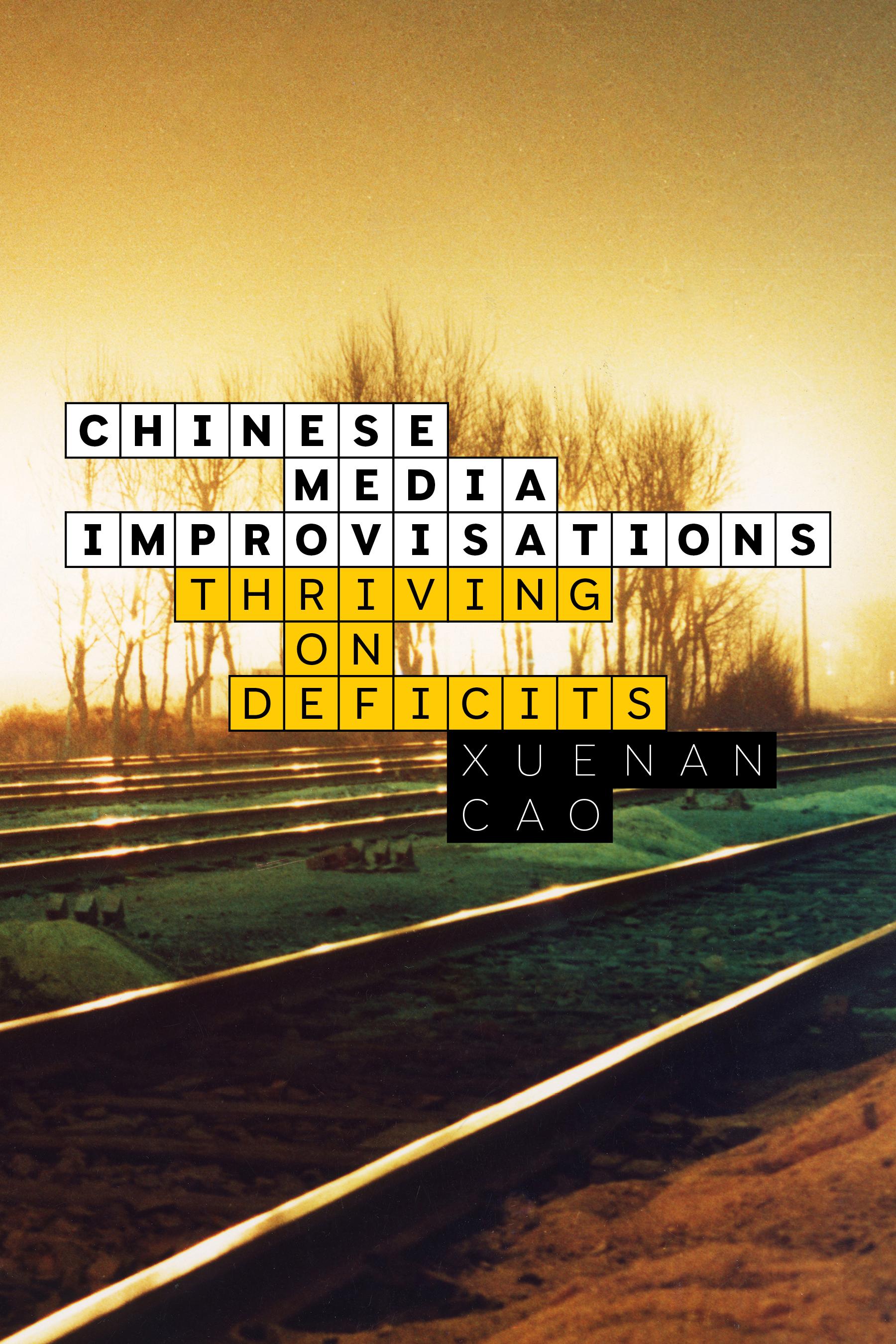
Xuenan Cao offers an unexpected angle on China's technological rise, spotlighting the role of deficit-driven improvisation. As Cao demonstrates, where printing paper, computers, and microchips have been in shortage, media improvisations and AI gadgetry have filled the gap and become the unlikeliest accelerants of tech imaginaries.
Equal parts media-historical and literary analysis, the book connects several moments in Chinese history: Mao's Great Leap Forward that demanded the country produce mountains of books, notwithstanding the shortage of papers and printers; the compressed development that pushed key industries—such as China Railway—to informatize amidst hazards; the information-theoretical explosion in which scientists impersonated computing devices when there were none for them to access; and the ironic present, when municipals have scrambled to update their smart-cities with low-budget AI gadget theatrics, such as facial recognition toilet paper dispensers. These are scenarios in which media practitioners—from print to information technologies and to AI—have had to improvise in response to political pressure and thrive on a deficiency of funding and materials. Drawing on Chinese communist party archival records, China Railway local archives, newspapers, ersatz college reference books, science journals, and AI-related technical documents, each book section combines archival research and literary readings, narrated through personal history with media-theoretical extrapolation. Ultimately, Cao persuades that the critique and deconstruction of the canonicity of Western media theory requires an understanding of media improvisations in China.
Zahle einfach mit Karte, Klarna, Apple Pay oder Google Pay. Nicht zufrieden? Du hast immer ein 14-tägiges Widerrufsrecht. Lies mehr in unseren AGB. Hast du Fragen, schreib uns eine E-Mail an hello@memmo.org.
Memmo macht das Lernen einfacher – wo auch immer du bist. Bei uns findest du deine Kursbücher und smarte Lerntools an einem Ort: Zusammenfassungen, Quizzes, Podcasts und Lernkarten. Und Ted, dein Lernbuddy, beantwortet alles, was du wissen möchtest. Über 50.000 Studierende lernen bereits hier – gemacht, damit du schneller lernst und weniger Stress hast.