
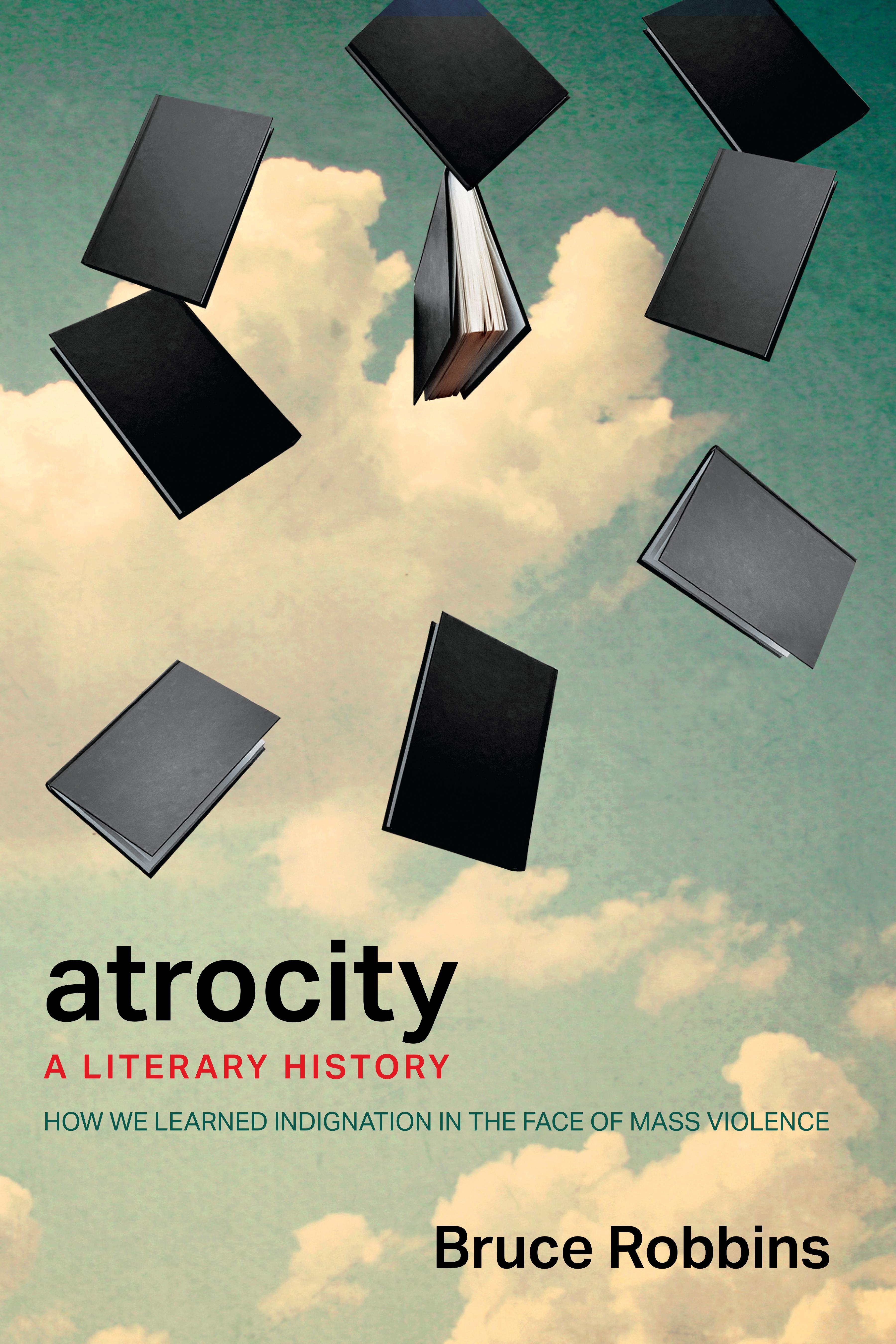
Exploring literary representations of mass violence, Bruce Robbins traces the emergence of a cosmopolitan recognition of atrocity.
Mass violence did not always have a name. Like conquest, what we think of now as atrocities have not always invited indignation or been seen to violate moral norms. Venturing from the Bible to Zadie Smith, Robbins explores the literature of suffering, to show how, over time, abhorrence of mass violence takes shape. With it comes the emergence of a necessary element of cosmopolitanism: the ability to look at one's own nation with the critical eyes of a stranger.
Drawing on a vast written archive and with penetrating insight, Robbins takes up such literary representations of violence as Bartolomé de las Casas's account of his fellow Spaniards' atrocities, Kurt Vonnegut's Slaughterhouse-Five, Grimmelshausen's 1668 novel Simplicissimus, David Mitchell's Cloud Atlas, Gabriel García Márquez's One Hundred Years of Solitude, Homero Aridjis's short novel Smyrna in Flames, and Tolstoy's Hadji Murat. These essential texts do more than simply testify to atrocious acts. In their literariness, they take the risk of contextualizing and relativizing, thereby extending beyond the legal paradigm of accusation. They recognize atrocity as a moral scandal about which something should be done and can be done, while they also place that scandal within a larger and more uncertain history.
Zahle einfach mit Karte, Klarna, Apple Pay oder Google Pay. Nicht zufrieden? Du hast immer ein 14-tägiges Widerrufsrecht. Lies mehr in unseren AGB. Hast du Fragen, schreib uns eine E-Mail an hello@memmo.org.
Memmo macht das Lernen einfacher – wo auch immer du bist. Bei uns findest du deine Kursbücher und smarte Lerntools an einem Ort: Zusammenfassungen, Quizzes, Podcasts und Lernkarten. Und Ted, dein Lernbuddy, beantwortet alles, was du wissen möchtest. Über 50.000 Studierende lernen bereits hier – gemacht, damit du schneller lernst und weniger Stress hast.