
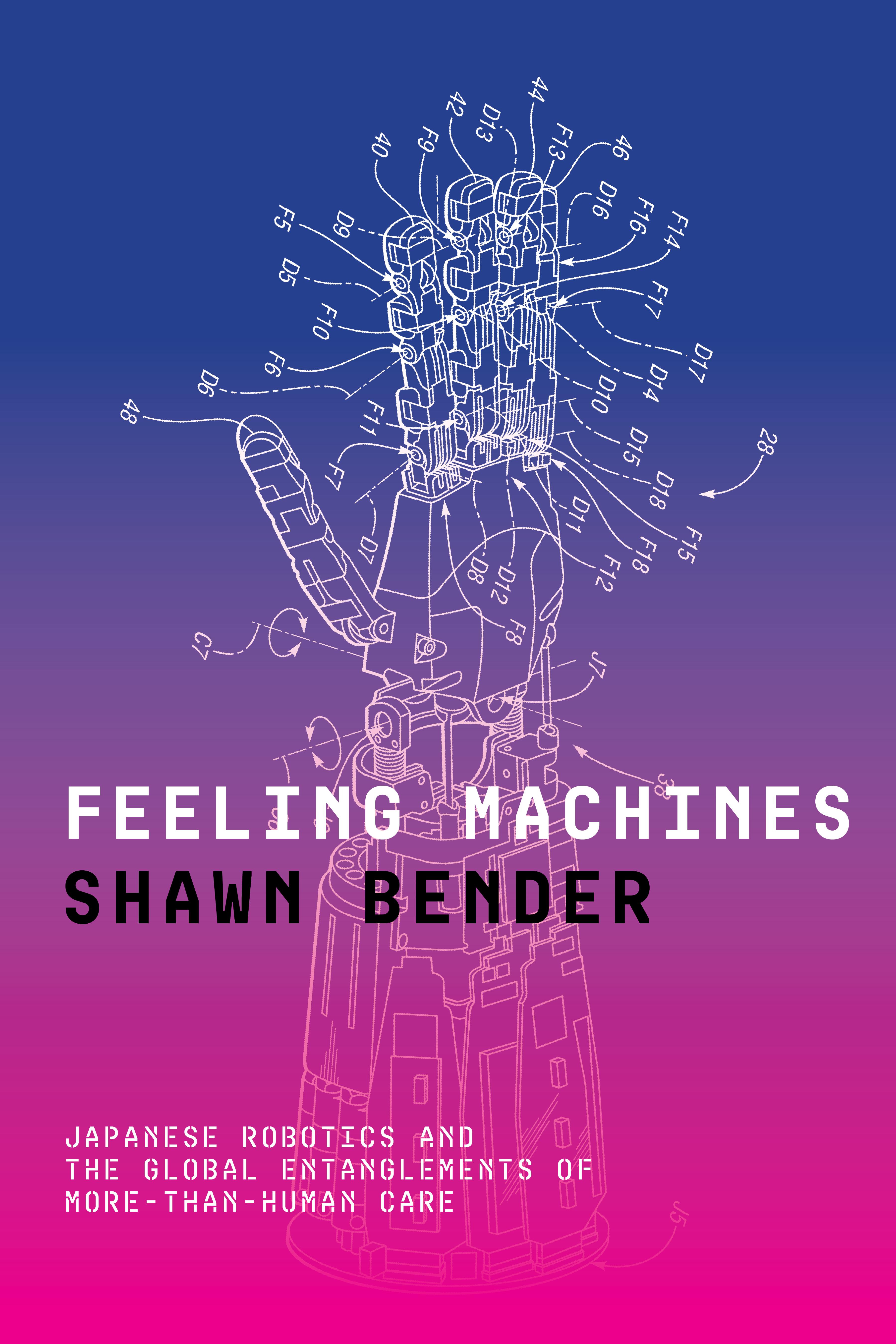
In recent years, debates over healthcare have accompanied rapid advances in technology, from the expansion of telehealth services to artificial intelligence driven diagnostics. In this book, Shawn Bender delves into the world of Japanese robots engineered for care. Care robots (kaigo robotto) emerged early in the 21st century, when roboticists began converting assembly line technologies into responsive machines for older adults and people with disabilities. These robots are meant to be felt and programmed to feel. While some greet them with enthusiasm, others fear that they might replace a fundamentally human task. Based on fieldwork in Japan, Denmark, and Germany, Bender traces the emergence of care robots in Japan and examines their impact on therapeutic practice around the world.
Social science scholarship on robotics tends to be either speculative—imagining life together with robots—or experimental—observing robot-human interaction in laboratories or through short-term field studies. Instead, Bender follows roboticists developing technologies in Japan, and travels with the robots themselves into everyday sites of care, tracking the integration of robots into institutional care and the connection of care practice to robotics development. By exploring the application of Japanese robotics across the globe, Feeling Machines highlights the entanglements of therapeutic practice and technological innovation in an age of more-than-human care.
Zahle einfach mit Karte, Klarna, Apple Pay oder Google Pay. Nicht zufrieden? Du hast immer ein 14-tägiges Widerrufsrecht. Lies mehr in unseren AGB. Hast du Fragen, schreib uns eine E-Mail an hello@memmo.org.
Memmo macht das Lernen einfacher – wo auch immer du bist. Bei uns findest du deine Kursbücher und smarte Lerntools an einem Ort: Zusammenfassungen, Quizzes, Podcasts und Lernkarten. Und Ted, dein Lernbuddy, beantwortet alles, was du wissen möchtest. Über 50.000 Studierende lernen bereits hier – gemacht, damit du schneller lernst und weniger Stress hast.