
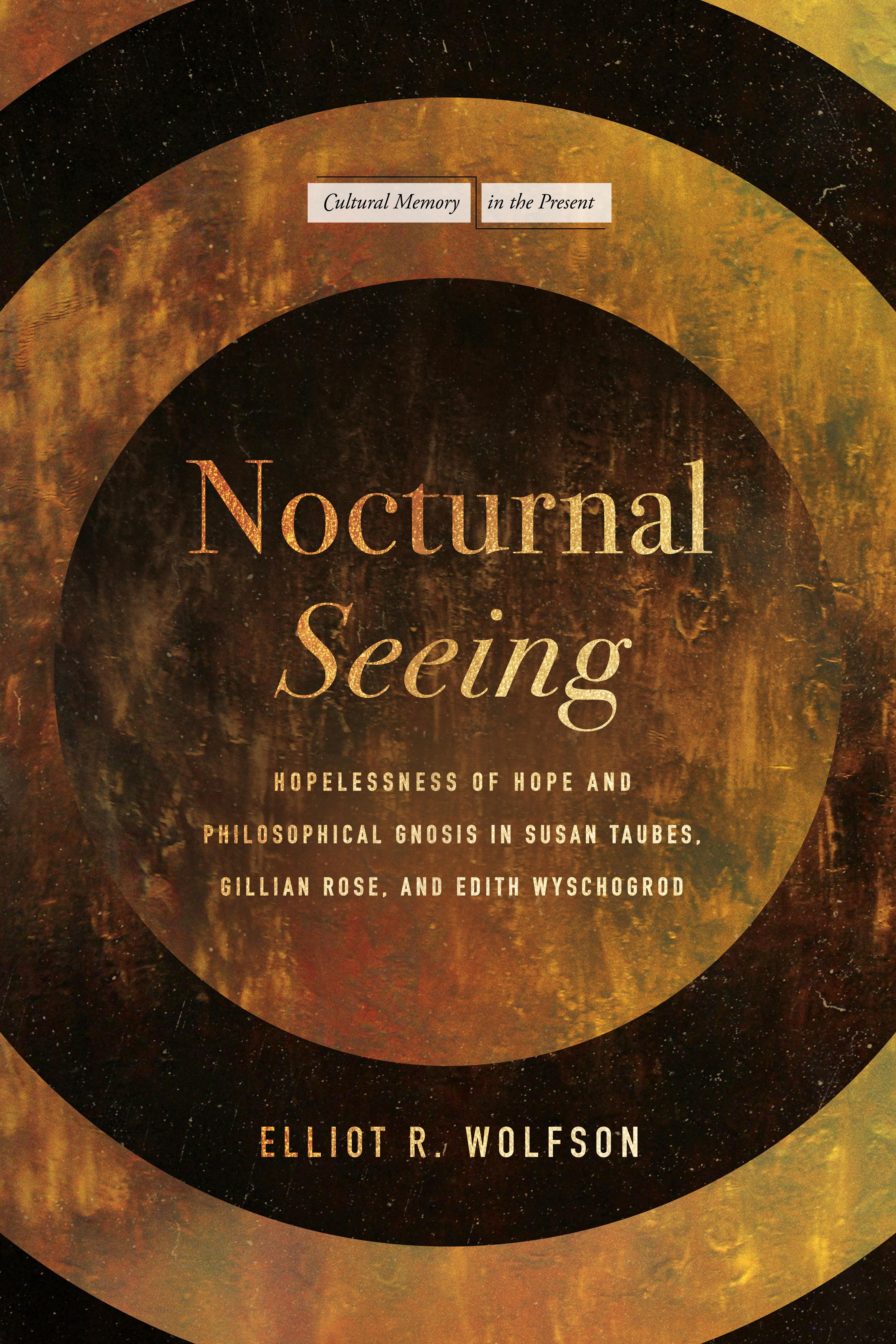
In this erudite new work, Elliot R. Wolfson explores philosophical gnosis in the writings of Susan Taubes, Gillian Rose, and Edith Wyschogrod. The juxtaposition of these three extraordinary, albeit relatively neglected, philosophers provides a prism through which Wolfson scrutinizes the interplay of ethics, politics, and theology. The bond that ties together the diverse and multifaceted worldviews promulgated by Taubes, Rose, and Wyschogrod is the mutual recognition of the need to enunciate a response to the calamities of the twentieth century based on an incontrovertible acknowledgment of the decadence and malevolence of human beings, without, however, succumbing to acrimony and despair. The speculation of each of these philosophers on melancholia and the tragicomedy of being is unquestionably intricate, exhibiting subtle variations and idiosyncrasies, but we can nevertheless identify a common denominator in their attempt to find the midpoint positioned between hope and hopelessness. As Wolfson articulates, Taubes, Rose, and Wyschogrod exemplify a philosophical sensibility informed by a nocturnal seeing, which is not merely a seeing in the night but rather a seeing of the night. Ultimately, the book reveals the potential for these thinkers' ideas to enhance our moral sensitivity and to encourage participation in the ongoing struggle for meaning and decency in the present.
Zahle einfach mit Karte, Klarna, Apple Pay oder Google Pay. Nicht zufrieden? Du hast immer ein 14-tägiges Widerrufsrecht. Lies mehr in unseren AGB. Hast du Fragen, schreib uns eine E-Mail an hello@memmo.org.
Memmo macht das Lernen einfacher – wo auch immer du bist. Bei uns findest du deine Kursbücher und smarte Lerntools an einem Ort: Zusammenfassungen, Quizzes, Podcasts und Lernkarten. Und Ted, dein Lernbuddy, beantwortet alles, was du wissen möchtest. Über 50.000 Studierende lernen bereits hier – gemacht, damit du schneller lernst und weniger Stress hast.