
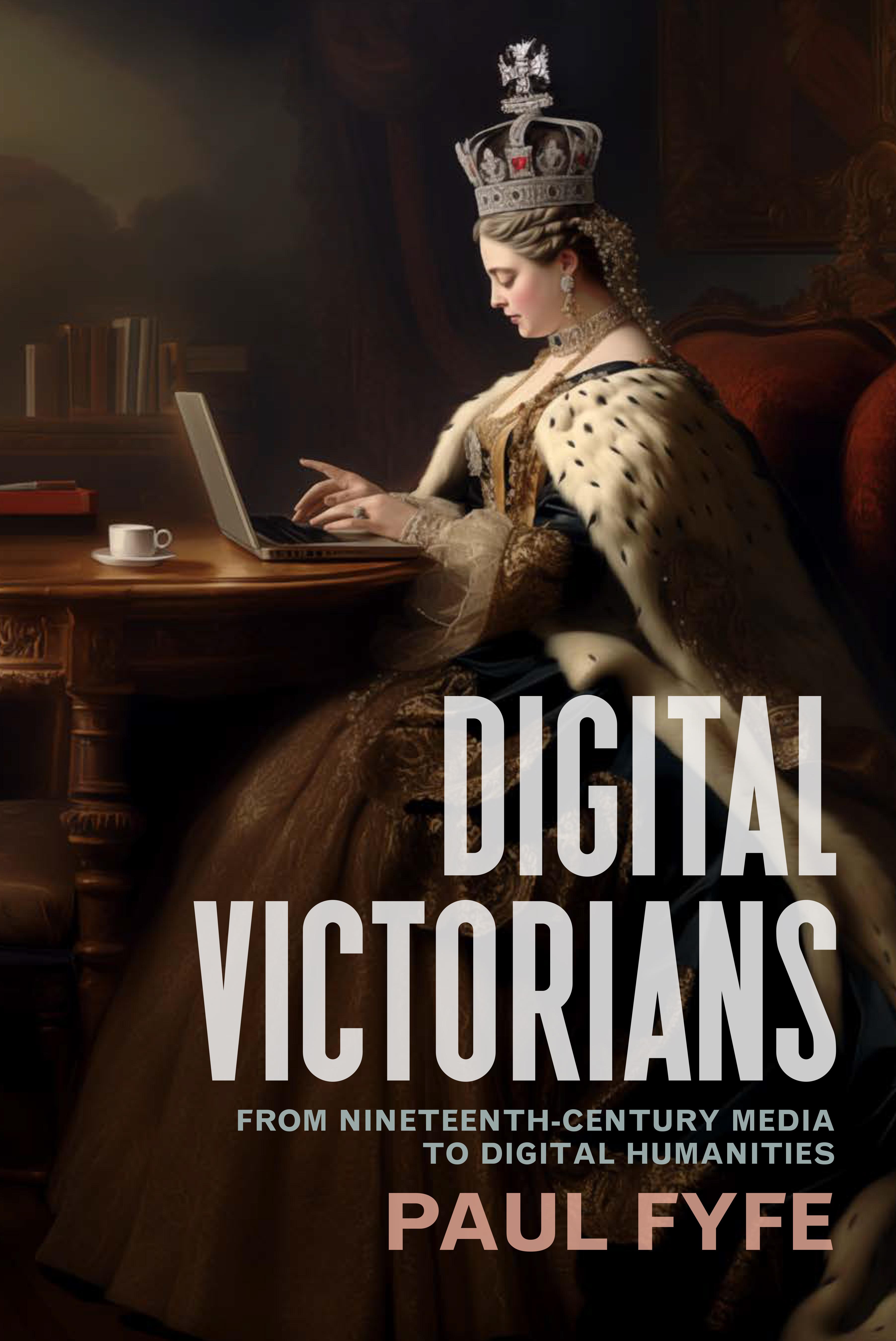
Perhaps no period better clarifies our current crisis of digital information than the nineteenth century. Self-aware about its own epochal telecommunications changes and awash in a flood of print, the nineteenth century confronted the consequences of its media shifts in ways that still define contemporary responses. In this authoritative new work, Paul Fyfe argues that writing about Victorian new media continues to shape reactions to digital change. Among its unexpected legacies are what we call digital humanities, characterized by the self-reflexiveness, disciplinary reconfigurations, and debates that have made us digital Victorians, so to speak, struggling again to resituate humanities practices amid another technological revolution.
Engaging with writers such as Thomas De Quincey, George Eliot, George du Maurier, Henry James, and Robert Louis Stevenson who confronted the new media of their day, Fyfe shows how we have inherited Victorian anxieties about quantitative and machine-driven reading, professional obsolescence in the face of new technology, and more—telling a longer history of how writers, readers, and scholars adapt to dramatically changing media ecologies, then and now. The result is a predigital history for the digital humanities through nineteenth-century encounters with telecommunication networks, privacy intrusions, quantitative reading methods, remediation, and their effects on literary professionals. As Fyfe demonstrates, well before computers, the Victorians were already digital.
Zahle einfach mit Karte, Klarna, Apple Pay oder Google Pay. Nicht zufrieden? Du hast immer ein 14-tägiges Widerrufsrecht. Lies mehr in unseren AGB. Hast du Fragen, schreib uns eine E-Mail an hello@memmo.org.
Memmo macht das Lernen einfacher – wo auch immer du bist. Bei uns findest du deine Kursbücher und smarte Lerntools an einem Ort: Zusammenfassungen, Quizzes, Podcasts und Lernkarten. Und Ted, dein Lernbuddy, beantwortet alles, was du wissen möchtest. Über 50.000 Studierende lernen bereits hier – gemacht, damit du schneller lernst und weniger Stress hast.