
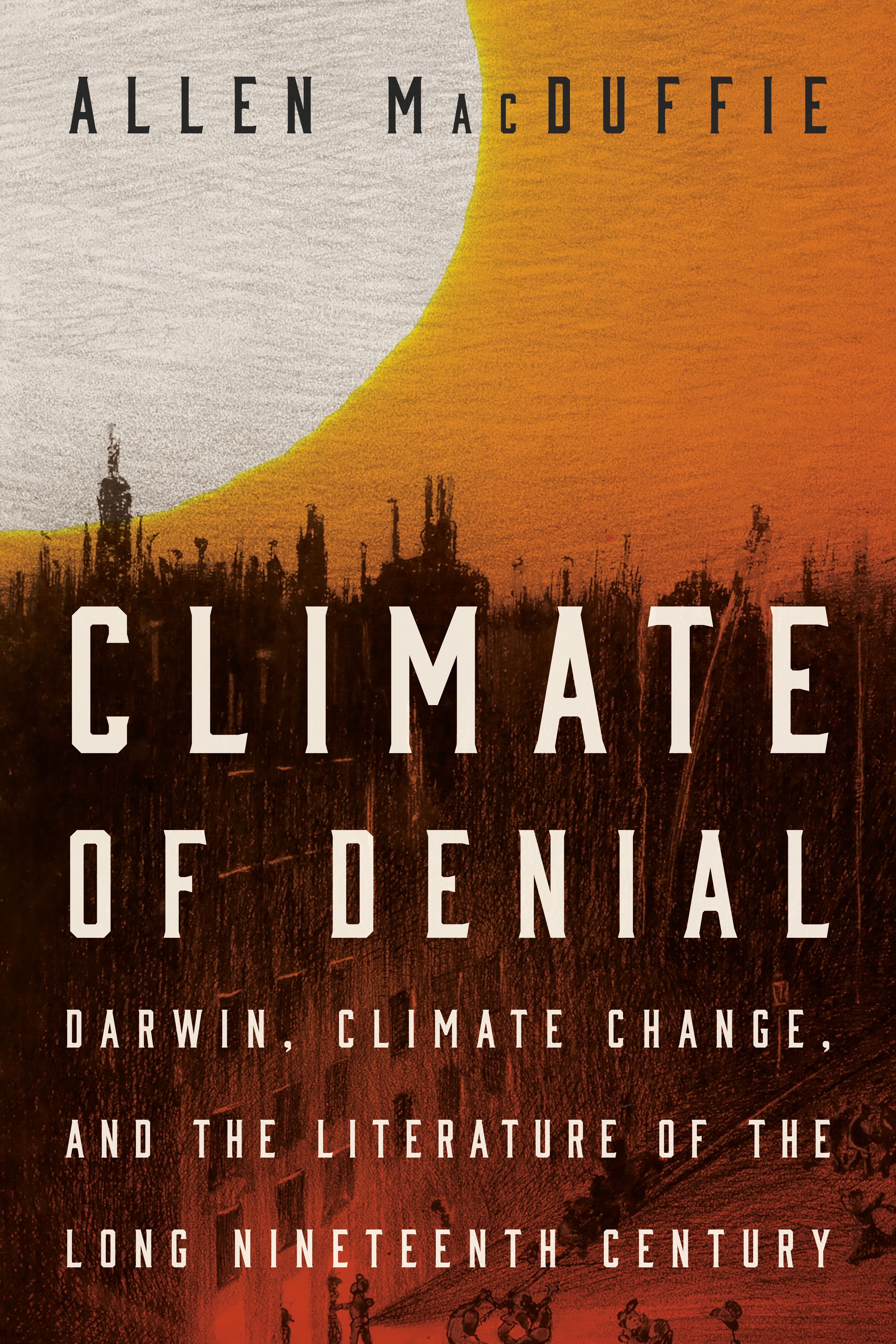
Many people today experience the climate crisis with a divided state of mind: aware of the extreme effects, but living everyday life as if the crisis is not actually happening. This book argues that this structure of feeling has roots that can be traced back to the nineteenth century, when Western culture encountered the profound shock of Charles Darwin's theory of evolution.
Darwin's theory made it increasingly difficult for secular humanists to flatly deny that humans are animals, fully enmeshed in natural systems and processes. But like those of us confronting climate change today, many writers and scientists struggled to integrate its depersonalizing vision into their understanding of the place of humans in the natural order. The result was that the radical environmental implications of The Origin of Species were evaded as soon as they were articulated, abetted by a culture of denial structured by the illusions of capital and empire.
In light of the climate emergency, Climate of Denial recontextualizes nineteenth-century texts to offer rich insight into the defensive strategies used—then and now—to avoid confronting the unsettling realities of our situation on this planet.
Zahle einfach mit Karte, Klarna, Apple Pay oder Google Pay. Nicht zufrieden? Du hast immer ein 14-tägiges Widerrufsrecht. Lies mehr in unseren AGB. Hast du Fragen, schreib uns eine E-Mail an hello@memmo.org.
Memmo macht das Lernen einfacher – wo auch immer du bist. Bei uns findest du deine Kursbücher und smarte Lerntools an einem Ort: Zusammenfassungen, Quizzes, Podcasts und Lernkarten. Und Ted, dein Lernbuddy, beantwortet alles, was du wissen möchtest. Über 50.000 Studierende lernen bereits hier – gemacht, damit du schneller lernst und weniger Stress hast.