
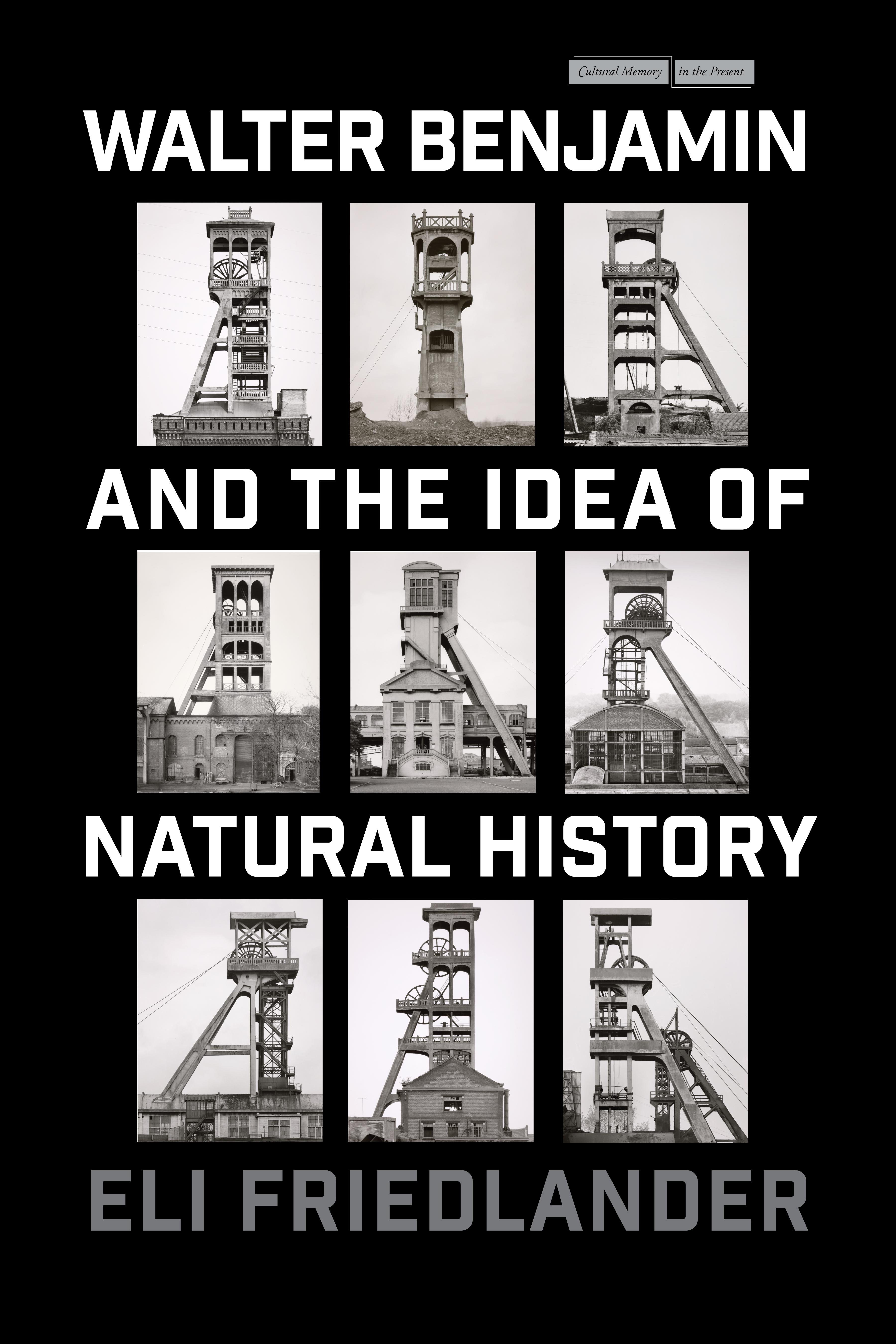
In this incisive new work, Eli Friedlander demonstrates that Walter Benjamin's entire corpus, from early to late, comprises a rigorous and sustained philosophical questioning of how human beings belong to nature.
Across seemingly heterogeneous writings, Friedlander argues, Benjamin consistently explores what the natural in the human comes to, that is, how nature is transformed, actualized, redeemed, and overcome in human existence. The book progresses gradually from Benjamin's philosophically fundamental writings on language and nature to his Goethean empiricism, from the presentation of ideas to the primal history of the Paris arcades. Friedlander's careful analysis brings out how the idea of natural history inflects Benjamin's conception of the work of art and its critique, his diagnosis of the mythical violence of the legal order, his account of the body and of action, of material culture and technology, as well as his unique vision of historical materialism.
Featuring revelatory new readings of Benjamin's major works that differ, sometimes dramatically, from prevailing interpretations, this book reveals the internal coherence and philosophical force of Benjamin's thought.
Zahle einfach mit Karte, Klarna, Apple Pay oder Google Pay. Nicht zufrieden? Du hast immer ein 14-tägiges Widerrufsrecht. Lies mehr in unseren AGB. Hast du Fragen, schreib uns eine E-Mail an hello@memmo.org.
Memmo macht das Lernen einfacher – wo auch immer du bist. Bei uns findest du deine Kursbücher und smarte Lerntools an einem Ort: Zusammenfassungen, Quizzes, Podcasts und Lernkarten. Und Ted, dein Lernbuddy, beantwortet alles, was du wissen möchtest. Über 50.000 Studierende lernen bereits hier – gemacht, damit du schneller lernst und weniger Stress hast.