
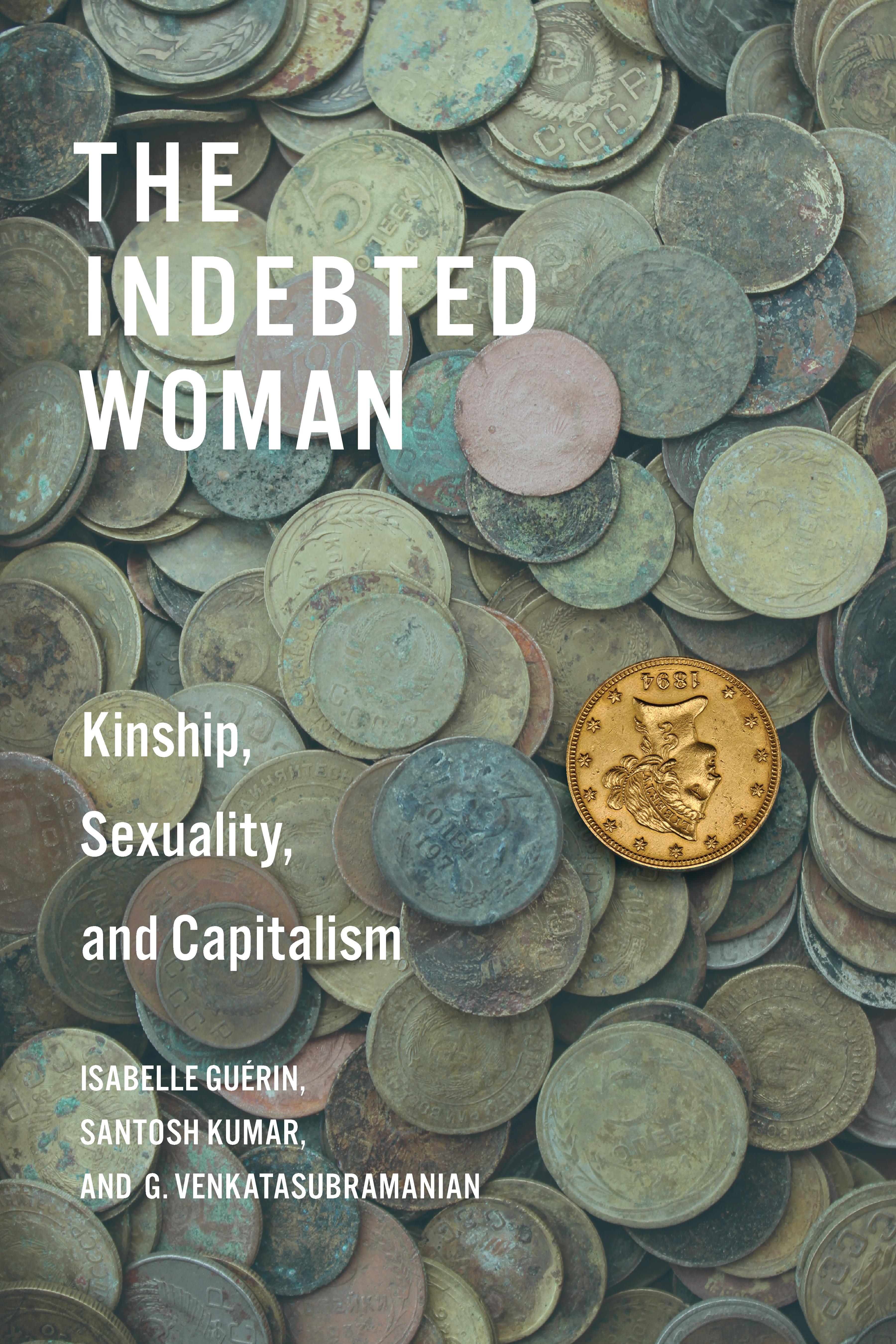
Women, and particularly poor women, have become essential cogs in the wheel of financialized capitalism. Globally, women are responsible for managing household debt, and that debt has exploded over the last decade, reaching an all-time high after the COVID-19 pandemic. Across various categories of loans, including subprime lending, microcredit policies, and consumer loans, as well as rent and utilities, women are overrepresented as clients and managers, and are being enfolded into the system. The Indebted Woman discusses the crucial yet invisible roles poor women play in making and consolidating debt and credit markets. Isabelle Guérin, Santosh Kumar, and G. Venkatasubramanian spent over two decades observing a credit market that specifically targets women in the Indian countryside of east-central Tamil Nadu. They found that paying off debts required labor, frequently involved sexual transactions, and shaped women's bodies and subjectivities. Bringing together ethnography, statistical surveys, and financial diaries, they offer for the first time a comprehensive theory for this sexual division of debt that goes far beyond the Indian case, exposing the ways capitalism transforms womanhood and how this transformation in turn fuels capitalism.
Zahle einfach mit Karte, Klarna, Apple Pay oder Google Pay. Nicht zufrieden? Du hast immer ein 14-tägiges Widerrufsrecht. Lies mehr in unseren AGB. Hast du Fragen, schreib uns eine E-Mail an hello@memmo.org.
Memmo macht das Lernen einfacher – wo auch immer du bist. Bei uns findest du deine Kursbücher und smarte Lerntools an einem Ort: Zusammenfassungen, Quizzes, Podcasts und Lernkarten. Und Ted, dein Lernbuddy, beantwortet alles, was du wissen möchtest. Über 50.000 Studierende lernen bereits hier – gemacht, damit du schneller lernst und weniger Stress hast.