
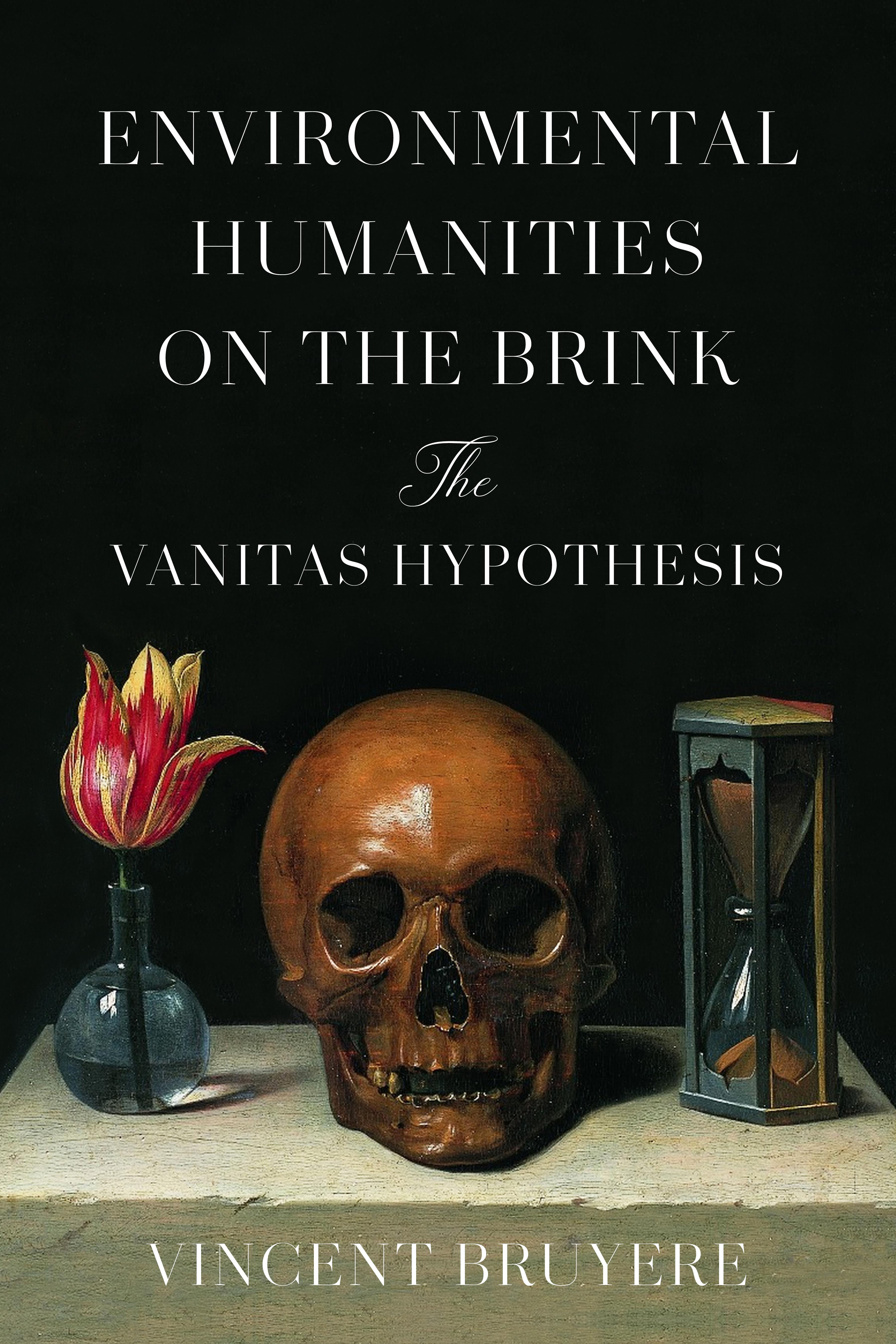
In this experimental work of ecocriticism, Vincent Bruyere confronts the seeming pointlessness of the humanities amid spectacularly negative future projections of environmental collapse.
The vanitas paintings of the sixteenth and seventeenth centuries dazzlingly depict heaps of riches alongside skulls, shells, and hourglasses. Sometimes even featuring the illusion that their canvases are peeling away, vanitas images openly declare their own pointlessness in relation to the future. This book takes inspiration from the vanitas tradition to fearlessly contemplate the stakes of the humanities in the Anthropocene present, when the accumulated human record could well outlast the climate conditions for our survival. Staging a series of unsettling encounters with early modern texts and images whose claims of relevance have long since expired, Bruyere experiments with the interpretive affordances of allegory and fairytale, still life and travelogues. Each chapter places a vanitas motif—canvas, debris, toxics, paper, ark, meat, and light—in conversation with stories and images of the Anthropocene, from the Pleistocene Park geoengineering project to toxic legacies to in-vitro meat.
Considering questions of quiet erasure and environmental memory, this book argues we ought to keep reading, even by the flickering light of extinction.
Zahle einfach mit Karte, Klarna, Apple Pay oder Google Pay. Nicht zufrieden? Du hast immer ein 14-tägiges Widerrufsrecht. Lies mehr in unseren AGB. Hast du Fragen, schreib uns eine E-Mail an hello@memmo.org.
Memmo macht das Lernen einfacher – wo auch immer du bist. Bei uns findest du deine Kursbücher und smarte Lerntools an einem Ort: Zusammenfassungen, Quizzes, Podcasts und Lernkarten. Und Ted, dein Lernbuddy, beantwortet alles, was du wissen möchtest. Über 50.000 Studierende lernen bereits hier – gemacht, damit du schneller lernst und weniger Stress hast.