
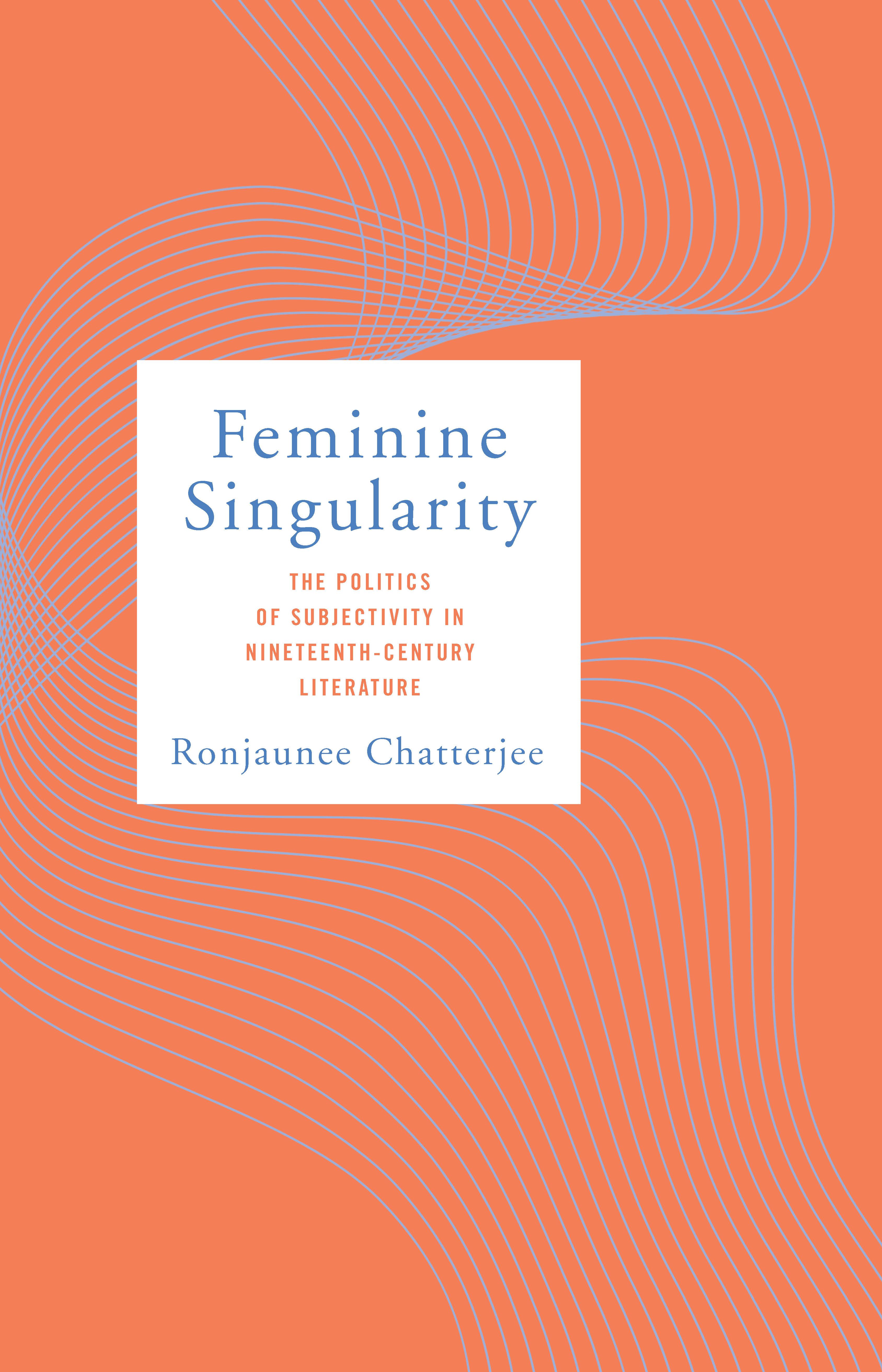
What happens if we read nineteenth-century and Victorian texts not for the autonomous liberal subject, but for singularity—for what is partial, contingent, and in relation, rather than what is merely "alone"? Feminine Singularity offers a powerful feminist theory of the subject—and shows us paths to thinking subjectivity, race, and gender anew in literature and in our wider social world.
Through fresh, sophisticated readings of Lewis Carroll, Christina Rossetti, Charles Baudelaire, and Wilkie Collins in conversation with psychoanalysis, Black feminist and queer-of-color theory, and continental philosophy, Ronjaunee Chatterjee uncovers a lexicon of feminine singularity that manifests across poetry and prose through likeness and minimal difference, rather than individuality and identity. Reading for singularity shows us the ways femininity is fundamentally entangled with racial difference in the nineteenth century and well into the contemporary, as well as how rigid categories can be unsettled and upended.
Grappling with the ongoing violence embedded in the Western liberal imaginary, Feminine Singularity invites readers to commune with the subversive potentials in nineteenth-century literature for thinking subjectivity today.
Zahle einfach mit Karte, Klarna, Apple Pay oder Google Pay. Nicht zufrieden? Du hast immer ein 14-tägiges Widerrufsrecht. Lies mehr in unseren AGB. Hast du Fragen, schreib uns eine E-Mail an hello@memmo.org.
Memmo macht das Lernen einfacher – wo auch immer du bist. Bei uns findest du deine Kursbücher und smarte Lerntools an einem Ort: Zusammenfassungen, Quizzes, Podcasts und Lernkarten. Und Ted, dein Lernbuddy, beantwortet alles, was du wissen möchtest. Über 50.000 Studierende lernen bereits hier – gemacht, damit du schneller lernst und weniger Stress hast.