
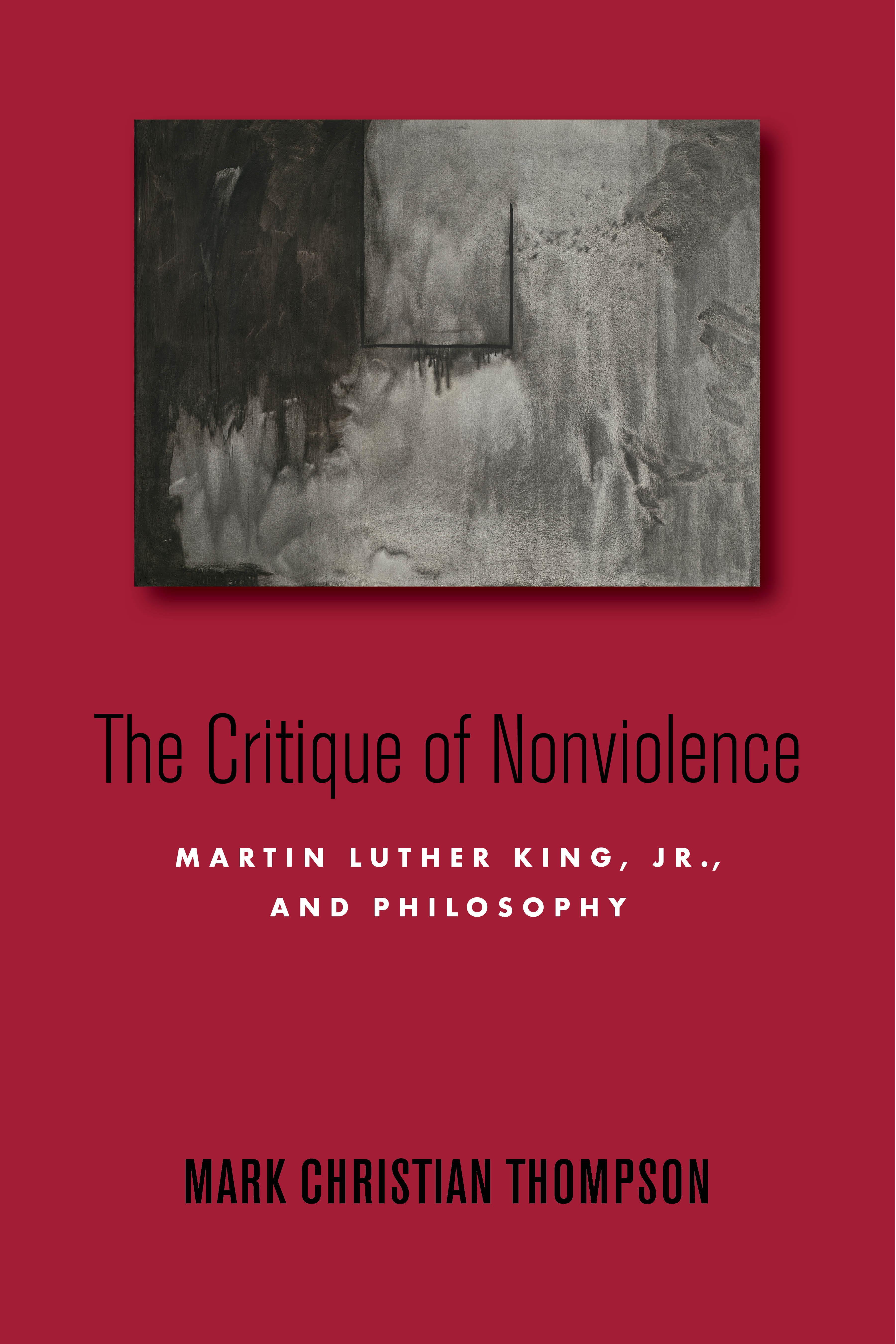
How does Martin Luther King, Jr., understand race philosophically and how did this understanding lead him to develop an ontological conception of racist police violence?
In this important new work, Mark Christian Thompson attempts to answer these questions, examining ontology in Martin Luther King, Jr.'s philosophy. Specifically, the book reads King through 1920s German academic debates between Martin Heidegger, Rudolf Bultmann, Hans Jonas, Carl Schmitt, Eric Voegelin, Hannah Arendt, and others on Being, gnosticism, existentialism, political theology, and sovereignty. It further examines King's dissertation about Tillich, as well other key texts from his speculative writings, sermons, and speeches, positing King's understanding of divine love as a form of Heideggerian ontology articulated in beloved community.
Tracking the presence of twentieth-century German philosophy and theology in his thought, the book situates King's ontology conceptually and socially in nonviolent protest. In so doing, The Critique of Nonviolence reads King's "Letter from a Birmingham Jail" (1963) with Walter Benjamin's "Critique of Violence" (1921) to reveal the depth of King's political-theological critique of police violence as the illegitimate appropriation of the racialized state of exception. As Thompson argues, it is in part through its appropriation of German philosophy and theology that King's ontology condemns the perpetual American state of racial exception that permits unlimited police violence against Black lives.
Zahle einfach mit Karte, Klarna, Apple Pay oder Google Pay. Nicht zufrieden? Du hast immer ein 14-tägiges Widerrufsrecht. Lies mehr in unseren AGB. Hast du Fragen, schreib uns eine E-Mail an hello@memmo.org.
Memmo macht das Lernen einfacher – wo auch immer du bist. Bei uns findest du deine Kursbücher und smarte Lerntools an einem Ort: Zusammenfassungen, Quizzes, Podcasts und Lernkarten. Und Ted, dein Lernbuddy, beantwortet alles, was du wissen möchtest. Über 50.000 Studierende lernen bereits hier – gemacht, damit du schneller lernst und weniger Stress hast.