
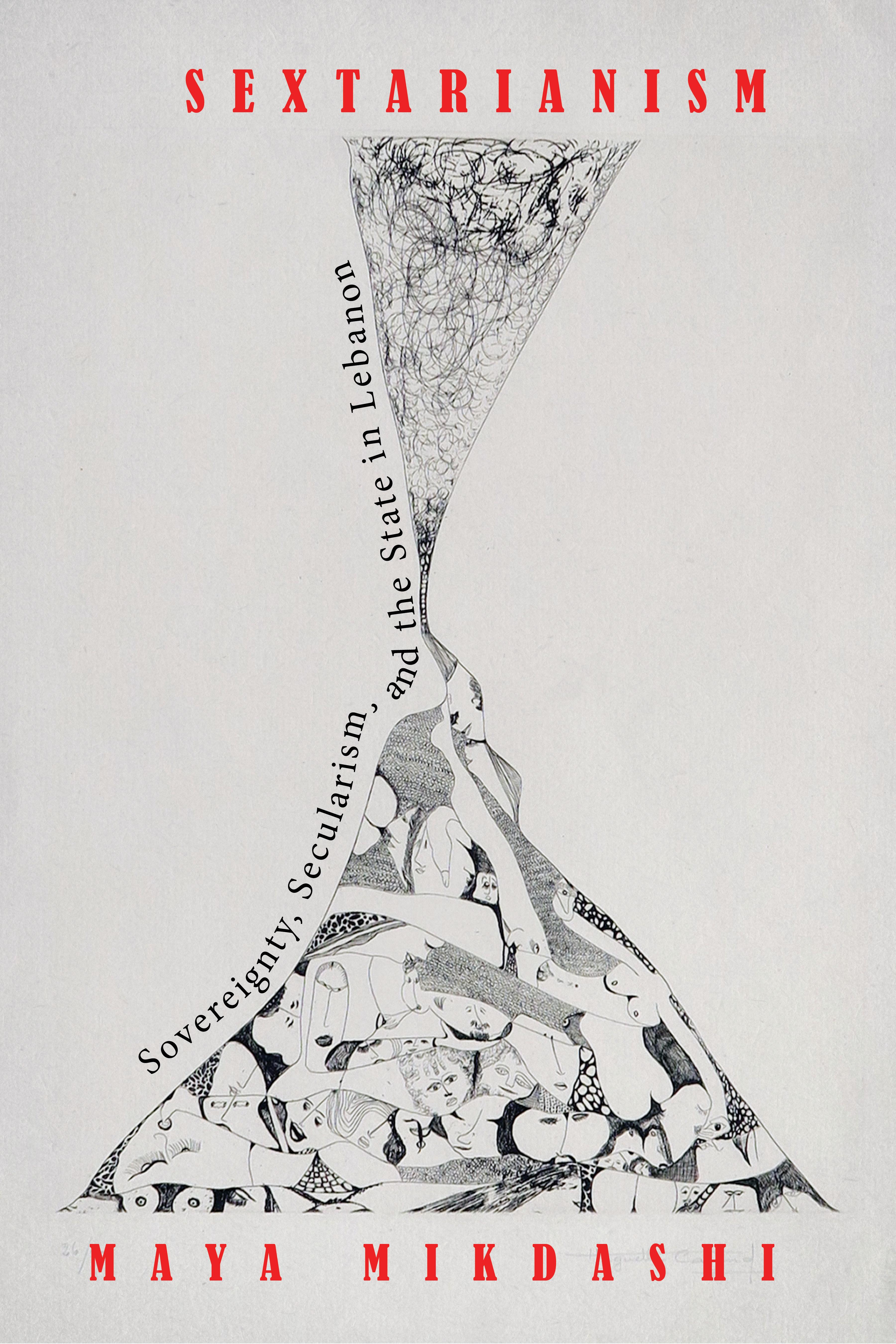
The Lebanese state is structured through religious freedom and secular power sharing across sectarian groups. Every sect has specific laws that govern kinship matters like marriage or inheritance. Together with criminal and civil laws, these laws regulate and produce political difference. But whether women or men, Muslims or Christians, queer or straight, all people in Lebanon have one thing in common—they are biopolitical subjects forged through bureaucratic, ideological, and legal techniques of the state.
With this book, Maya Mikdashi offers a new way to understand state power, theorizing how sex, sexuality, and sect shape and are shaped by law, secularism, and sovereignty. Drawing on court archives, public records, and ethnography of the Court of Cassation, the highest civil court in Lebanon, Mikdashi shows how political difference is entangled with religious, secular, and sexual difference. She presents state power as inevitably contingent, like the practices of everyday life it engenders, focusing on the regulation of religious conversion, the curation of legal archives, state and parastatal violence, and secular activism. Sextarianism locates state power in the experiences, transitions, uprisings, and violence that people in the Middle East continue to live.
Zahle einfach mit Karte, Klarna, Apple Pay oder Google Pay. Nicht zufrieden? Du hast immer ein 14-tägiges Widerrufsrecht. Lies mehr in unseren AGB. Hast du Fragen, schreib uns eine E-Mail an hello@memmo.org.
Memmo macht das Lernen einfacher – wo auch immer du bist. Bei uns findest du deine Kursbücher und smarte Lerntools an einem Ort: Zusammenfassungen, Quizzes, Podcasts und Lernkarten. Und Ted, dein Lernbuddy, beantwortet alles, was du wissen möchtest. Über 50.000 Studierende lernen bereits hier – gemacht, damit du schneller lernst und weniger Stress hast.